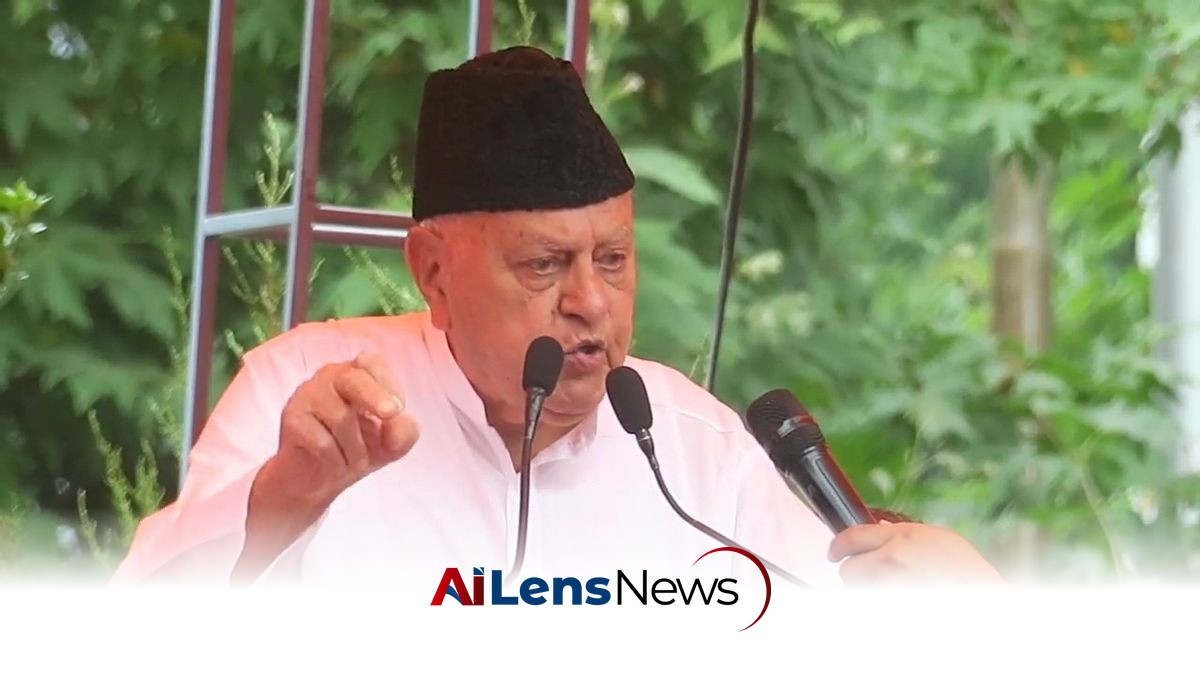


In a recent address, Dr. Farooq Abdullah urged secular and patriotic forces to unite against rising communalism and intolerance in India, emphasizing the need for constitutional values.
New Delhi, India Jul 19, 2026 ALN: National Conference President Dr. Farooq Abdullah voiced deep concern over what he described as the growing climate of hatred, communalism, religious intolerance, and social polarization in the country. His remarks come amid increasing tensions in various parts of India, where incidents of communal violence and discrimination against minority communities have been reported more frequently. This atmosphere of division has raised alarms among various political leaders and social activists who advocate for a more inclusive and harmonious society.
Dr. Abdullah's call for unity is not merely a reaction to current events but is rooted in a broader historical context. India, known for its rich tapestry of cultures and religions, has long been characterized by a pluralistic society. However, over the years, various political movements have attempted to exploit religious and communal identities for electoral gains, leading to fragmentation and discord. Dr. Abdullah emphasized that collective action is essential to combat these divisive forces and to protect the foundational values that have historically united the country.
Addressing a gathering of senior party leaders, office-bearers, and a large number of party workers, Dr. Farooq stated that India's freedom was not won by any single community or religion but was secured through the collective sacrifices of people belonging to every faith, region, and background. This statement resonates with the historical narrative of the Indian independence movement, where leaders from diverse backgrounds, including Hindus, Muslims, Sikhs, and Christians, came together to oppose colonial rule. The unity displayed during this period is often cited as a testament to India's potential for coexistence.
He observed that the Constitution of India guarantees every citizen the fundamental rights to equality, religious freedom, freedom of expression, and justice, adding that these constitutional and democratic values continue to constitute the bedrock of the nation's unity, strength, and progress. The Constitution, adopted in 1950, was a revolutionary document that enshrined the principles of secularism and democracy, aiming to protect the rights of all citizens irrespective of their religious or cultural backgrounds. Dr. Abdullah's emphasis on these rights serves as a reminder of the ongoing struggle to uphold them in the face of rising intolerance.
Referring to Jammu & Kashmir's constitutional relationship with the Union of India, Dr. Farooq mentioned that the accession of the erstwhile State was accompanied by specific constitutional assurances under which it enjoyed a distinct constitutional position. The region, which has a unique history and demographic makeup, was granted special status under Article 370 of the Indian Constitution, allowing it certain autonomy. However, he expressed regret that these constitutional guarantees were diluted over the decades, ultimately culminating in the abrogation of the region's special constitutional status in 2019. This move has been a point of contention and debate, with many arguing that it undermined the rights of the people of Jammu and Kashmir.
Reaffirming the party's longstanding position, he stated that the National Conference would continue its peaceful, democratic, and constitutional struggle for the restoration of Jammu & Kashmir's special constitutional status and the constitutional rights of its people. The National Conference, a major political party in the region, has historically advocated for the rights and aspirations of the people of Jammu and Kashmir, often positioning itself as a defender of the region's unique identity and autonomy.
Emphasizing the universal message of faith, Dr. Farooq said that all religions preach humanity, peace, justice, compassion, tolerance, brotherhood, and mutual respect, and that no religion sanctions hatred, violence, oppression, or the killing of innocent people. This assertion highlights a critical aspect of interfaith dialogue and the need for communities to come together in the face of adversity. The emphasis on shared values across religions is particularly poignant in a country where religious diversity is both a strength and a source of tension.
Recalling the immense contribution of minorities to India's freedom struggle, he noted that they had rendered invaluable sacrifices for the country's independence. This historical perspective is crucial in understanding the current socio-political climate, as it underscores the importance of recognizing and honoring the contributions of all communities to the nation’s history. The freedom struggle was marked by the participation of individuals from various backgrounds who united against colonial oppression, and this legacy of unity is essential for fostering a sense of belonging among all citizens today.
At the same time, he expressed concern over what he described as increasing instances of injustice, inequality, and discrimination faced by minority communities, alleging that systematic attempts were being made to erode their constitutional and democratic rights. Reports of hate crimes, social ostracism, and discriminatory policies have raised alarms among human rights organizations and civil society groups, leading to calls for greater accountability and protection of minority rights. Dr. Abdullah's remarks echo the sentiments of many who advocate for a society where diversity is celebrated rather than suppressed.
Urging citizens to reject the politics of hatred, division, and polarization, Dr. Farooq called upon people across the country to uphold the values of communal harmony, constitutionalism, democratic traditions, inclusiveness, and national unity. He stated that only by strengthening these foundational principles could India continue to advance on the path of peace, stability, progress, and prosperity. The emphasis on communal harmony is particularly relevant in the current political landscape, where polarizing rhetoric can often overshadow constructive dialogue and understanding.
Dr. Abdullah's appeal for unity against hate and communalism serves as a timely reminder of the need for collective responsibility in safeguarding the values that define Indian democracy. As the nation grapples with various challenges, including social unrest and economic disparities, the call for unity transcends political affiliations and encourages citizens to work together for a more inclusive future. The implications of such a movement could be profound, potentially leading to a more cohesive society where diversity is not only accepted but celebrated as a vital component of the nation's identity.
To learn more about the latest developments in Elections, stay updated with our exclusive reports and analyses on AiLensNews.

