

More
Checking your session
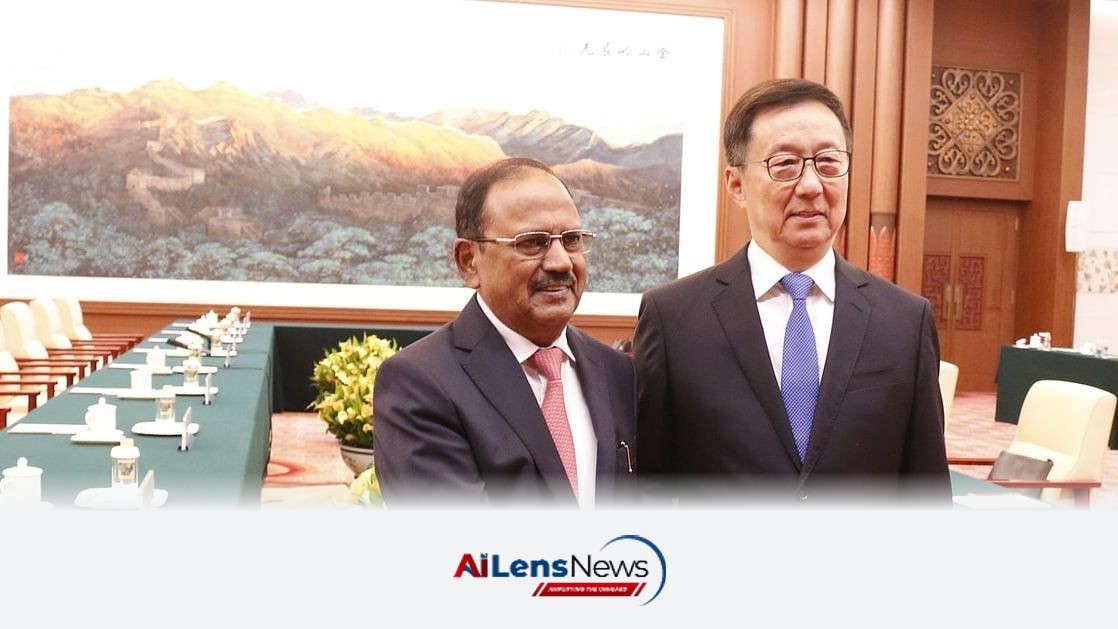



National Security Advisor Ajit Doval met with Chinese Vice President Han Zhang to discuss enhancing peace along the India-China border and improving bilateral relations.
New Delhi, India Aug 25, 2026 ALN: National Security Advisor Ajit Doval met with Chinese Vice President Han Zhang on Tuesday to discuss methods for strengthening peace and tranquillity in the border areas, as well as enhancing bilateral relations between India and China. This meeting is particularly significant, given the ongoing complexities in the India-China relationship, which has been marred by border disputes and military tensions over recent years.
Doval's visit to Beijing, which began on Monday, is a two-day engagement centered around the Special Representatives (SR) talks on the India-China boundary issue. His counterpart in these discussions is Chinese Foreign Minister Wang Yi. The SR talks are part of a long-standing mechanism established in 2003 aimed at addressing the territorial disputes along the 3,488-kilometer border between the two nations.
The dialogue between Doval and Vice President Han Zhang specifically emphasized the need for peace and stability in border regions, reflecting a mutual desire to improve relations across various sectors, including economic, political, and multilateral engagements. This approach aligns with the consensus reached by the leaders of both countries, as highlighted in a statement from the Indian Embassy shared on social media platform X.
The timing of these talks is particularly crucial, occurring just ahead of Chinese President Xi Jinping's anticipated visit to New Delhi for the BRICS summit scheduled for September 12-13. Xi's visit not only represents a diplomatic engagement but also opens the door for potential discussions with Indian Prime Minister Narendra Modi, which could pave the way for further initiatives aimed at enhancing bilateral ties.
The backdrop to these discussions is a complicated history of India-China relations, which have significantly deteriorated since the 2020 Galwan Valley clash. This incident, which resulted in casualties on both sides, marked a turning point that led to a prolonged military stand-off in eastern Ladakh. Since then, both nations have taken steps to stabilize their relationship, though tensions remain palpable, particularly concerning the border and the region of Arunachal Pradesh, which continues to be a contentious issue.
Despite the challenges, the SR talks offer a structured framework for dialogue, which officials from both countries consider a vital tool for managing and addressing recurring tensions. The mechanism has been instrumental in facilitating communication and fostering a better understanding of each country's positions regarding the boundary dispute.
During a media briefing on Monday, Chinese Foreign Ministry spokesperson Lin Jian underscored the importance of the upcoming SR talks, describing them as the "main channel" for negotiations concerning the boundary question. He also noted that these discussions would provide an important platform for addressing mutual interests beyond just territorial issues.
In August of the previous year, the two countries successfully conducted the 24th round of SR talks, during which both sides engaged in candid discussions about the boundary issue and reached a series of common understandings. These discussions have laid the groundwork for ongoing dialogue and have fostered a spirit of cooperation aimed at maintaining peace and tranquillity along the border.
As Doval and Wang prepare for their talks, the focus will likely extend beyond the boundary question to encompass broader bilateral relations and regional and international issues. The implications of these discussions are significant, as they could influence not only India-China relations but also the geopolitical landscape in Asia, particularly in the context of rising tensions in the Indo-Pacific region.
The outcome of the SR talks and any potential meetings between Xi and Modi could signal a shift in the trajectory of India-China relations. Both countries are keen on fostering a stable environment that allows for economic growth and regional cooperation, but this will require navigating the complexities of their historical grievances and strategic interests.
As the world watches these developments, the importance of diplomacy and dialogue in resolving long-standing disputes cannot be overstated. The expectation is that both nations will approach the upcoming talks with a commitment to finding mutually agreeable solutions, which could ultimately contribute to a more peaceful and cooperative regional order.
To learn more about the latest developments in Elections, stay updated with our exclusive reports and analyses on AILensNews.
The BJP initiates its outreach efforts in Punjab today, with Shivraj Chouhan set…

In a meeting in Tripoli, Libyan PM Abdul Hamid Dbeibeh and Qatar's Minister of S…
The NBCC emphasizes the need for transparency and protection against wrongful vo…

Ajit Doval's recent engagement with China's leadership signals a potential shift…

The BJP and Shiromani Akali Dal are negotiating a potential pre-poll alliance in…