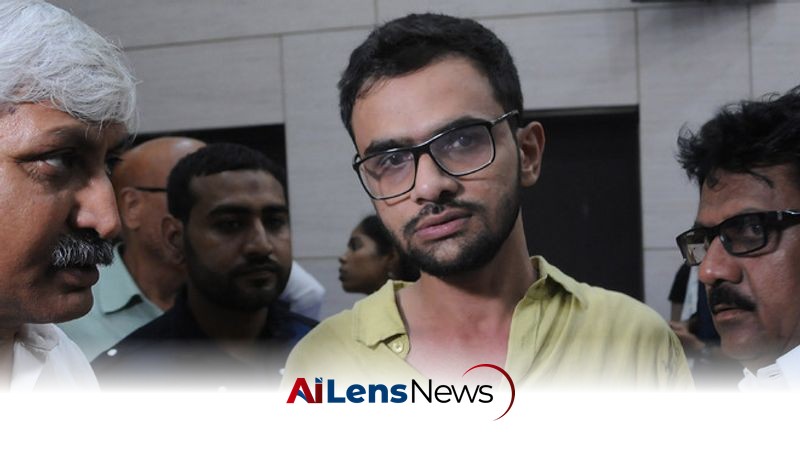


The Delhi High Court has issued a notice to the Delhi Police regarding Umar Khalid's third bail plea in the 2020 Delhi riots conspiracy case, marking a significant development in his ongoing legal battle.
New Delhi, India Aug 1, 2026 ALN: The legal battle surrounding former Jawaharlal Nehru University (JNU) scholar Umar Khalid's continued incarceration in connection with the 2020 Delhi riots conspiracy case has escalated. On Friday, the Delhi High Court took a pivotal step by issuing a notice to the Delhi Police regarding Khalid's third regular bail plea, along with a related application seeking interim bail.
Khalid, who has been in custody since September 2020, is facing serious charges under the Unlawful Activities (Prevention) Act (UAPA). The UAPA is a stringent law in India aimed at preventing unlawful activities associated with terrorism. It allows for extended detention without charge and has been criticized by various human rights organizations for its potential misuse against dissenters and activists. Khalid's legal team argues that the evidence against him is insufficient and that his continued detention is unjustified. The court's decision to seek a response from the police indicates a potential shift in the proceedings, as it highlights the judiciary's role in scrutinizing the grounds for Khalid's detention.
In previous hearings, Khalid's counsel has emphasized that the allegations are based on vague and unsubstantiated claims. They argue that the prosecution has failed to establish a direct link between Khalid and the alleged conspiracy to incite violence during the riots. The defense maintains that the charges are politically motivated and aimed at suppressing dissent against the government, particularly in the context of the protests against the Citizenship Amendment Act (CAA) that gripped the nation in late 2019 and early 2020.
The Delhi riots, which occurred in February 2020, resulted in significant loss of life and property, leading to widespread unrest in the national capital. The violence was primarily between the supporters of the CAA and those opposing it, leading to communal tensions that left at least 53 people dead and hundreds injured. The riots also saw extensive damage to property and businesses, exacerbating the already volatile atmosphere in the city. Khalid's case has garnered considerable media attention and public interest, with many viewing it as emblematic of broader issues concerning civil liberties and dissent in India.
The implications of Khalid's case extend beyond his personal circumstances; they touch upon the larger narrative of how dissent is treated in India. Critics argue that the government has increasingly resorted to draconian laws to silence opposition voices, particularly those who challenge its policies or ideology. Khalid's supporters view his detention as part of a systematic crackdown on activists, students, and intellectuals who engage in critical discourse about governance and policy.
As the court awaits the police's response, the outcome of this bail plea could have significant implications not only for Khalid but also for the ongoing discourse surrounding the treatment of dissenters and activists in the country. If the court grants bail, it could signal a judicial acknowledgment of the need for a more nuanced approach to cases involving allegations of terrorism and sedition, particularly in politically charged environments.
The next hearing is expected to delve deeper into the merits of the case, as both sides prepare to present their arguments. Khalid's supporters continue to rally for his release, asserting that his detention is politically motivated. There have been numerous protests and public demonstrations advocating for Khalid's release, with activists, students, and civil society groups highlighting the importance of protecting democratic freedoms and civil rights in India.
As the legal proceedings unfold, the spotlight remains on the judiciary's role in balancing state security concerns with individual rights, particularly in cases involving political dissent. The judiciary's decisions in such high-profile cases have the potential to set precedents that could either reinforce or challenge the current legal framework surrounding dissent and civil liberties in India.
Moreover, the case has implications for the broader political landscape in India. The current government has faced criticism for its handling of dissent and its approach to civil liberties. Khalid's case is one of several that have drawn attention to the treatment of activists and dissenters, igniting discussions about the health of democracy in India. Observers are keenly watching how the judiciary navigates these complex issues, as its rulings could influence public perception and trust in the legal system.
In conclusion, Umar Khalid's bail plea is not merely a legal matter; it encapsulates the tensions between state authority and individual rights, particularly in a democracy that prides itself on freedom of expression. As the Delhi High Court prepares to hear the case, the implications of its decision will resonate beyond the courtroom, affecting the lives of many and shaping the future of political dissent in India.
To understand the broader context of Khalid's situation, it is essential to recognize the events leading up to the 2020 Delhi riots. The Citizenship Amendment Act (CAA), passed in December 2019, aimed to provide a pathway to citizenship for non-Muslim refugees from neighboring countries. This legislation sparked widespread protests across India, with many viewing it as discriminatory and a violation of the secular principles enshrined in the Indian Constitution. The protests often escalated into confrontations between supporters and opponents of the CAA, culminating in the violence that erupted in February 2020.
Umar Khalid emerged as a vocal critic of the CAA and a prominent figure in the student-led protests. His activism, particularly at JNU, positioned him as a target for government scrutiny, especially during a time when dissent was increasingly being met with legal challenges and arrests under laws like the UAPA. Khalid's arrest and subsequent charges have raised alarm among civil rights advocates, who argue that the law is being used to stifle free speech and dissent.
The discussions surrounding Khalid's case also intersect with ongoing debates about the role of universities in political discourse. JNU, known for its leftist student politics, has been at the forefront of various movements advocating for social justice and human rights. The university's history of activism has made it a focal point for government criticism, and Khalid's case has further polarized opinions about the role of educational institutions in shaping political thought and action.
Furthermore, the international community has taken note of the situation in India regarding civil liberties and dissent. Human rights organizations and foreign governments have expressed concern over the treatment of activists like Khalid, calling for adherence to democratic norms and respect for individual rights. The implications of Khalid's case could extend beyond national borders, influencing how India is perceived globally concerning its commitment to human rights and democratic values.
In light of these developments, the Delhi High Court's decision on Khalid's bail plea will be closely scrutinized not only for its legal ramifications but also for its potential impact on the socio-political landscape in India. The case has become a litmus test for the judiciary's independence and its ability to uphold the rule of law in the face of political pressure. As the legal proceedings continue, the outcome may serve as a crucial indicator of the state of democracy and civil liberties in India, shaping the discourse around dissent and governance for years to come.
To learn more about the latest developments in Political Controversies, stay updated with our exclusive reports and analyses on AiLensNews.

