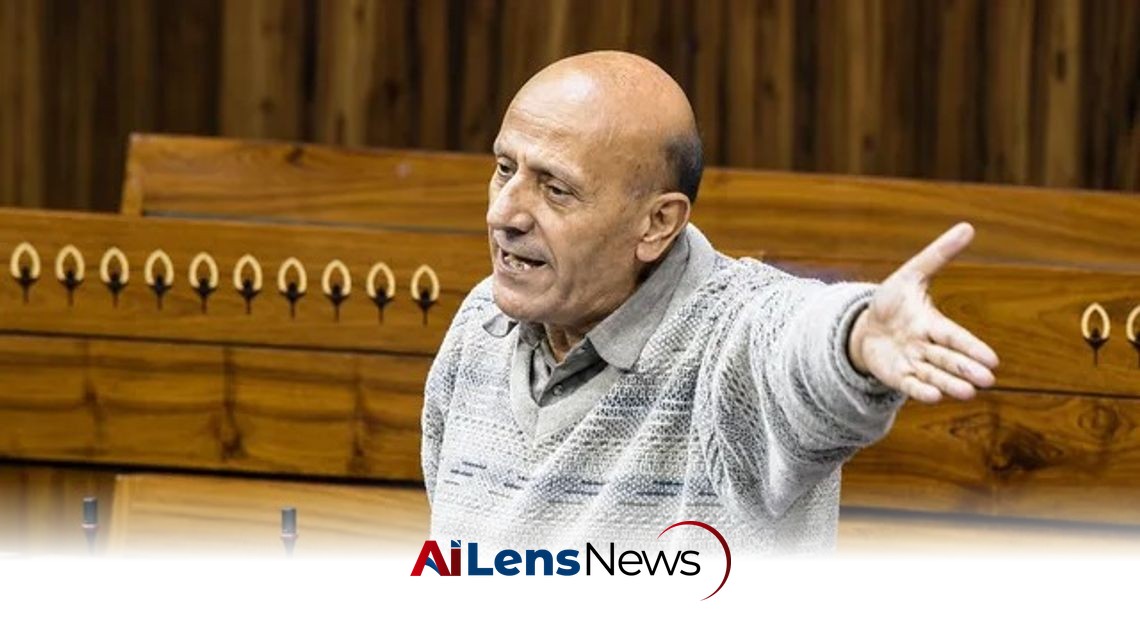


The Patiala House Court has permitted Baramulla MP Abdul Rashid Sheikh to attend the upcoming Parliament session in custody, amid ongoing legal proceedings against him.
New Delhi, India Jul 16, 2026 ALN: The Patiala House Court has granted permission to Baramulla MP Abdul Rashid Sheikh to attend the upcoming Parliament session while in custody. Sheikh is currently facing charges in a terror case filed by the National Investigation Agency (NIA). This decision raises significant questions regarding the intersection of legal proceedings, political responsibilities, and the rights of elected officials.
Special Judge Prashant Sharma approved the request after reviewing submissions from Sheikh's counsel and the NIA's representative. The court has allowed Sheikh to attend Parliament from July 20 to August 13, a period that is crucial for legislative business. This decision reflects the court's recognition of the importance of parliamentary duties, even for those facing serious legal challenges.
Jail authorities have been instructed to escort Sheikh to Parliament during session days and return him to jail afterward. This arrangement highlights the delicate balance that must be maintained between the enforcement of law and the functioning of democracy. Sheikh had filed an application for custody parole through his lawyer, Advocate Vikhyat Oberoi, seeking this permission, which underscores the procedural avenues available to individuals in custody who hold public office.
Special Public Prosecutor Gautam Khazanchi, representing the NIA, stated that the agency had no objections to Sheikh attending the sessions under custody. This lack of objection may indicate a broader understanding of the necessity for elected officials to engage in legislative processes, regardless of their legal circumstances. However, it also raises concerns about the implications of allowing individuals facing serious charges to participate in governance.
This is not the first instance where Sheikh has been allowed to attend Parliament while in custody. Previously, he was granted interim bail to attend his father's last rites. Such instances may reflect a precedent in the judicial system that allows for compassion in certain circumstances, but they also open discussions about the potential for perceived leniency towards those in political positions.
Sheikh has been in custody since his arrest in a case registered by the NIA in 2017, which included a supplementary charge sheet against him. The case against Sheikh is part of a broader crackdown on alleged terrorism financing and related activities, which the NIA has been actively pursuing in various regions of India. The agency's investigations have often highlighted the challenges of addressing terrorism while ensuring that due process is followed for individuals involved.
The political context surrounding Sheikh's case is also significant. As a Member of Parliament representing Baramulla, a region in Jammu and Kashmir, Sheikh's actions and legal battles are closely followed by both his constituents and the national media. His case has the potential to influence public perception of the NIA's operations and the Indian government's approach to handling terrorism-related cases in politically sensitive areas.
Furthermore, the implications of granting custody parole to a sitting MP extend beyond individual cases. It raises questions about the integrity of the legislative process and the potential influences that legal troubles could have on an elected official's decision-making capabilities. Critics may argue that allowing MPs with serious charges to participate in Parliament could undermine public trust in democratic institutions.
In addition, this ruling may set a precedent for future cases involving elected officials who are facing legal challenges. The judiciary's approach to balancing the rights of the accused with the need for accountability in governance will be closely monitored. Legal experts and political analysts may debate the ramifications of such decisions, particularly in terms of how they might affect the behavior of other lawmakers who find themselves in similar situations.
The case also highlights the ongoing tensions in Jammu and Kashmir, where political dynamics are heavily influenced by security concerns and the presence of various militant groups. Sheikh's political career and the charges against him are emblematic of the complex interplay between local governance, national security, and the fight against terrorism. As the situation evolves, the outcomes of Sheikh's case may have lasting impacts on the political landscape in the region.
Moreover, the decision to allow Sheikh to attend Parliament while in custody reflects broader societal attitudes towards crime and punishment, particularly in a political context. The balance between justice and the rights of individuals, especially those in positions of power, remains a contentious issue in many democracies. Observers will likely continue to scrutinize how such cases are handled and the precedents they set for future governance.
In conclusion, the Patiala House Court's decision to grant custody parole to MP Abdul Rashid Sheikh for the upcoming Parliament session raises important questions about the role of elected officials in the face of legal challenges. It underscores the need for a careful examination of the intersection between law and politics, as well as the implications of such rulings for the integrity of democratic institutions. As the Parliament session approaches, all eyes will be on Sheikh and the broader ramifications of his case for governance in India.
The implications of this ruling extend beyond the immediate circumstances of Sheikh's case. It opens a broader dialogue about the rights of elected officials who find themselves entangled in legal issues, particularly in contexts where their actions may be scrutinized under national security laws. The balance between maintaining a robust democratic process and ensuring accountability for those in positions of power is a delicate one, and this case serves as a critical reference point for future legal and political discussions.
Furthermore, the public's perception of judicial actions in politically sensitive cases can significantly influence trust in the legal system. The decision to allow Sheikh to attend Parliament may be viewed as a necessary accommodation for the functioning of democracy, but it also raises concerns about whether such allowances could be perceived as favoritism or leniency towards individuals in political office. The judicial system's credibility hinges on its ability to navigate these complex situations without compromising the principles of justice.
As the Parliament session approaches, the broader implications of Sheikh's case will likely be a topic of discussion among political analysts, legal experts, and the media. The outcomes of this case, alongside Sheikh's participation in the legislative process, may have lasting effects on public opinion regarding the NIA's role in counter-terrorism efforts, the treatment of elected officials facing serious charges, and the overall integrity of the political landscape in India.
To learn more about the latest developments in Political Controversies, stay updated with our exclusive reports and analyses on AiLensNews.

