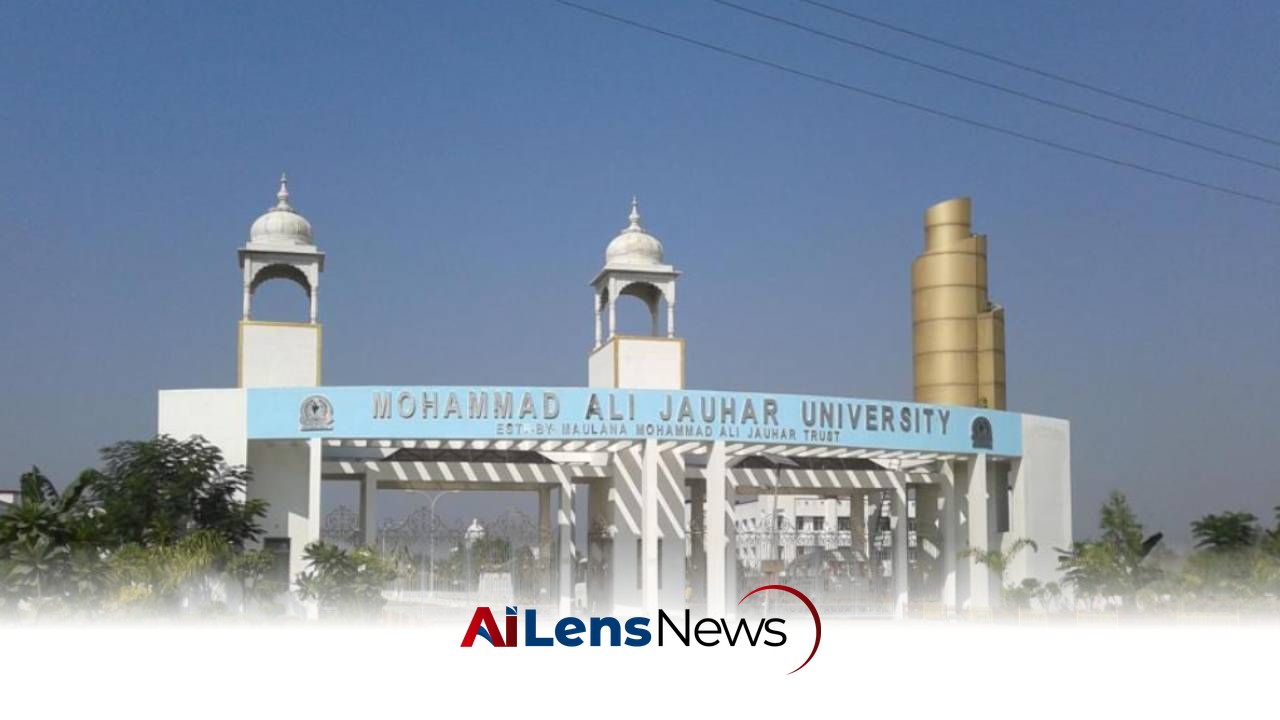


Maulana Arshad Madani criticizes the demolition of Rampur's Jauhar University, advocating for legal resolutions over political actions fueled by hatred.
New Delhi, India Jul 18, 2026 ALN: Lucknow: Jamiat Ulema-e-Hind president Maulana Arshad Madani has expressed strong opposition to the demolition of Rampur’s Jauhar University, stating that politics driven by hatred undermines the nation. Speaking at the Hindu-Muslim Ittehad Conference in Lucknow, he emphasized that if there are any irregularities, the government should impose penalties or take legal action rather than resorting to demolitions.
Madani described the proposal of “One Nation, One Election” as a political maneuver and insisted that disputes like the Gyanvapi issue should be resolved through a final court verdict. He warned that an atmosphere of hatred is being cultivated in the country, which could only be countered by fostering love and mutual respect among communities.
He remarked, “Communalism must be resisted collectively, and the country should unite for progress.” Madani pointed out that while Azam Khan is a political figure, the university is named after Maulana Mohammad Ali Jauhar, a significant contributor to the nation. He asserted that demolishing the university is unjustified, especially when it affects the future of thousands of students.
Jauhar University, established in 2006, is not just an educational institution but also a symbol of the aspirations of many students from marginalized communities. The university has been a center for higher education and research, attracting students from various backgrounds. The demolition, therefore, raises significant concerns regarding educational rights and access, particularly in a country where educational infrastructure is already under strain.
On the Gyanvapi dispute, he reiterated that if a negotiated settlement is not feasible, the courts should deliver a final judgment to resolve the matter. The Gyanvapi mosque-Kashi Vishwanath temple dispute has been a contentious issue in India, representing broader communal tensions that have historical roots. Madani criticized the political agenda behind the “One Nation, One Election” proposal, stating that it aims to deepen divisions between Hindus and Muslims, despite all religions advocating for love and humanity.
The proposal for “One Nation, One Election” has been a topic of considerable debate in India, suggesting that simultaneous elections for the Lok Sabha and state assemblies could streamline the electoral process and reduce the burden of frequent elections. However, critics argue that this could undermine the federal structure of the country and diminish the representation of regional issues, potentially marginalizing minority voices further.
Madani explained the essence of religious beliefs, noting that “Allahu Akbar” means “Allah is the Greatest,” while many regard “Om” as the supreme sacred sound. He stressed that respect for all faiths is crucial and should not lead to conflict. This perspective is essential in a diverse nation like India, where multiple religions coexist, and mutual respect is fundamental to maintaining peace and harmony.
He further clarified that Islam promotes love and compassion, urging people to read and understand the Quran, which he claims contains no messages of violence or hatred. This assertion challenges the misconceptions that often surround Islamic teachings, especially in the context of contemporary global narratives that link Islam with extremism. Madani noted that this understanding is drawing many towards Islam globally, highlighting the importance of education and dialogue in combating stereotypes.
Addressing the issue of repeated exam paper leaks, he emphasized that the government must prioritize students' futures, as these leaks adversely affect millions. The integrity of the examination system is crucial for maintaining trust in educational institutions, and repeated incidents of paper leaks can undermine the value of academic qualifications. This issue has garnered significant attention in recent years, with calls for reforms to ensure transparency and accountability in the education sector.
On the topic of making “Vande Mataram” compulsory, he stated that the Constitution guarantees every citizen the right to practice their religion, and this principle should be upheld. The debate around “Vande Mataram,” a song that has been associated with the Indian independence movement, reflects broader discussions about nationalism and identity in contemporary India. While many view it as a patriotic anthem, others see its compulsory recitation as an infringement on religious freedoms, particularly among certain communities.
Madani concluded by stating that neither he nor his organization engages in electoral politics, focusing instead on spreading messages of love, harmony, and national unity. This stance highlights a significant aspect of the Jamiat Ulema-e-Hind's mission, which aims to promote social justice and inter-community dialogue rather than partisan political engagement. In a time marked by political polarization, such efforts are crucial for fostering a sense of unity among diverse groups in India.
The remarks made by Madani resonate within a larger context of communal relations in India, where political narratives often exploit religious sentiments for electoral gains. The need for dialogue, understanding, and cooperation among different communities is more pressing than ever, especially in light of rising tensions and the challenges posed by divisive politics.
In conclusion, the demolition of Jauhar University and the surrounding political discourse encapsulate the broader challenges facing Indian society today. As various stakeholders navigate these complex issues, the emphasis on unity, respect for diversity, and commitment to justice will be pivotal in shaping the future of communal harmony in the country.
The demolition of educational institutions, particularly those that serve marginalized communities, raises critical questions about the government's priorities and its commitment to the right to education. Jauhar University has been a beacon of hope for many students who aspire to improve their circumstances through education. The loss of such an institution could have long-lasting implications for the community it serves, potentially hindering the educational and professional prospects of countless individuals.
Furthermore, the political implications of the demolition cannot be overlooked. The act has the potential to exacerbate existing communal tensions and create a divisive atmosphere that could lead to further unrest. Critics argue that such actions are often politically motivated, aimed at consolidating power among certain groups while marginalizing others. This situation calls for a careful examination of the motivations behind such demolitions and the broader socio-political context in which they occur.
As India continues to grapple with issues of identity, nationalism, and communal harmony, the voices of leaders like Maulana Arshad Madani become increasingly important. Their calls for unity and understanding serve as a reminder of the need for a collective effort to build a more inclusive society. The emphasis on love, respect, and mutual understanding among different communities is essential for overcoming the challenges posed by divisive politics and fostering a sense of belonging for all citizens.
In this regard, the role of educational institutions extends beyond mere academic instruction. They serve as platforms for dialogue, understanding, and the exchange of ideas among diverse groups. The preservation of such institutions is crucial for promoting social cohesion and mitigating the impact of communal tensions. As stakeholders in education, government officials, community leaders, and citizens must work together to ensure that the right to education is upheld and that all individuals have access to the opportunities necessary for personal and communal growth.
Ultimately, the path forward requires a commitment to justice, equality, and respect for diversity. The demolition of Jauhar University serves as a painful reminder of the challenges that lie ahead, but it also presents an opportunity for reflection and action. By fostering a culture of dialogue and cooperation, India can move towards a future where every citizen, regardless of their background, has the opportunity to thrive and contribute to the nation's progress.
To learn more about the latest developments in Political Controversies, stay updated with our exclusive reports and analyses on AiLensNews.

