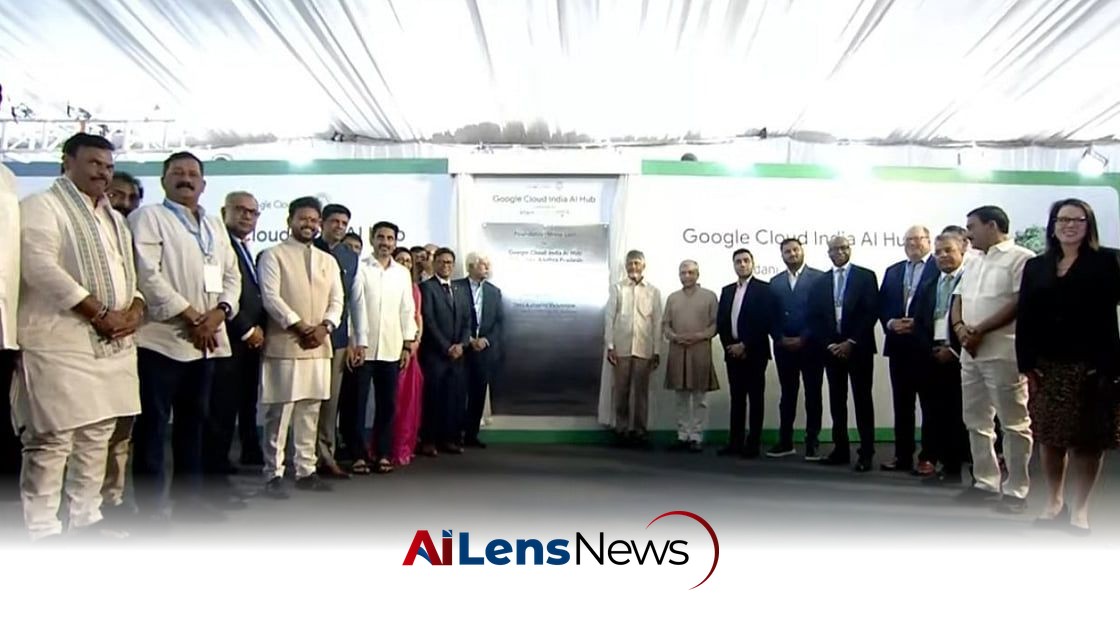


Singer Chinmayi's tweet about the Simhachalam temple land allotment for a Google-Adani data centre ignites debate over environmental concerns and government transparency.
New Delhi, India Jul 13, 2026 ALN: Follow TNM's WhatsApp channel for news updates and story links.
A tweet by singer Chinmayi flagging the allotment of Simhachalam temple land for a Google-Adani data centre project has triggered a public exchange on X involving the Telugu Desam Party's digital wing and the Human Rights Forum (HRF), reigniting scrutiny of the Andhra Pradesh government's hyperscale data centre push near Visakhapatnam.
Chinmayi shared a Frontline article criticising the state government's decision to allot Simhachalam hill lands — considered sacred as the site of a prominent Vaishnavite shrine — for one of three Google-Adani AI data centres planned near Vizag. Her post questioned whether the temple link would finally shift public opinion against the project, noting what she called official indifference to environmental costs.
The controversy surrounding the data centre project is set against a broader backdrop of rapid technological advancement and the increasing demand for data storage and processing capabilities. As businesses and governments worldwide continue to digitize operations, the need for hyperscale data centres, which can process vast amounts of data at high speeds, has surged. This trend is particularly evident in India, where a growing digital economy and a large population of internet users have led to an unprecedented demand for data services.
According to reports, 160 acres owned by Sri Varaha Lakshmi Narasimha Swamy Devasthanam at Simhachalam were allotted for the project by the Andhra Pradesh Industrial Infrastructure Corporation (APIIC), the state's industrial infrastructure agency in April 2026. It was then leased to Vizag Hyperscale Data Centre Park Ltd, a special purpose vehicle owned by Adani Infra (India) Ltd — a partner of Raiden Infotech India Pvt Ltd, the Google subsidiary collaborating with Adani on the data centre projects. The Adani Group, a multinational conglomerate involved in various sectors including energy, resources, logistics, agribusiness, real estate, financial services, and defense, has been expanding its footprint in the technology sector, particularly in data infrastructure.
The Andhra Pradesh High Court has since sought explanations from the state government, APIIC, and statutory bodies including the State Environment Impact Authority (SEIAA), after admitting a public interest litigation filed by environmentalist Bolisetty Satyanarayana, who is seeking cancellation of the allotment on grounds that transferring endowment land to a private company was illegal. This legal challenge underscores the tensions between economic development initiatives and environmental conservation, a theme that resonates across many regions in India where land use policies are increasingly contested.
The handle, TDP's official digital wing handle, responded directly to Chinmayi, thanking her for "caring about Andhra's soil" but accusing her of "selective environmentalism" for opposing data centres while using platforms that run on them. This accusation highlights a common critique of environmental advocates who may utilize technology that contributes to environmental degradation while simultaneously calling for its protection.
In a longer follow-up thread, iTDP argued the land was leased, not sold, and that "the sanctity of the temple remains completely untouched and sovereign", with all legal questions resting with the court. The argument made by iTDP reflects a broader narrative often employed by governments and corporations that emphasize the economic benefits of such projects, framing them as necessary for progress and development. They contended that the project would help reverse a generational talent drain to Bengaluru and Hyderabad, cities that have become major technology hubs in India, thus retaining local talent and fostering economic growth in Andhra Pradesh.
Defending the state's water and energy plans, the iTDP claimed Andhra was pursuing "a sustainable 6.5 GW scale" against over 10 GW of corporate interest, calling this "restraint" rather than indifference. This claim is significant as the allocation of resources for energy generation is a critical issue in regions where rapid industrialization is occurring. The balance between sustainable development and meeting the demands of a growing economy remains a contentious topic.
Rohith Gutta of the Human Rights Forum pushed back on the rebuttal, arguing it erased environmental and community costs from what he called a "progress" narrative, and accused the government of withholding transparency on its green power and water plans while offering rhetoric instead of public hearings. The call for transparency is crucial in the context of large-scale projects that have the potential to significantly impact local communities and ecosystems. Gutta's remarks reflect a growing sentiment among activists who demand more accountability from government and corporate entities in decision-making processes that affect public resources and environmental health.
"You can't take the environment and people out of the equation and call it progress," HRF said. This statement encapsulates a fundamental critique of development paradigms that prioritize economic growth over ecological sustainability and social welfare. The implications of such development strategies can lead to long-term environmental degradation, displacement of communities, and loss of cultural heritage, particularly in regions with significant historical and spiritual sites.
HRF cited company-submitted documents to claim the three Google-Adani sites would together generate a permanent workforce of only 1,725, questioning Rs 23,000 crore in subsidies for that number of jobs. This figure raises concerns about the cost-effectiveness of large-scale subsidies provided by the government to attract investment, especially when the anticipated job creation does not align with the financial incentives offered. Critics argue that such subsidies could be better allocated to sectors that generate more substantial employment opportunities or that address pressing social issues.
It also disputed iTDP's characterization of Godavari water flowing into the sea as "waste," calling it basic hydrology, and said the Polavaram project was built for irrigation and drinking water — not data centres — at the cost of tribal displacement. The mention of the Polavaram project highlights the complexities involved in water management in the region, where competing demands for agricultural, industrial, and domestic water use can lead to conflicts and environmental strain. The displacement of tribal communities as a result of such projects raises ethical questions about the social costs of development and the need for inclusive planning that respects the rights and livelihoods of marginalized populations.
On the Simhachalam site specifically, HRF said: "Data Centers do not create 'livelihoods, skills, and a future'. They do the opposite... The Data Center site at Simhachalam actually is on the catchment of Mudasarlova Reservoir and next to the Kambalakonda Wildlife Sanctuary." This assertion points to the environmental implications of situating data centres in ecologically sensitive areas. The proximity to a reservoir and wildlife sanctuary raises concerns about potential impacts on water resources and local biodiversity, which are critical for maintaining ecological balance and supporting community livelihoods. As the debate continues, it underscores the necessity for a comprehensive assessment of the long-term consequences of such projects, not just in terms of economic viability but also environmental sustainability and social equity.
To learn more about the latest developments in Political Controversies, stay updated with our exclusive reports and analyses on AiLensNews.

