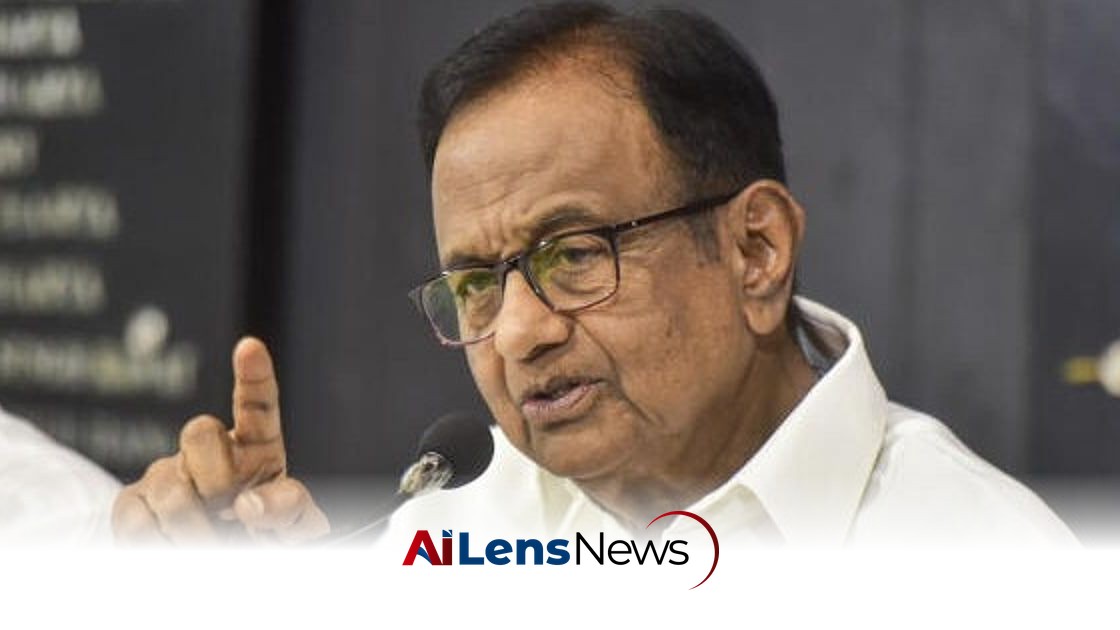



Congress leader P Chidambaram responds to PM Modi's 'dimagi naxal' comment, asserting his pride in the label amidst a warning about ideological threats.
New Delhi, India Aug 16, 2026 ALN: New Delhi: Senior Congress leader P Chidambaram has taken a bold stance against Prime Minister Narendra Modi's recent comments, declaring, "I am proud to be a dimagi naxal." This remark came in response to Modi's warning about the so-called 'dimagi naxals' who allegedly manipulate policies and pose a threat to societal stability. The term 'dimagi naxal' is used pejoratively to describe individuals who are perceived to have extremist ideological beliefs, particularly those aligned with leftist or Maoist ideologies, but who engage in intellectual or political discourse rather than armed rebellion.
During his address from the Red Fort on the occasion of the 80th Independence Day, Modi highlighted the need for citizens to "identify and isolate" these ideological supporters of violence and anarchy. He noted that while armed Naxalism has been largely eradicated from the forests, its ideological roots remain entrenched within the system, suggesting that the influence of such ideologies can still be felt in urban and political spheres. This statement reflects a growing concern among various political factions about the persistence of radical ideologies in contemporary India.
Chidambaram's retort on social media was a direct challenge to Modi's assertions. The Prime Minister had previously stated that individuals with a Maoist mindset had infiltrated corridors of power, influencing public policy and serving as advisers on government committees. This accusation implies that there are elements within the government and political institutions that may be sympathetic to or influenced by extremist ideologies, raising questions about the integrity and direction of policy-making in the country.
Modi emphasized the importance of vigilance against this ideological threat, citing the devastating impact of Naxalism and Maoist violence on the lives of millions. He mentioned that over 3,500 police and security personnel have lost their lives in the conflict, a toll that surpasses military casualties in wars. This statistic serves to underscore the severity of the issue, framing it not merely as a political challenge but as a significant humanitarian crisis that has affected countless families across the nation.
"Naxalism held a very large part of India and a huge population in its grip, at gunpoint," Modi remarked, underscoring the urgency of addressing this issue. The Prime Minister's rhetoric is part of a broader narrative that seeks to portray his government as being tough on internal security threats, which has been a cornerstone of his administration’s policy since he took office in 2014.
In his address, the Prime Minister reiterated his government's commitment to ending Naxalism, which he has prioritized since taking office in 2014. He lamented the decades of violence that have devastated families and futures, stating, "Naxalism and Maoism have destroyed the future of millions of young people. They have taken away the sons of countless mothers, ruined families, and shattered the dreams of parents." This emotional appeal aims to resonate with the public’s sentiments regarding safety and security, portraying the government as a protector of citizens against violent extremism.
Modi expressed satisfaction with the progress made in combating Naxalite and Maoist violence, highlighting areas once plagued by bloodshed now flourishing under development and trust. This assertion of progress aims to bolster the government's image, suggesting that its policies are effective and that the situation is improving, despite ongoing challenges in certain regions of the country where Naxalism remains a concern.
Chidambaram's assertion of pride in being labeled a 'dimagi naxal' reflects a broader political discourse, challenging the narrative set forth by the Prime Minister and advocating for a more nuanced understanding of ideological differences. His comments can be seen as an attempt to reclaim the narrative around leftist ideologies and to highlight the importance of intellectual discourse in political debate. Chidambaram's response also indicates a willingness to engage in a dialogue about the ideological underpinnings of policies rather than dismiss them outright as extremist or dangerous.
This exchange between Modi and Chidambaram highlights the polarization in Indian politics, where ideological labels are often weaponized in political discourse. The term 'Naxal' itself carries significant historical weight, originating from a peasant uprising in West Bengal in the 1960s and evolving into a broader movement associated with Maoist ideologies. The legacy of Naxalism is complex, with roots in socio-economic disparities, agrarian distress, and a perceived lack of government accountability in rural areas.
As the political landscape continues to evolve, the implications of such labels and the framing of ideological battles will play a crucial role in shaping public opinion and policy direction. The discourse surrounding Naxalism and its ideological counterparts is not merely a political tactic; it reflects deeper issues within Indian society, including poverty, governance, and the quest for justice and equality. The challenge for leaders like Modi and Chidambaram will be to address these underlying issues while navigating the treacherous waters of political rhetoric and public sentiment.
To learn more about the latest developments in Political Controversies, stay updated with our exclusive reports and analyses on AILensNews.

