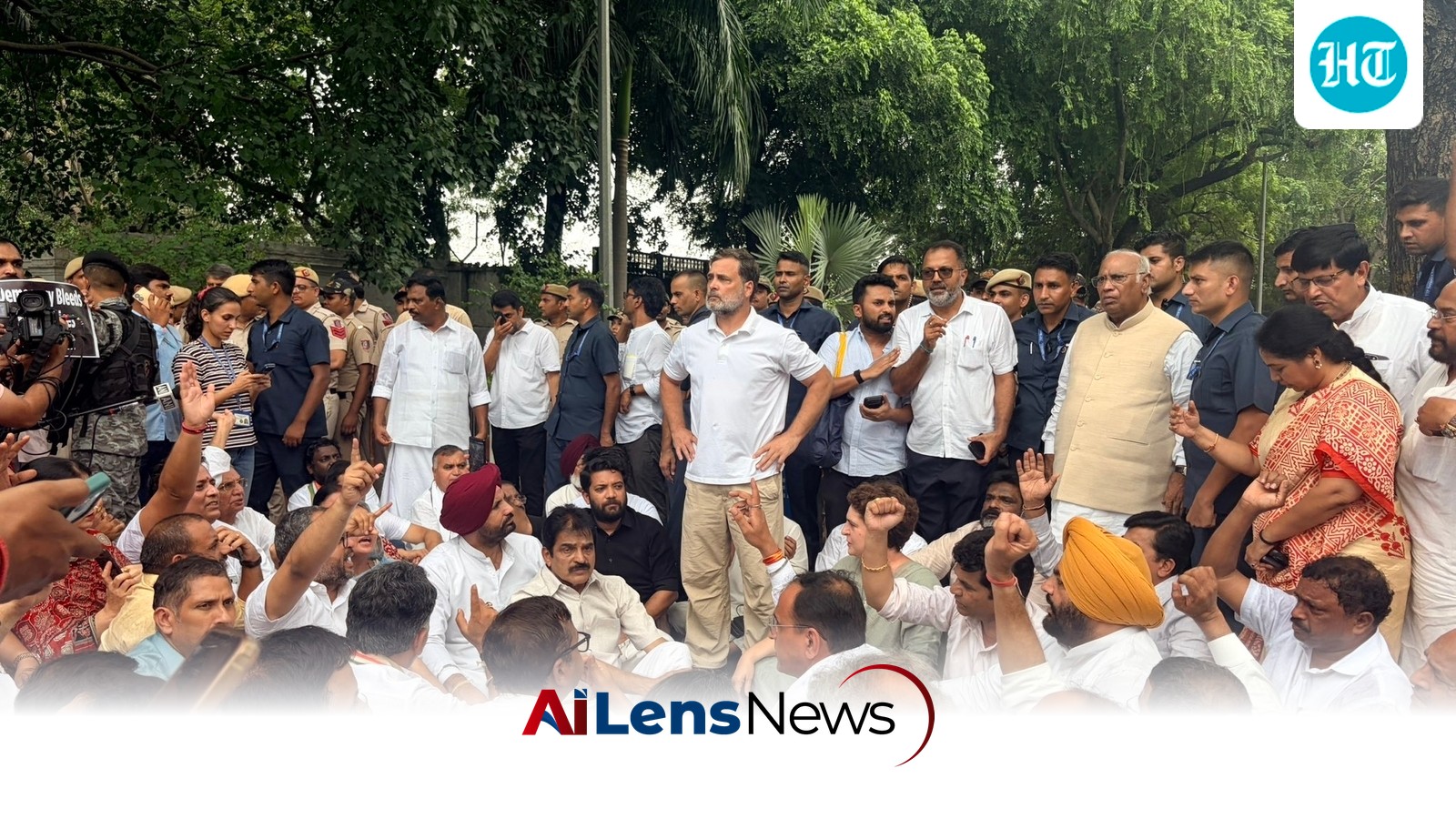


Rahul Gandhi's march to PM Modi's house highlights government accountability issues following police action against student protesters.
Chandigarh, India Jul 21, 2026 ALN: The recent protest led by Rahul Gandhi, the Leader of Opposition and prominent figure within the Indian National Congress party, has drawn significant attention to ongoing tensions between the government and student activists in India. The protest took place outside the official residence of Prime Minister Narendra Modi at 7, Lok Kalyan Marg, in New Delhi, and was a direct response to police actions against a student march organized by the Cockroach Janata Party (CJP) the previous day. This incident has sparked a broader discussion about the state of education in India and the government's accountability regarding its handling of student grievances.
On Tuesday, following the protest, Jitendra Singh, Union Minister of State in the Prime Minister's Office (PMO), engaged with Gandhi and indicated the government's readiness to discuss education-related issues in Parliament. The timing of this dialogue is crucial, as it coincides with the ongoing Monsoon Session of Parliament, a period typically marked by heightened political activity and debate on pressing national issues. However, the Congress party remains steadfast in its demand for the resignation of Education Minister Dharmendra Pradhan, as well as calls for the resignations of Prime Minister Modi and Home Minister Amit Shah, citing their responsibility for the police's aggressive response to student protests.
In a post on social media platform X, Gandhi expressed the rationale behind the protest, stating, "We have marched to PM Modi’s house to demand answers from him for the brutalities against young students yesterday. The Government doesn’t want to take any accountability nor does it want to have a debate on it in Parliament. PM and HM must resign for destroying the future of India’s youth." This statement encapsulates the frustrations of many students and activists who feel marginalized and unheard by the current administration.
The protest was not only a demonstration of solidarity with the students but also a strategic move to bring attention to the broader issues within the education system in India. The clashes that occurred during the CJP's 'Chalo Sansad' march, which resulted in injuries to several protesters, have intensified the scrutiny on the government's approach to handling dissent and dialogue regarding educational reforms. Gandhi's assertion that the education system is "broken" reflects a sentiment that has been echoed by numerous stakeholders, including students, educators, and policymakers who advocate for systemic change.
During the protest, Congress MPs, including party president Mallikarjun Kharge and general secretaries Priyanka Gandhi Vadra and KC Venugopal, joined Gandhi in voicing their concerns. This marked a significant moment for the party, as it was the first time Gandhi had led such a demonstration directly outside the residence of the Prime Minister. The decision to move the protest to the PM's house came after the Lok Sabha speaker did not allow the opposition to address these critical issues in Parliament, prompting Gandhi to take more direct action.
In the wake of the protest, Minister of State in the PMO, Jitendra Singh, approached Gandhi in an attempt to de-escalate the situation and urged him to end the demonstration. This encounter highlights the government's recognition of the need to engage with opposition leaders and address the growing unrest among students and activists.
In his remarks to the media before the protest, Gandhi accused the central government of using police force to suppress legitimate concerns raised by students. He articulated the frustrations surrounding the education and testing systems, which many believe have been compromised under the current administration. His comments reflect a broader critique that has been growing among students and educational advocates, who argue that the integrity of educational institutions is at stake.
Gandhi characterized the police response to the protests as “un-Indian,” emphasizing that young people deserve better treatment and opportunities. He articulated a sense of urgency regarding the future of India’s youth, stating, "The point is this is no way to treat the young people of this country. The young people of this country do not have opportunities; all the doors are closed; one door is open for competitive exams, which is also destroyed." This statement underscores the desperation felt by many students who see their futures jeopardized by systemic failures in education.
Furthermore, Gandhi accused the ruling Bharatiya Janata Party (BJP) of prioritizing the interests of industrialists over those of students, arguing that the education system has been unduly influenced by the Rashtriya Swayamsevak Sangh (RSS), the ideological parent of the BJP. This claim speaks to a larger narrative of political influence in educational policies and practices, raising questions about the autonomy of educational institutions in India.
After addressing the media, Gandhi, along with Priyanka Gandhi Vadra and KC Venugopal, visited Ram Manohar Lohia Hospital to meet with students who were injured during the protests. This act of solidarity further emphasizes the Congress party's commitment to standing with the student community and advocating for their rights.
In parallel to the Congress protest, the CJP has been actively voicing its demands for accountability and reform. Representatives from the CJP, Saurav Das and Ashutosh Ranka, met with Union Health Minister JP Nadda to formally present their demands following the protests. The dismantling of protest infrastructure at Jantar Mantar after the clashes signifies the government's ongoing efforts to maintain order in the capital, while prohibitory orders limiting gatherings in parts of central Delhi remain in effect.
Despite these challenges, CJP founder Abhijeet Dipke has continued his sit-in at Jantar Mantar, affirming the organization's commitment to the cause until Education Minister Pradhan resigns. This steadfastness reflects a broader trend of activism among student groups and civil society organizations advocating for educational reform and accountability from the government.
Adding another layer to the ongoing protests, climate activist and education reformer Sonam Wangchuk has been on a hunger strike at Safdarjung Hospital. Wangchuk, who was taken into custody by Delhi Police on July 18, has been drawing attention to issues within the education system and the need for urgent reforms. Recent health bulletins indicate that while he is receiving some medical support, he continues to decline intravenous fluids and glucose administration, raising concerns about his well-being.
Wangchuk's hunger strike and the circumstances surrounding it have further galvanized support for the student movement, highlighting the lengths to which activists are willing to go to draw attention to their cause. The convergence of these various protests and actions reflects a growing discontent among students and activists regarding the current state of education in India and the perceived lack of responsiveness from the government.
As the political landscape continues to evolve in the wake of these protests, the implications for the education system and the broader political discourse in India remain significant. The ongoing dialogue between the government and opposition, as well as the activism from student groups, will likely shape the future of educational policies and the relationship between the state and its citizens.
The events surrounding the protests serve as a reminder of the importance of accountability and dialogue in governance, particularly concerning issues that directly impact the lives and futures of young people in India. As the government prepares for discussions in Parliament, the outcome of these conversations will be closely watched by students, educators, and political observers alike.
To learn more about the latest developments in Political Controversies, stay updated with our exclusive reports and analyses on AiLensNews.

