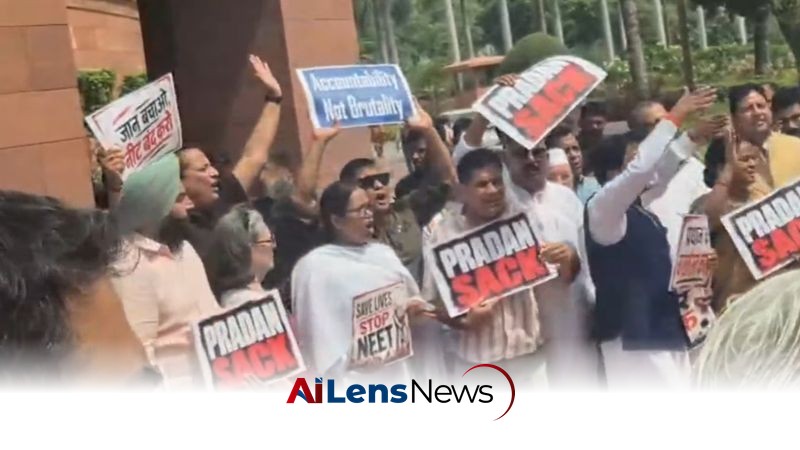


In a heated exchange outside Parliament, MPs from the NDA and opposition INDIA bloc confronted each other over the paper leak controversy, escalating tensions amid ongoing protests.
Chandigarh, India Jul 23, 2026 ALN: In a dramatic scene outside Parliament today, Members of Parliament (MPs) from both the ruling National Democratic Alliance (NDA) and the opposition INDIA bloc clashed vocally over the contentious issue of a recent paper leak. The confrontation intensified as slogans of "Isteefa do" (Resign now) and "Vande Mataram" echoed through the air, reflecting the rising tensions surrounding the ongoing agitation led by the Central Joint Platform (CJP).
The protests, which have gained momentum in recent days, were primarily focused on allegations of corruption and mismanagement related to the paper leak incident. As MPs gathered, the atmosphere became charged with emotions, leading to a standoff between the two factions.
The paper leak issue has been a significant point of contention in recent parliamentary sessions, with the opposition demanding accountability and transparency from the government. The INDIA bloc, comprising various opposition parties, has been vocal in its criticism, calling for the resignation of officials implicated in the scandal. This incident has not only raised questions about the integrity of the examination system but has also sparked wider discussions about governance and the ethical responsibilities of public officials.
Historically, paper leaks in India have led to widespread outrage, particularly among students and aspirants who view such incidents as a betrayal of their efforts and aspirations. The current situation is no different, as it has highlighted systemic issues within the examination process and raised concerns about the effectiveness of regulatory bodies tasked with maintaining the integrity of academic assessments. The CJP's involvement indicates that the protests are not merely political but have grassroots support from various civil society groups advocating for educational reform.
In recent years, India has witnessed numerous instances of paper leaks across various competitive examinations, including those for government jobs and educational institutions. These incidents have often resulted in mass protests, with students demanding stringent action against those responsible and calling for reforms to ensure transparency in the examination process. The recurring nature of these leaks has led to a growing distrust among the youth towards the systems in place, further exacerbating the already tense relationship between the government and its constituents.
As the protests unfolded, several prominent leaders from both sides took to the forefront. Opposition leaders accused the government of failing to address the concerns of the public and demanded immediate action against those responsible for the leak. They argued that the government's inaction signals a lack of accountability and a disregard for the rule of law, which could have long-term implications for public trust in governmental institutions.
On the other hand, NDA MPs defended their stance, emphasizing the need for stability and governance amid the ongoing protests. They argued that the opposition was using the situation for political gain rather than seeking genuine solutions. This perspective underscores a common narrative within the ruling party that opposition factions often exploit crises to undermine the government, diverting attention from their own shortcomings.
The clash of ideologies between the two factions has not only heightened tensions within the Parliament but has also spilled over into public discourse, with citizens engaging in heated debates over social media platforms. The dialogue reflects deep-seated frustrations with the political system, as many citizens feel that their voices are not being heard amidst the political maneuvering.
The public's reaction to the protests has been mixed, with many expressing frustration over the ongoing political turmoil. Citizens have taken to social media to voice their opinions, with some supporting the demands for accountability, while others call for an end to the disruptions in Parliament. This division in public sentiment illustrates the complex landscape of Indian politics, where issues of corruption and governance often intersect with broader societal concerns about stability and progress.
Additionally, the media coverage of the protests has played a significant role in shaping public perception. The portrayal of the opposition's demands for accountability versus the ruling party's calls for calm and governance has created a narrative that reflects the polarized nature of contemporary Indian politics. This situation has led to calls for reform not only within the examination system but also within the political framework that governs such processes.
Furthermore, the protests have resonated with a larger audience beyond the immediate stakeholders. Many citizens, especially students and young professionals, have expressed solidarity with the protesters, seeing their struggle as emblematic of broader issues related to educational fairness and access to opportunities. The emotional weight of the protests has prompted discussions about the future of governance and the role of public institutions in safeguarding the interests of the populace.
The clash between the NDA and INDIA bloc MPs highlights the deepening political divide in the country. As the paper leak controversy continues to unfold, it remains to be seen how the government will respond to the mounting pressure from the opposition and the public. The implications of this situation extend beyond the immediate crisis; they could influence future legislative sessions and impact the government's ability to implement policies effectively.
Moreover, the ongoing protests could serve as a catalyst for broader discussions about educational reforms in India. The examination system has long been criticized for its opacity and susceptibility to corruption. If the current protests lead to meaningful changes, it may set a precedent for how similar issues are addressed in the future, potentially reshaping the relationship between the government, educational institutions, and the public.
As the discourse around governance evolves, there is also a pressing need for the government to engage with civil society and student groups to address their concerns. The role of educational institutions in fostering transparency and accountability cannot be overstated, and collaborative efforts could lead to significant reforms that benefit all stakeholders.
In conclusion, the paper leak controversy has not only exposed vulnerabilities within the examination system but has also underscored the broader issues of governance and accountability in India. The ongoing tensions between the NDA and INDIA bloc MPs reflect a critical moment in the country's political discourse, one that could have lasting repercussions for how governance is perceived and enacted in the future. As the public watches closely, the actions taken by both the government and opposition in the coming days will be pivotal in shaping the narrative surrounding this issue.
Ultimately, the resolution of this controversy may depend on the willingness of all parties involved to engage in constructive dialogue and seek common ground. The future of educational integrity and public trust in governance hinges on the outcomes of these discussions, making it imperative for leaders to prioritize the needs of the citizens they represent.
To learn more about the latest developments in Political Controversies, stay updated with our exclusive reports and analyses on AiLensNews.

