

The opposition parties criticize the government's intolerance towards peaceful protests, following the removal of activist Wangchuk from Jantar Mantar.
Chandigarh, India Jul 19, 2026 ALN: The political landscape in India is witnessing heightened tensions as opposition parties have come together to condemn the government's recent actions against peaceful dissent. This comes in the wake of the removal of activist Wangchuk from Jantar Mantar, a site historically associated with protests and demonstrations. The incident has sparked widespread debate about the right to protest and the government's increasing efforts to control public discourse.
Wangchuk, a well-known figure in the realm of environmental activism and educational reform, has been a vocal advocate for sustainable practices and reforms in India’s education system. His removal from Jantar Mantar during a peaceful protest has raised alarm bells among civil rights advocates and political leaders alike. The site itself, Jantar Mantar, holds historical significance as a hub for various movements, where citizens have gathered to voice their concerns and demand accountability from the government. The recent events have led many to question the current administration’s stance on civil liberties and the right to peaceful assembly.
Rahul Gandhi, a prominent leader of the Indian National Congress, voiced strong criticism against the BJP-led government, stating that it is increasingly unwilling to tolerate peaceful dissent. He emphasized that the suppression of voices advocating for change undermines the very foundation of democracy. Gandhi's remarks reflect a growing sentiment among opposition leaders who believe that the government's actions are not only unjust but also indicative of a broader trend of authoritarianism. His call for unity among opposition parties is a strategic move aimed at galvanizing support against what they perceive to be a systematic erosion of democratic values.
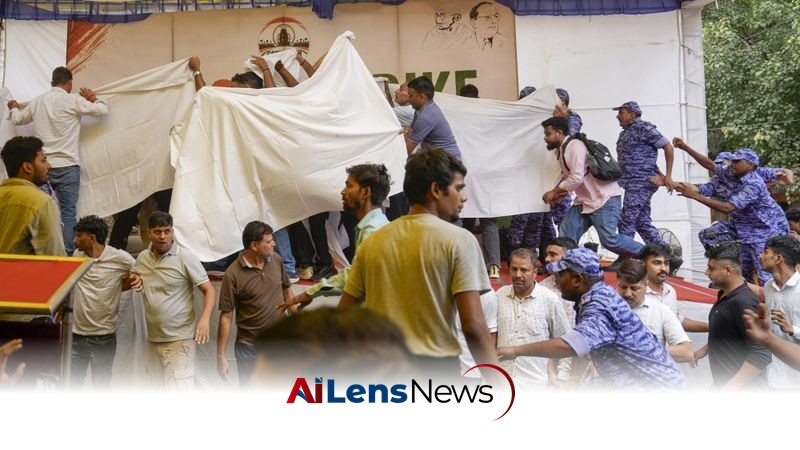
The events leading to Wangchuk's removal from Jantar Mantar unfolded during a protest that aimed to raise awareness about environmental degradation and demand policy changes from the government. Eyewitnesses described a chaotic scene as police intervened, leading to a confrontation between the activists and law enforcement. The police's actions have been characterized as heavy-handed, with many observers noting that the use of force against peaceful demonstrators raises serious ethical questions about the treatment of dissent in India.
Historically, Jantar Mantar has been a site of significant protests, including movements for social justice, anti-corruption campaigns, and various human rights issues. The removal of Wangchuk is not an isolated incident but part of a larger pattern where activists and ordinary citizens face increasing scrutiny and repression when they attempt to express their views publicly. This trend has been noted by various human rights organizations, which have documented instances of police violence and intimidation against protesters across the country.
The opposition has rallied around the incident, with various leaders expressing their outrage. They argue that such actions are indicative of a broader trend of silencing dissenting voices in the country. Opposition parties, including the Trinamool Congress, the Aam Aadmi Party, and others, have condemned the government's actions, calling for a united front to protect the rights of citizens to peacefully assemble and express their views. This coalition of opposition voices reflects a growing concern about the implications of government policies on civil liberties.
In addition to vocal support from party leaders, grassroots movements have also mobilized in response to the incident. Activists and citizens are organizing rallies and discussions to highlight the importance of protecting democratic rights. The opposition’s strategy appears to be focused on framing the government’s actions as part of a larger narrative of repression, which they intend to use in upcoming political campaigns.
This incident raises significant questions about the state of democracy in India. Critics argue that the government's approach to dissent is becoming increasingly authoritarian, stifling the voices of those who challenge the status quo. The opposition is likely to leverage this incident in upcoming political campaigns, framing it as a violation of fundamental rights. The implications for the ruling party could be severe, as public sentiment shifts towards a demand for greater accountability and transparency in governance.
Furthermore, the incident could have ripple effects beyond immediate political ramifications. It may embolden other activists and citizens to speak out against perceived injustices, potentially leading to a resurgence of activism across various sectors of society. The role of social media in this context cannot be understated, as platforms have become critical tools for mobilizing public opinion and organizing protests.
Social media has erupted with reactions from citizens, many expressing solidarity with Wangchuk and condemning the government's actions. Hashtags related to the incident have trended, reflecting a growing concern among the public regarding the state of civil liberties in the country. The online discourse has highlighted the divide between government narratives and public sentiment, with many users calling for an end to the repression of dissent.
The public reaction is indicative of a larger societal frustration with the perceived authoritarian tendencies of the government. Many citizens are voicing their fears that the right to protest is under threat, which could have long-term consequences for democratic engagement in India. The incident has also prompted discussions about the role of law enforcement in a democracy and the ethical obligations of police to protect rather than suppress peaceful assembly.
The removal of Wangchuk from Jantar Mantar serves as a flashpoint in the ongoing struggle for peaceful dissent in India. As opposition parties unite against what they perceive as governmental overreach, the implications for democracy and civil rights remain a critical topic of discussion. The incident underscores the need for vigilance in protecting democratic freedoms, as well as the importance of public engagement in holding the government accountable.
As the political landscape continues to evolve, the response from both the government and the public will shape the future of dissent and activism in India. The events at Jantar Mantar may well become a pivotal moment in the ongoing discourse about civil liberties, setting the stage for future confrontations between the state and its citizens.
To learn more about the latest developments in Political Controversies, stay updated with our exclusive reports and analyses on AiLensNews.

