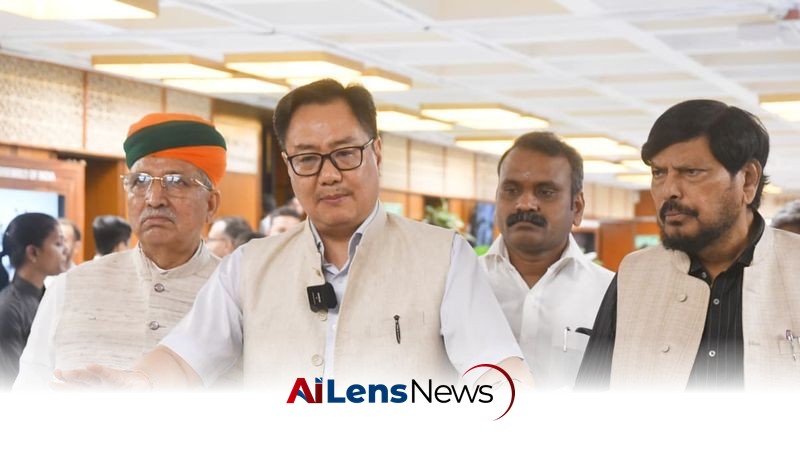


Union Minister Kiren Rijiju criticized the opposition's walkout during an all-party meeting, highlighting the presence of 20 MPs from the TMC.
Chandigarh, India Jul 19, 2026 ALN: In a recent all-party meeting, Union Minister Kiren Rijiju expressed his discontent regarding the opposition's decision to walk out. The meeting aimed to address various pressing issues, but the opposition's temporary boycott raised questions about their commitment to dialogue.
Rijiju specifically pointed out that the opposition's action was unwarranted, especially considering the presence of 20 MPs from the Trinamool Congress (TMC). He emphasized that such behavior undermines the purpose of these meetings, which are intended to foster collaboration among different political factions. The all-party meetings are a platform where diverse political parties come together to discuss and deliberate on critical national issues, making the participation of all members essential for a holistic approach to governance.
The all-party meeting was convened to discuss critical national issues, including legislative matters and governance challenges. The government sought to engage all parties in a constructive dialogue, but the opposition's walkout disrupted the proceedings. Such meetings are typically designed to create a consensus on pressing issues ranging from economic policies to national security, and the absence of significant opposition participation can hinder the decision-making process.
The context of this meeting is particularly important given the current political climate in the country. With a history of contentious relations between the ruling party and the opposition, these meetings are seen as an opportunity to bridge gaps and work towards a united approach on national challenges. The government has often emphasized the need for bipartisan support on issues such as health care reforms, infrastructure development, and climate change initiatives, which require collective action and cooperation.
While the opposition initially boycotted the meeting, they later returned to make their point. This action was seen as a strategic move to highlight their dissent against the government's policies. The opposition's walkout can be interpreted as a protest against perceived neglect of their concerns and an attempt to draw attention to issues they believe are not being adequately addressed by the ruling party. However, Rijiju's remarks suggest that such tactics may not be effective in achieving meaningful outcomes.
Political observers have noted that the walkout could be a double-edged sword for the opposition. On one hand, it serves to galvanize their base by demonstrating their willingness to stand up against what they view as authoritarian tendencies of the government. On the other hand, it risks alienating moderate voters who may perceive the opposition as unwilling to engage in the democratic process. The balance between protest and participation is a delicate one, and the opposition must navigate this landscape carefully to maintain credibility.
Political analysts have weighed in on the incident, noting that the opposition's walkout could be perceived as a lack of seriousness in addressing national issues. Critics argue that constructive engagement is essential for democracy, and such actions may alienate voters who seek accountability and cooperation. The effectiveness of the opposition's strategies is under scrutiny, and the implications of their actions could reverberate through upcoming elections.
Leaders from various parties have expressed mixed reactions to the incident. Some have sided with Rijiju, arguing that the opposition should have used the platform to voice their concerns rather than resorting to a walkout. Others have defended the opposition's right to protest, highlighting the importance of dissent in a healthy democracy. This divergence in opinions reflects the polarized political landscape of the country, where every action is closely analyzed and interpreted through partisan lenses.
The history of all-party meetings in India is marked by both collaboration and conflict. These meetings have been convened for various reasons, including to address crises such as natural disasters, economic downturns, and national security threats. However, they have also witnessed walkouts and boycotts, often reflecting the underlying tensions between the ruling party and the opposition. The current incident is not isolated but rather part of a larger trend where political parties grapple with the challenges of governance in a democratic framework.
In the past, there have been successful instances where all-party meetings have led to significant policy changes and collaborative efforts. For example, during times of national emergencies, parties have come together to formulate cohesive strategies that benefit the populace. The effectiveness of these meetings often hinges on the willingness of all parties to engage in genuine dialogue, setting aside partisan differences for the greater good.
As political tensions continue to rise, the effectiveness of all-party meetings remains in question. Rijiju's comments serve as a reminder of the importance of dialogue in governance, urging all parties to prioritize collaboration over confrontation. The future of such meetings may depend on the ability of political leaders to foster an environment where open communication is encouraged, and dissent is viewed as a constructive element rather than a hindrance.
Moreover, the implications of this incident extend beyond the immediate political landscape. Voter sentiment is increasingly shaped by perceptions of political behavior, and the opposition's strategy may influence public opinion ahead of upcoming elections. As citizens look for accountability and effective governance, the actions of both the ruling party and the opposition will be scrutinized closely.
In conclusion, the recent all-party meeting and the subsequent walkout by the opposition highlight the ongoing challenges of political dialogue in India. The need for constructive engagement is paramount, and the ability of political leaders to navigate their differences while addressing the concerns of the electorate will be crucial for the health of the democratic process. As the political landscape continues to evolve, the lessons learned from this incident may shape future interactions among parties and influence the trajectory of governance in the country.
To learn more about the latest developments in Political Controversies, stay updated with our exclusive reports and analyses on AiLensNews.

