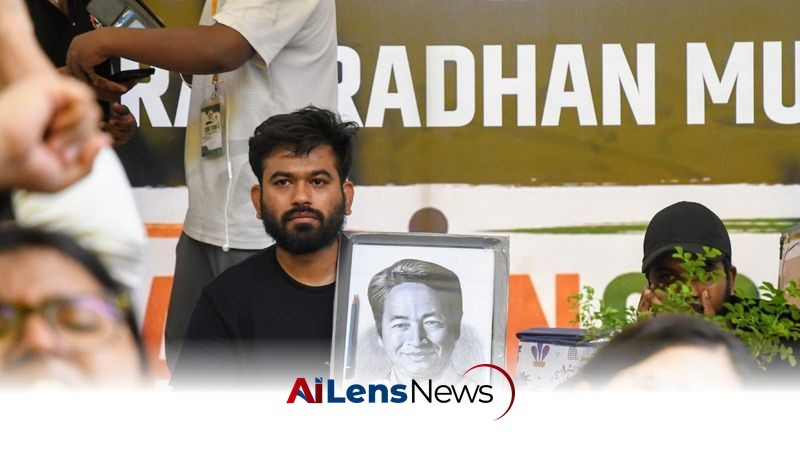


Abhijit Dipke, founder of the CJP, has begun an indefinite hunger strike after allegations of police brutality during protests. His actions come in response to the hospitalization of activist Wangchuk.
Chandigarh, India Jul 18, 2026 ALN: Abhijit Dipke, the founder of the Citizens for Justice and Peace (CJP), has commenced an indefinite hunger strike in protest against the treatment of activists during a recent crackdown by the Delhi Police. This drastic measure follows the hospitalization of fellow activist Wangchuk, who was reportedly injured during the protests at Jantar Mantar. Dipke's hunger strike, a form of non-violent resistance, aims to draw attention to the escalating tensions between law enforcement and civil society activists, particularly those advocating for social justice and human rights.
Dipke alleges that he was subjected to physical abuse and unlawful detention by the police while participating in the demonstrations. The protests were aimed at highlighting various social issues, including the treatment of marginalized communities and the need for justice in ongoing cases of violence against activists. The backdrop of these protests is a growing concern over police brutality in India, especially against those who challenge the status quo or advocate for the rights of underrepresented groups.
The protests at Jantar Mantar have been a focal point for activists advocating for social justice and human rights. This site, known for its historical significance as a venue for public demonstrations, has seen a surge in participation from various groups, including students, labor unions, and civil rights organizations. Participants have raised concerns over police brutality and the suppression of dissenting voices in the country, particularly in the wake of controversial policies and legislation perceived as detrimental to minority rights.
Dipke's hunger strike is seen as a continuation of these efforts to draw attention to the plight of activists facing state repression. The CJP, founded in response to communal violence and injustice, has been at the forefront of advocating for accountability and justice in cases involving marginalized communities. The organization has consistently highlighted issues such as caste discrimination, religious intolerance, and the need for systemic reform within law enforcement agencies.
Wangchuk's hospitalization has raised alarms among supporters and fellow activists. Reports indicate that he sustained injuries during the police crackdown, which has intensified calls for accountability and reform within law enforcement agencies. The circumstances surrounding his injuries remain unclear, prompting further scrutiny of the police's actions during the protests. Eyewitness accounts suggest that the police employed excessive force to disperse the gathering, leading to injuries among several protesters, including Wangchuk.
The incident has sparked outrage among human rights advocates, who are demanding answers about the protocols followed by the police during such operations. Activists argue that the use of force against peaceful demonstrators is a violation of fundamental rights guaranteed by the Indian Constitution. Wangchuk's case has become emblematic of the broader struggles faced by activists in India, where dissent is often met with hostility from state authorities.
Dipke's hunger strike has garnered significant attention on social media, with many expressing solidarity with his cause. Activists and supporters have rallied around the hashtag #JusticeForWangchuk, demanding transparency and justice for those affected by police violence. The online discourse surrounding these events has highlighted the role of social media as a tool for mobilization and awareness, enabling activists to share their experiences and call for collective action.
Public sentiment appears to be shifting, with increasing numbers of individuals and organizations voicing their concerns about state repression. The protests have also attracted the attention of international human rights organizations, which are monitoring the situation closely. Reports from these organizations emphasize the need for the Indian government to uphold its commitments to protect civil liberties and ensure that law enforcement operates within the bounds of the law.
The situation has sparked a broader conversation about the treatment of activists in India. Many are calling for an independent investigation into the police's conduct during the protests, emphasizing the need for accountability and the protection of civil liberties. The demand for transparency is not just a reaction to the recent events but part of a larger movement advocating for systemic change within India's policing practices.
Legal experts and civil rights advocates are urging the government to establish clear guidelines for police conduct during protests, including protocols for the use of force. They argue that accountability mechanisms must be put in place to prevent abuses of power and to ensure that those responsible for violations are held accountable. This includes calls for the establishment of independent oversight bodies that can investigate complaints against law enforcement officials without bias.
As Dipke continues his hunger strike, the spotlight remains on the ongoing struggle for justice and the rights of activists in the country. His actions serve as a poignant reminder of the challenges faced by those advocating for change in a climate of increasing repression. The hunger strike, while a personal sacrifice, is also a strategic move to galvanize public support and pressurize authorities to address the grievances of activists.
In conclusion, the events surrounding Dipke's hunger strike and Wangchuk's hospitalization highlight the urgent need for dialogue and reform in addressing the concerns of activists and marginalized communities. The coming days will be crucial in determining the response from authorities and the broader public to these pressing issues. As the situation unfolds, it remains to be seen whether the government's response will reflect a commitment to upholding democratic values or if it will further entrench the patterns of repression that have characterized recent years. The implications of this struggle extend beyond individual cases; they resonate with the broader fight for human rights and justice in India, a nation grappling with its identity and values in a rapidly changing socio-political landscape.
To learn more about the latest developments in Political Controversies, stay updated with our exclusive reports and analyses on AiLensNews.

