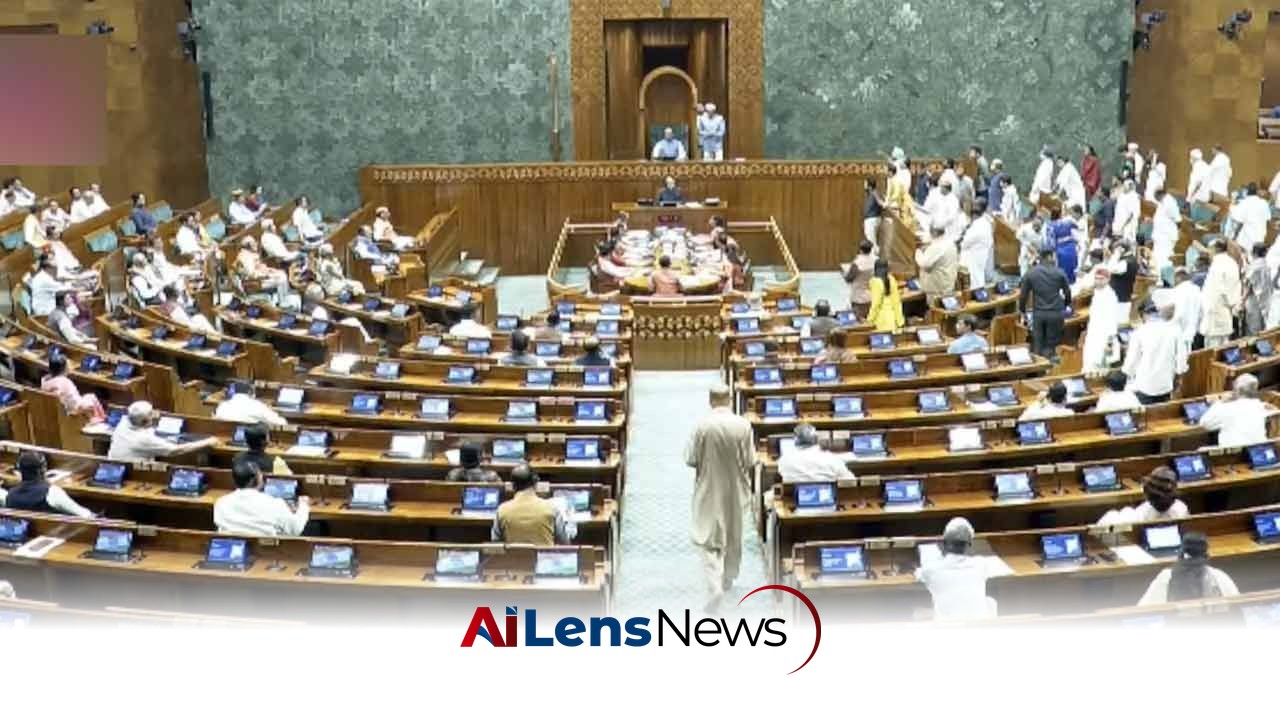


The Union Cabinet has approved a draft bill imposing severe penalties for organized paper leaks, including up to 10 years in prison and a ₹10 crore fine.
New Delhi, India Jul 25, 2026 ALN: New Delhi: The Union Cabinet on Friday approved a draft bill to ensure stricter punishments – 10 years’ jail for paper leaks, fine up to ₹10 crore – hours after Prime Minister Narendra Modi made an announcement, official sources said.
The draft bill was approved in a cabinet meeting chaired by the Prime Minister at the Parliament House complex. The bill seeks an amendment to the Public Examinations (Prevention of Unfair Means) Act, 2024 and proposes a minimum punishment of five years’ imprisonment for individuals involved in paper leaks and/or a fine.
It proposes a jail term of up to 10 years and a maximum fine of ₹10 crore in case of organized paper leaks. Sources said the bill also provides for a time-bound probe of the cases and a statutory mandate for trial in fast-track courts, with a stipulation that the probe must be completed in three months.
The current legal framework regarding paper leaks and examination malpractices has been criticized for being inadequate in deterring such activities. The present law has provisions for three to five years’ imprisonment for individuals, and five to 10 years’ imprisonment and a minimum fine of ₹1 crore for those involved in the organized crime of cheating and paper leaks. The newly proposed amendments aim to significantly increase these penalties, reflecting a growing concern about the integrity of the examination process in India.
The bill is aimed at preventing organized gangs and institutions that indulge in unfair means for monetary gains, while protecting candidates from its provisions. The existing law is aimed at curbing leaks, malpractices as well as organized malpractices in recruitment examinations like the Union Public Service Commission (UPSC), Staff Selection Commission (SSC), and entrance tests such as the National Eligibility-cum-Entrance Test (NEET), Joint Entrance Examination (JEE), and Common University Entrance Test (CUET). These examinations are crucial for students seeking higher education and professional opportunities, making their integrity paramount.
Sources indicate that the amended bill is likely to come up in Parliament on Monday, as announced by the Prime Minister in a video message issued around midnight. In the message, Modi announced that a bill containing provisions for stronger action against paper leaks will be introduced in Parliament next week. This move underscores the government's commitment to tackling the issue of examination malpractices more aggressively.
The announcement of the bill comes at a time when there are heightened tensions surrounding examination integrity, particularly following protests led by the Cockroach Janta Party (CJP) demanding the resignation of Education Minister Dharmendra Pradhan. Protesters are calling for accountability for exam irregularities, reforms in the education system, and ₹1 crore compensation to families of students who reportedly committed suicide after the NEET-UG paper leak in May. Such tragic incidents have amplified the urgency of addressing the systemic issues within the examination framework.
According to sources, the entire cabinet is standing behind Pradhan, and the government is unlikely to agree to the Opposition’s demand for his resignation. The Opposition is also seeking an apology from the Prime Minister for the alleged police brutality against the CJP-led protesters during the July 20 Parliament march. This political backdrop adds complexity to the legislative process as the government navigates calls for reform while maintaining its stance on existing leadership.
In addition to the proposed amendments to the Public Examinations (Prevention of Unfair Means) Act, the government is reportedly taking up all issues linked to reforms within the National Testing Agency (NTA), which conducts the NEET-UG for medical admissions. The NTA has faced scrutiny over its handling of examination processes, and the government is likely to address these concerns in the coming months. The Public Examinations (Prevention of Unfair Means) Act, 2024, represents the first such law introduced by the current government in response to a growing public outcry over paper leaks and examination malpractices.
Historically, the issue of paper leaks in India has been a long-standing concern. The education policy introduced by former Prime Minister Rajiv Gandhi in the late 1980s recognized the need for legislation to curb such practices. However, despite repeated discussions and debates, no subsequent Congress government introduced a law specifically targeting paper leaks and unfair means in examinations. This historical context highlights the significance of the current government's initiative, as it marks a decisive step towards addressing a problem that has plagued the education sector for decades.
The implications of the proposed bill extend beyond mere legal consequences for offenders. By establishing stricter penalties and a more efficient legal process, the government aims to restore public confidence in the examination system, which is fundamental for students' future prospects. The potential for a three-month investigation and the establishment of fast-track courts could expedite justice for victims of examination fraud, ensuring that those responsible are held accountable in a timely manner.
Furthermore, the bill's focus on organized paper leaks signifies a recognition of the complex networks that facilitate such malpractices. By targeting not only individual offenders but also the organized entities behind these operations, the government hopes to dismantle the infrastructure that supports examination fraud. This comprehensive approach is essential in creating a fair and equitable examination environment for all candidates.
In conclusion, the Union Cabinet's approval of the draft bill to amend the Public Examinations (Prevention of Unfair Means) Act, 2024, represents a significant step towards combating examination malpractices in India. As the bill moves to Parliament for discussion, it will be closely watched by stakeholders across the education sector, including students, educators, and policymakers. The outcome of this legislative effort could have far-reaching effects on the integrity of the examination system and the future of education in India.
To learn more about the latest developments in Elections, stay updated with our exclusive reports and analyses on AiLensNews.

