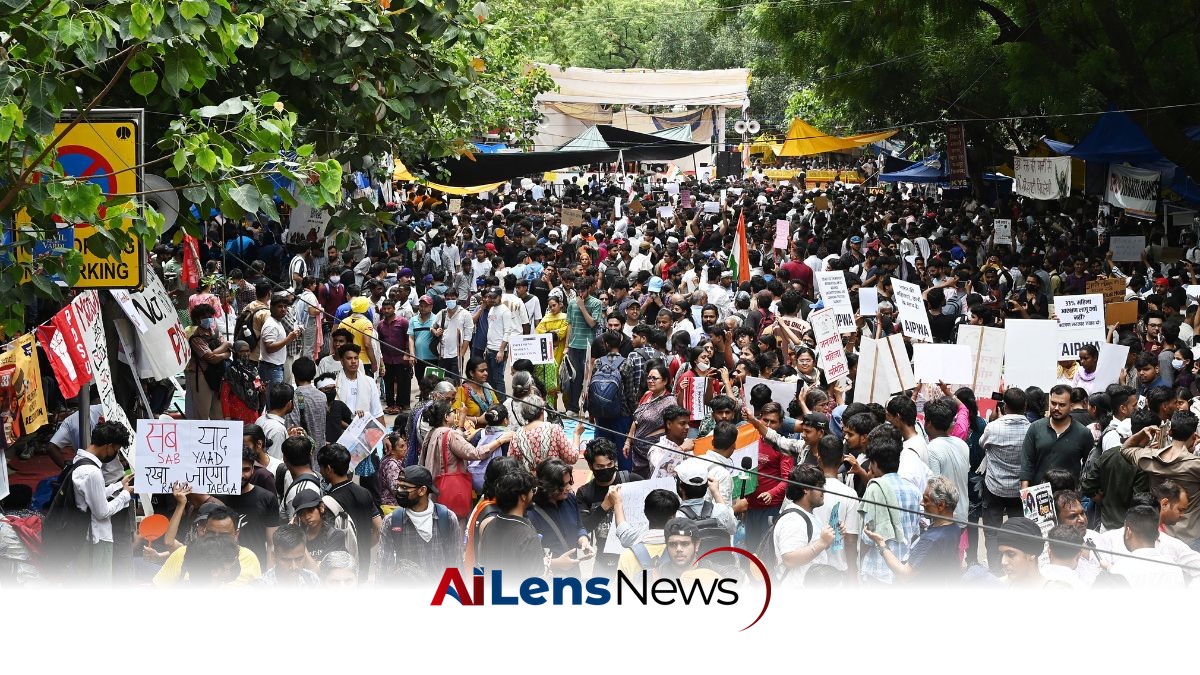


The BJP struggles to connect with Gen Z voters, relying on outdated communication methods. A strategic overhaul is needed to resonate with this influential demographic.
New Delhi, India Aug 2, 2026 ALN: The Bharatiya Janata Party (BJP) has established itself as the world’s largest democratic political organization, significantly transforming India’s political landscape through its governance, organizational strategies, and communication methods. However, one critical challenge looms large on the horizon: the BJP is currently engaged in an information war with Generation Z using a communication strategy that is more suited to Millennials. This misalignment represents a strategic oversight that could have far-reaching implications for the party's political fortunes.
India is not merely a young country; it is evolving into a nation where the voices of young voters are poised to play a decisive role in shaping political outcomes. As the nation approaches the 2024 General Election, the electoral landscape is marked by a staggering 96.88 crore registered voters, which includes over 2 crore newly enrolled voters aged 18-29, and 1.84 crore first-time voters aged 18-19. This demographic is not just significant; it is a voting bloc larger than the populations of most countries worldwide. Therefore, neglecting or misinterpreting the aspirations and needs of this demographic is not only unwise but could also prove detrimental to the BJP’s electoral strategy.
Understanding the fundamental differences between Generation Z and Millennials is crucial for effective engagement. While Millennials experienced the digital revolution, Generation Z has been born into a world where digital technology is ubiquitous. Their political education is shaped less by traditional media such as newspapers and television debates and more by contemporary platforms like Instagram Reels, YouTube Shorts, podcasts, gaming communities, and online creators. This shift in information consumption patterns underscores a significant transformation in political communication.
According to Digital 2024, India boasted over 751 million internet users at the start of 2024, with a median age of 28.4 years. This statistic highlights India’s status as one of the youngest and most digitally connected societies globally. In this context, political narratives are no longer constructed over weeks or months; they are formed in mere minutes. A viral reel can reach more young Indians than a traditional political rally, and a meme can influence public opinion more effectively than a formal press conference. Furthermore, an influencer with credibility among their peers can often communicate messages more persuasively than seasoned television spokespersons.
The opposition parties have recognized this transformation more swiftly than many within the BJP. Across various social media platforms, a consistent narrative has emerged, suggesting that the Modi Government fails to understand the aspirations of Generation Z. Issues such as employment, examinations, the implications of artificial intelligence, student concerns, and the rising cost of living are rapidly amplified into broader political stories that frame the government as having neglected young Indians. The potency of this narrative does not necessarily stem from factual accuracy but rather from its relatability to the experiences and concerns of young voters.
In response, the BJP often deploys experienced spokespersons who excel in communicating with traditional television audiences. However, the reality is that television is no longer the primary medium through which first-time voters form their political opinions. Generation Z expects a level of authenticity that traditional political communication often lacks. This is where a strategic reset is essential for the BJP. The party does not merely require more social media campaigns; it needs genuine Gen Z leadership that resonates with young voters. This leadership should not consist of symbolic appointments or carefully scripted influencers; instead, it should include credible young entrepreneurs, engineers, startup founders, AI researchers, creators, sportspersons, policy professionals, and student leaders who inherently grasp the aspirations and anxieties of their generation.
Young Indians are not solely interested in abstract discussions about GDP growth; they want to understand how India’s economic transformation translates into tangible opportunities for them. Ironically, the BJP possesses a compelling governance narrative to share. India has emerged as one of the world’s fastest-growing major economies, boasting a rapidly expanding digital public infrastructure, ranking as the third-largest startup ecosystem globally, accelerating semiconductor manufacturing, promoting AI innovation, and strengthening manufacturing through initiatives like Make in India. However, these accomplishments are often communicated as government programs rather than as stories of young Indians who are thriving because of them. In today’s political landscape, communication has shifted from merely conveying information to fostering identification.
Data from post-election analyses of the 2019 Lok Sabha election revealed that youth voters played a pivotal role in the BJP’s electoral success, with an estimated 41% of young voters supporting the party, significantly contributing to its national lead. This support is not guaranteed and must be actively cultivated. Each political generation has its own set of priorities and expectations, and today’s 20-year-olds have little memory of pre-2014 India. Their political benchmarks are not rooted in historical contexts but are instead shaped by their aspirations for the future. Consequently, governance alone is insufficient; it must be articulated in a manner that resonates with those who will inherit India’s future.
The recent emergence of youth-led digital protest movements, regardless of varying opinions on their effectiveness, underscores the speed at which Generation Z can mobilize online and influence national discourse. Within the BJP, there is a growing recognition that enhancing youth outreach and engaging with Gen Z is becoming politically imperative. To address this need, the BJP should consider establishing a structured Gen Z leadership ecosystem that spans campuses, startups, creator communities, and professional networks. Young leaders should not only be active during election campaigns but should also serve as year-round ambassadors who explain public policy, innovation, entrepreneurship, and governance in a language that resonates with their generation.
Prime Minister Narendra Modi has frequently referred to India’s youth as the nation’s greatest strength. The next phase of this engagement must involve placing trust in this generation by empowering them with leadership roles. Generation Z does not want politics to be handed to them; they desire it to be discussed with them. In the digital age, the most persuasive voices are not always the loudest; they are often those that sound like their own. Therefore, the BJP must adapt its strategies and communication methods to effectively engage with Generation Z, ensuring that it remains relevant in an ever-evolving political landscape.
To learn more about the latest developments in Elections, stay updated with our exclusive reports and analyses on AiLensNews.

