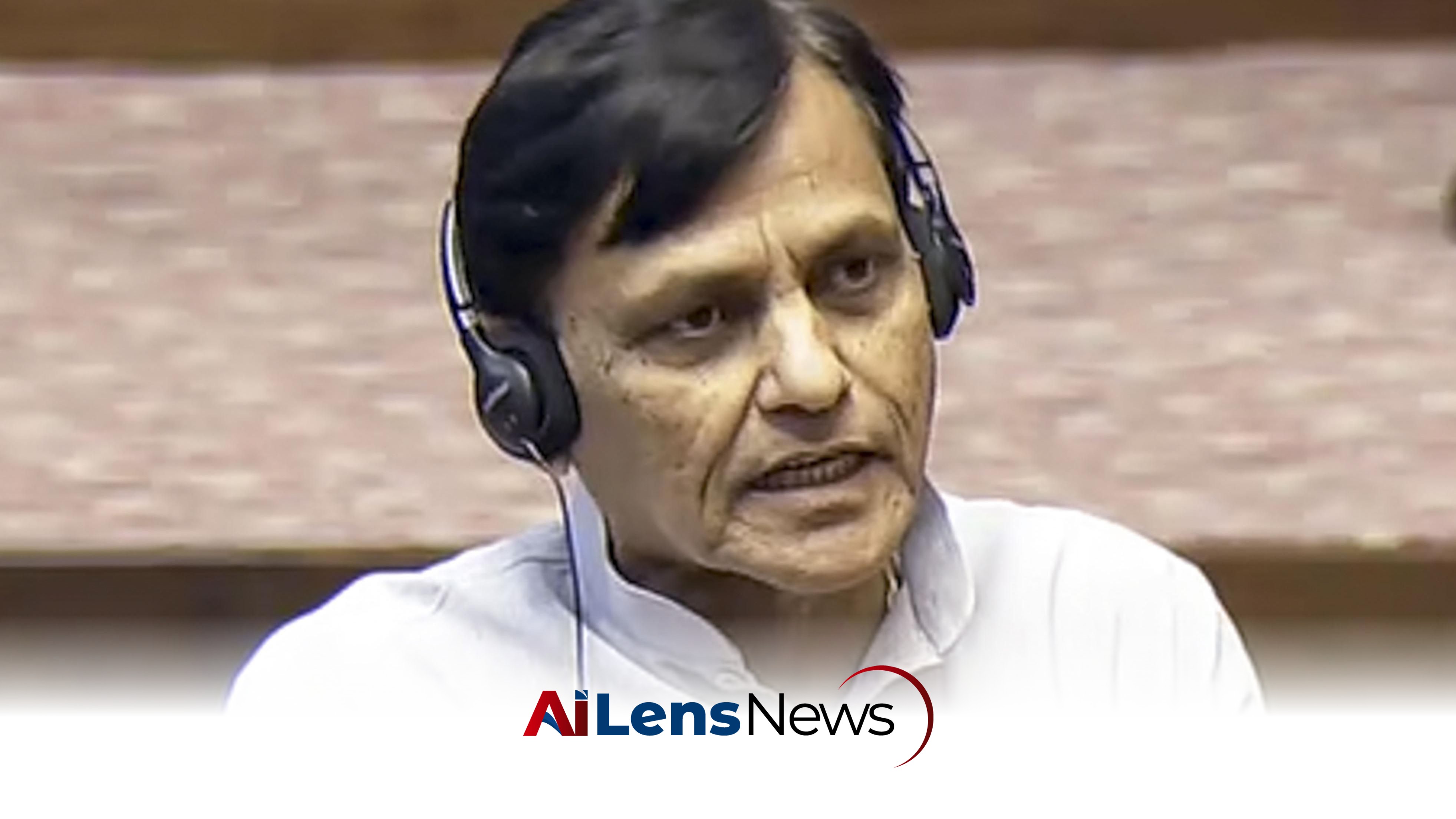


A new bill aims to amend the Prevention of Insults to National Honour Act, making insults to the national song 'Vande Mataram' a criminal offense.
New Delhi, India Jul 24, 2026 ALN: New Delhi: The government on Friday introduced a bill in the Rajya Sabha seeking to make any obstruction or insult to the national song 'Vande Mataram' a criminal offence.
Minister of State for Home Affairs Nityanand Rai introduced 'The Prevention of Insults to National Honour (Amendment) Bill, 2026', as several Opposition members, including those belonging to Left parties, opposed the introduction. The bill aims to reinforce the sanctity of national symbols and foster a sense of patriotism among citizens.
The bill will amend the Prevention of Insults to National Honour Act, 1971, which makes desecration of or disrespect toward the country's national symbols – including the national flag, the Constitution, and the national anthem – a criminal offence, carrying a punishment of up to three years' imprisonment. This existing legal framework underscores the importance of national symbols in fostering unity and national pride.
Vande Mataram, composed by Bankim Chandra Chattopadhyay, holds a significant place in India's history, particularly during the freedom struggle against British colonial rule. The song, which translates to "I bow to thee, Mother," evokes a deep sense of nationalism and has been a rallying cry for various movements advocating for India's independence. The introduction of the bill to protect Vande Mataram comes amid the year-long celebrations of the 150th anniversary of the song, highlighting its enduring legacy and relevance in contemporary India.
At the January 24, 1950 meeting of the Constituent Assembly, its President Rajendra Prasad stated that Vande Mataram, which played a historic role in India's freedom struggle, shall have the same status as that of the national anthem. This declaration emphasizes the cultural and historical significance of Vande Mataram in shaping the national identity of India.
The proposed legislation seeks to provide Vande Mataram with the same statutory protection as the national anthem, 'Jana Gana Mana'. Currently, there is no specific legal provision to prevent insults to the singing of Vande Mataram, which has raised concerns among proponents of the bill regarding the potential for disrespect or obstruction during public performances of the song. The Statement of Objects and Reasons of the proposed legislation highlights this gap in the existing law.
Therefore, in order to prohibit any person from intentionally preventing the singing of Vande Mataram or causing disturbance to any assembly engaged in such singing, it is proposed to amend Section 3 of the Act to bring the national song also in its ambit, making such acts punishable. This amendment aims to protect the song from any form of derision or obstruction, thus reinforcing its status as a national symbol.
The introduction of this bill has sparked a debate among lawmakers and the public. Supporters argue that the legislation is essential for preserving the dignity of national symbols and fostering a sense of pride among citizens. They contend that in a diverse and pluralistic society like India, it is crucial to uphold symbols of national unity, especially in an era where expressions of dissent can sometimes lead to disrespect for these symbols.
On the other hand, critics of the bill, including several opposition members, have raised concerns about the implications of criminalizing insults to Vande Mataram. They argue that such legislation could infringe upon fundamental rights, including the right to free speech and expression, which is enshrined in the Constitution of India. They caution against the potential misuse of the law to stifle dissent or criticism, particularly in a democratic society where diverse opinions and expressions should be encouraged.
The bill's opposition also reflects broader concerns regarding the politicization of national symbols. Some critics have pointed out that attempts to legislate respect for national symbols can sometimes be a means of diverting attention from pressing social and economic issues facing the country. They argue that rather than focusing on symbolic legislation, the government should prioritize addressing the root causes of discontent among citizens.
The implications of this bill extend beyond the legislative arena. If passed, it could set a precedent for how the government approaches the protection of national symbols in the future. It may also influence public discourse around nationalism and patriotism in India, potentially leading to a more polarized environment where expressions of dissent are scrutinized more closely.
In conclusion, the introduction of 'The Prevention of Insults to National Honour (Amendment) Bill, 2026' reflects the government's intent to bolster the legal protections surrounding national symbols, particularly Vande Mataram, amid ongoing celebrations of its historical significance. As the bill moves through the legislative process, it will likely continue to provoke discussions about the balance between protecting national identity and preserving the fundamental rights of citizens in a democratic society.
To understand the broader context of this proposed legislation, it is essential to recognize the historical significance of Vande Mataram. The song was first introduced in Bankim Chandra Chattopadhyay's 1882 poem, which later became a pivotal part of India's struggle for independence. Its lyrics invoke the spirit of the motherland, resonating deeply with the aspirations of a nation yearning for freedom from colonial rule. Vande Mataram was not only a song but also a symbol of resistance and unity among diverse groups fighting against British oppression.
The song's historical roots have often been a point of contention, particularly regarding its interpretation and the cultural implications of its lyrics. While many view it as a universal expression of love for the motherland, others have raised concerns about its religious connotations, arguing that it may not fully represent India's secular ethos. This debate has further complicated discussions around the song's status and the need for legal protection.
Moreover, the timing of the bill's introduction is noteworthy. As India grapples with various social, economic, and political challenges, the focus on national symbols like Vande Mataram may serve as a double-edged sword. While it may unite some citizens under a shared identity, it could also alienate others who feel that their voices and concerns are being overshadowed by a singular narrative of nationalism.
In recent years, there has been a noticeable rise in nationalism and patriotism in India, often accompanied by a push for stricter laws to protect national symbols. This trend reflects a growing sentiment among certain segments of the population that national pride must be safeguarded against perceived threats, including dissenting voices and criticism of government policies. The introduction of this bill can be seen as part of a broader movement to enshrine national symbols within the legal framework, reinforcing the idea that expressing dissent may come at a cost.
In light of these dynamics, the bill's potential impact on civil liberties is a critical concern. The fear of legal repercussions for expressing dissent could lead to self-censorship among citizens, stifling open dialogue and debate essential for a healthy democracy. As such, the balance between upholding national pride and safeguarding individual freedoms remains a contentious issue that will require careful consideration as the bill progresses through the legislative process.
Furthermore, the bill's passage could also influence how other national symbols are treated in the future. If Vande Mataram is afforded greater legal protection, similar measures might be proposed for other symbols, potentially leading to a more extensive framework governing expressions of nationalism. This could create an environment where the government has increased authority to regulate expressions of patriotism, raising questions about the definitions of respect and dissent in a democratic society.
As the discussion surrounding 'The Prevention of Insults to National Honour (Amendment) Bill, 2026' unfolds, it is crucial for citizens, lawmakers, and civil society to engage in thoughtful dialogue about the implications of such legislation. The interplay between national identity, cultural heritage, and individual freedoms will be at the forefront of this debate, shaping the future of how India navigates its complex social landscape.
In summary, the introduction of this bill highlights the ongoing tension between the desire to protect national symbols and the imperative to uphold democratic values. As this legislation advances, it will undoubtedly continue to evoke strong reactions from various segments of society, reflecting the diverse perspectives that characterize India's vibrant democracy.
To learn more about the latest developments in Political Controversies, stay updated with our exclusive reports and analyses on AiLensNews.

