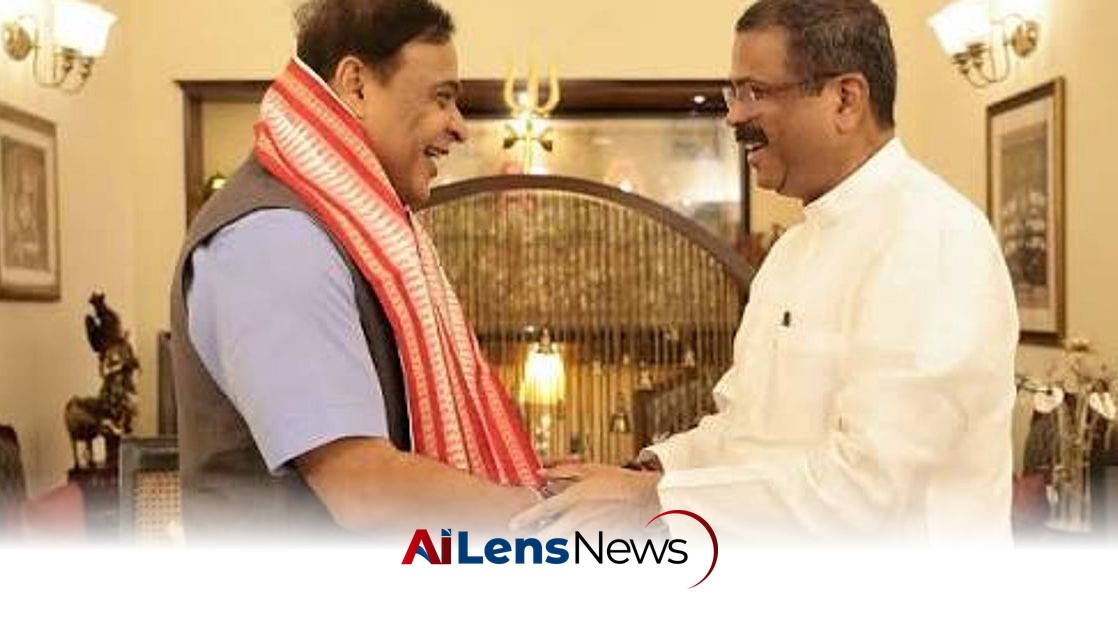


Assam Chief Minister Himanta Biswa Sarma thanks former Union Education Minister Dharmendra Pradhan for his contributions to education reforms and support for Assam.
Dispur, India Jul 25, 2026 ALN: Guwahati: Assam Chief Minister Himanta Biswa Sarma on Saturday expressed heartfelt gratitude to former Union Education Minister Dharmendra Pradhan following his resignation, praising his contribution to education reforms and his unwavering support for Assam. This gesture of appreciation comes at a time when the education sector in India is undergoing significant transformations, largely influenced by the policies and reforms initiated during Pradhan's tenure.
The National Education Policy (NEP), introduced in 2020, represents a comprehensive framework aimed at overhauling the Indian education system. It seeks to address various challenges faced by the sector, including quality of education, access, and equity. Under Dharmendra Pradhan's leadership, the NEP was not only implemented but also advocated for a decolonization of education, which resonates deeply with the sentiments of many who believe that India's educational framework should reflect its rich cultural heritage and historical context.
The NEP emphasizes several key areas, including the integration of vocational education, the importance of early childhood care, and the promotion of multilingual education. These components are designed to create a more holistic educational environment that caters to the diverse needs of India's student population. The policy also aims to increase the Gross Enrollment Ratio (GER) in higher education to 50% by 2035, which would require substantial investment in both infrastructure and teacher training.
In his post on X, Sarma articulated the difficulty of encapsulating his gratitude in mere words, highlighting Pradhan's relentless efforts to restore the "civilisational spirit of Bharat." This phrase underscores a broader movement within Indian politics and society that seeks to reconnect with indigenous knowledge systems and cultural narratives, moving away from colonial legacies that have long influenced the education system. The idea of decolonization in education is not just about changing curricula but also about fostering a sense of identity and pride among students in their cultural heritage.
Sarma's recognition of Pradhan's commitment to implementing the NEP is particularly noteworthy in the context of Assam, a state that faces unique educational challenges, including disparities in access to quality education across its diverse population. The Chief Minister emphasized that Pradhan's determination to carry forward educational reforms, despite facing political hurdles, would be remembered as a pivotal contribution to the nation-building process. Assam's geographical diversity and socio-economic challenges necessitate tailored educational strategies that can effectively address the needs of various communities.
On a personal note, Sarma expressed how Pradhan's genuine affection for Assam had always resonated with him. This personal connection is significant, as it reflects the importance of leadership that is not only politically motivated but also emotionally invested in the welfare of the states they serve. Pradhan's consistent support for Assam, especially during times of need, illustrates a model of governance where empathy and understanding play crucial roles in decision-making. Such relationships between state and national leaders can enhance cooperative governance, ensuring that local needs are adequately represented at the national level.
In his remarks, Sarma also referenced the recent inauguration of the Indian Institute of Management (IIM) Guwahati, a significant milestone for the state. The establishment of such premier institutions is in line with the NEP's vision of expanding quality higher education across India. Sarma credited Pradhan's vision and commitment for making this possible, highlighting the importance of educational institutions in fostering economic growth and social development. IIM Guwahati is expected to play a crucial role in developing managerial talent in the region, contributing to the overall economic landscape of Assam and the Northeast as a whole.
The IIM Guwahati's establishment is not just a local achievement but part of a broader national strategy to enhance India's educational infrastructure, which aims to produce skilled professionals capable of contributing to various sectors of the economy. This aligns with the government's objectives of making India a global knowledge hub. The NEP also encourages partnerships between academic institutions and industries, which is vital for ensuring that the education system remains relevant to the changing demands of the job market.
Sarma's expression of gratitude extended beyond mere acknowledgment of Pradhan's contributions. He articulated a hope that Pradhan would continue to serve the nation with the same sincerity and commitment in whatever capacity he takes on next. This reflects a broader sentiment in Indian politics where leaders often transition between roles, bringing their experiences and insights to new challenges. The continuity of leadership in educational reforms is essential for maintaining momentum and ensuring that the initiatives launched under the NEP are effectively implemented and sustained over time.
Additionally, Sarma's closing remarks, wishing Pradhan good health, happiness, and strength, encapsulate a collegial spirit that is often seen in political circles, where personal relationships can transcend party lines. The phrase "Assam will always remember your affection and your contribution" is indicative of how regional leaders value the support they receive from national figures, especially in times of need. Such expressions of gratitude can foster a sense of unity and collaboration among political leaders, which is crucial for addressing the complex issues facing the country.
This expression of gratitude is also set against the backdrop of ongoing discussions about the future of education in India. As the country grapples with the impacts of the COVID-19 pandemic on learning outcomes and the digital divide, the role of policymakers like Pradhan becomes even more critical. Their decisions will shape the educational landscape for future generations. The pandemic has exposed significant vulnerabilities in the education system, particularly in rural and underserved areas, making it imperative for leaders to prioritize equitable access to quality education.
Furthermore, the implications of Pradhan's resignation and Sarma's response may reverberate through Assam's political landscape. As the state continues to navigate its educational reforms, the relationship between state and central leadership will be crucial in determining the success of these initiatives. The collaborative spirit demonstrated by Sarma in his gratitude towards Pradhan may set a precedent for future interactions between Assam and the central government. Strong collaboration can lead to more effective implementation of policies and programs that benefit the education sector.
In conclusion, Sarma's heartfelt acknowledgment of Dharmendra Pradhan's contributions to education reforms reflects not just a personal sentiment but also highlights the significant shifts occurring within India's educational framework. As the country moves forward, the focus on quality education, access, and the integration of cultural values will remain paramount. The legacy of leaders like Pradhan, who champion such causes, will undoubtedly influence the trajectory of education in India for years to come. The ongoing evolution of the NEP and its implementation will require sustained commitment from all stakeholders, including government officials, educators, and the community at large.
In related news: West Bengal CM Suvendu Adhikari has condemned the recent attack on journalists during a NEET protest in Kolkata, emphasizing the importance of safeguarding press freedom and the right to peaceful protest. This incident serves as a reminder of the ongoing challenges faced by the media in reporting on sensitive issues, including education and public policy. The ability of journalists to operate freely is essential for fostering transparency and accountability in governance, particularly in the context of educational reforms and public discourse.
To learn more about the latest developments in Elections, stay updated with our exclusive reports and analyses on AiLensNews.

