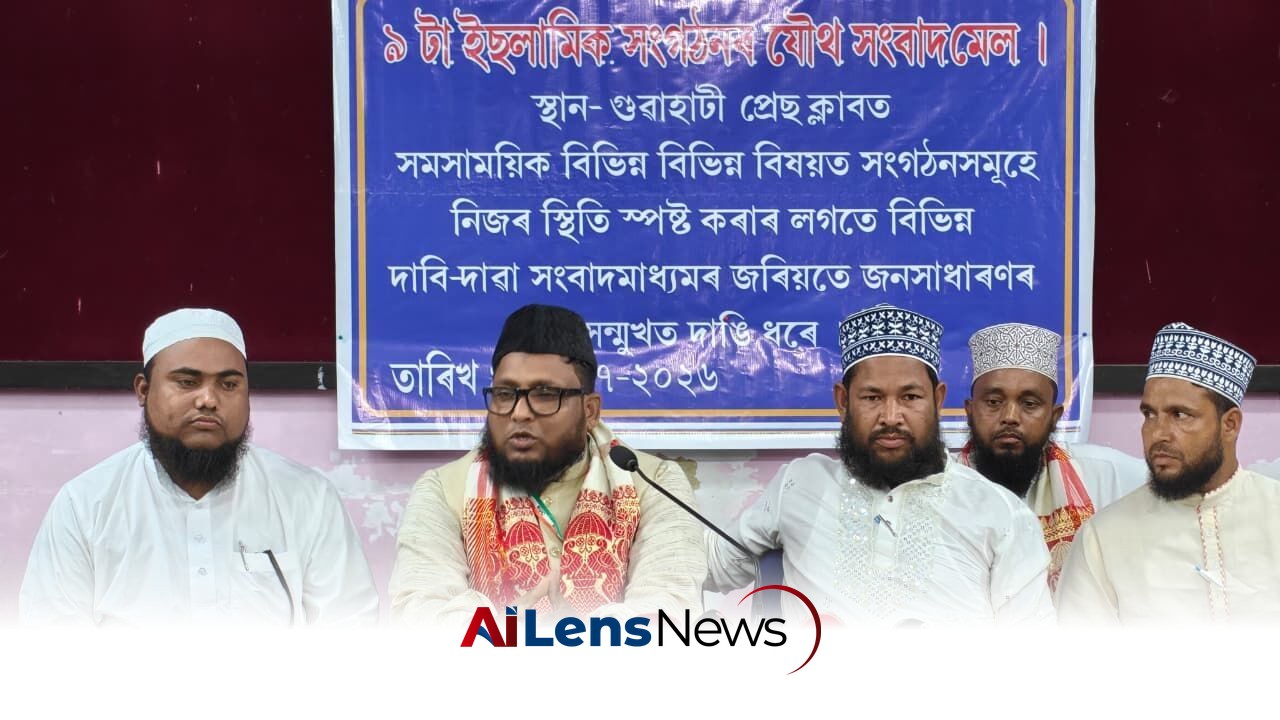


Eight Islamic organizations in Assam urge the government for land rights under Mission Basundhara, announcing a break from Congress support.
Dispur, India Jul 18, 2026 ALN: A united front of eight Islamic organisations in Assam has made a significant demand for land rights for poor and landless families, urging the state government to include eligible Muslims under the Mission Basundhara scheme. This appeal highlights ongoing issues related to land rights and socio-economic challenges faced by the Muslim community in the state.
The press conference, held at the Guwahati Press Club, featured Mufti Makibur Rahman Azhari, the head of the All Assam Ahle Sunnat Madrassa Education Board, who articulated the collective stance of the organisations on various political and social matters affecting their community. The Mission Basundhara scheme, initiated by the Assam government, aims to provide land rights to landless individuals and families, which has become a pressing issue for many in the region.
Chief Minister Himanta Biswa Sarma's recent remarks in the Assam Legislative Assembly during the ongoing Budget session indicated a willingness to consider the registration of eligible Indian Muslims under the Mission Basundhara land settlement programme. This statement has opened a dialogue about the inclusion of Muslims in land rights initiatives, which could potentially alleviate poverty and improve living conditions for many families in the state.
Azhari emphasized the need for the government to issue land pattas to poor and landless Muslims, calling for a comprehensive survey in Assam's char and chapori areas. These regions, often characterized by their riverine geography, have a significant population of landless individuals who face challenges in securing land for agricultural and residential purposes. "We urge the Assam government and the Chief Minister to help poor and landless Muslims obtain land pattas. A survey should be conducted in char-chapori areas so that genuine beneficiaries can be identified," he stated, highlighting the urgency of the situation.
The political dynamics surrounding these demands were further underscored by Azhari's criticism of the Congress party, particularly targeting local MLA Majibur Rahman, who was noted as the only Congress legislator to have actively pursued the issue of land rights for Muslims. Azhari's remarks pointed to a perceived lack of representation and advocacy for Muslim concerns within the Congress party, stating, "We have never seen Congress MLAs raise the question of registering poor Muslims under Basundhara. The Chief Minister himself informed the Assembly that only Majibur Rahman had discussed the matter with him." This criticism reflects broader sentiments within the community regarding political representation and the effectiveness of elected officials in addressing their needs.
The eight organisations involved in this coalition include the All Ahle Sunnat Madrassa Education Board, Ulama Council (BTC), As-Sunnah Trust, Rashtriya Ulama Council, Assam Islamic Research Center, Jamat Ulama Sunni Assam, Anjomane Tanzime Millat, and Hedayat Islam, Assam. These groups have historically played a role in advocating for the rights and welfare of Muslims in Assam, and their collective action signifies a strategic shift in political allegiances and advocacy efforts.
The press conference took a notable political turn as the organisations also criticized Congress MP Rakibul Hussain and the party's leadership for allegedly failing to adequately represent the concerns of Assamese Muslims. Azhari remarked, "In the last Lok Sabha election, Muslims overwhelmingly supported Rakibul Hussain. But after being elected, we did not see him effectively raise our concerns in Parliament." This disillusionment with Congress leadership has led to a declaration of a break from the party, with Azhari announcing that they would not support Hussain in future elections.
The implications of this political shift are significant, as Azhari indicated that the eight organisations could mobilize substantial support for the Bharatiya Janata Party (BJP) in the upcoming Nagaon Lok Sabha bypoll. "We are publicly informing the Chief Minister that we will work to ensure the BJP wins the Nagaon seat with around 2 lakh votes because what people want today is development," he asserted, suggesting a potential realignment of Muslim voters towards the BJP, traditionally seen as a party with a more Hindu nationalist agenda.
Azhari also praised the developmental work of BJP leaders Diplu Ranjan Saikia, Jitu Goswami, and Arup Kumar Dey, contrasting their efforts with those of Congress MP Gaurav Gogoi and leader Nurul Huda, whom he criticized for not adequately addressing the needs of the Muslim community. This juxtaposition of political figures reflects a broader narrative of dissatisfaction with the Congress party's approach to Muslim issues and a search for alternative representation.
The organisations symbolically severed ties with Congress, describing the move as a "three talaq," a term that carries cultural significance in the context of Islamic divorce, indicating a firm and irrevocable break. This metaphor highlights the depth of their discontent and the desire for a new political direction that prioritizes the needs of the Muslim community in Assam.
In reiterating their demand for land rights, development, and greater attention to the concerns of Muslims in the state, the organisations are not only addressing immediate socio-economic issues but also signaling a potential shift in the political landscape of Assam. The outcome of this movement could have far-reaching implications for future elections and the representation of Muslims in the state's political framework.
The demand for land rights is particularly relevant in the context of Assam's historical and socio-political landscape, where land ownership has been a contentious issue, often intersecting with ethnic identities and migration patterns. The char and chapori areas, where many of the affected individuals reside, have been subject to various state policies and interventions, making the demand for land pattas a critical point of contention.
As the political scene evolves, the response of the Assam government and the actions of the BJP will be closely monitored by both supporters and critics. The developments in this situation could set a precedent for how land rights and community representation are addressed in Assam and beyond, influencing the broader discourse on minority rights and socio-economic justice in India.
To learn more about the latest developments in Political Controversies, stay updated with our exclusive reports and analyses on AiLensNews.

