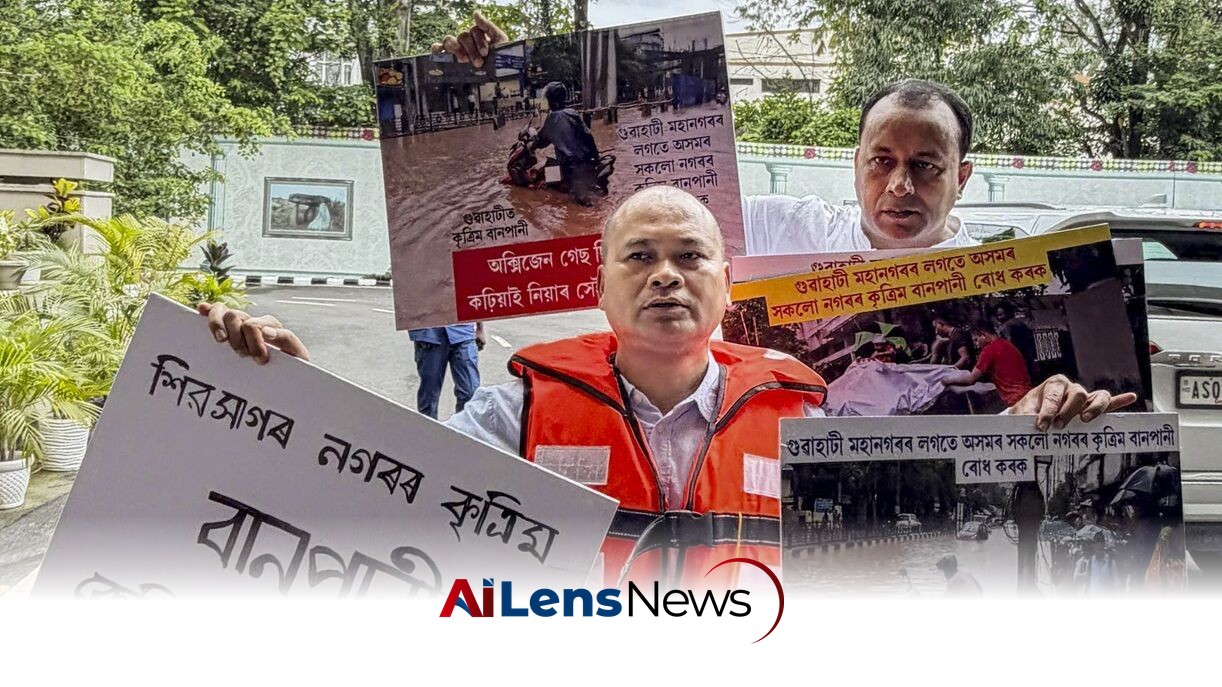


Akhil Gogoi's call for urgent flood discussions in Assam's Assembly leads to his suspension after a heated exchange with Speaker Ranjit Kumar Dass.
Dispur, India Jul 23, 2026 ALN: Demand for an urgent discussion on the severe flood situation in Upper Assam triggered high drama in the Assam Legislative Assembly on Thursday, with Raijor Dal chief and Sibsagar MLA Akhil Gogoi being suspended for the remainder of the day's proceedings following a heated confrontation with Speaker Ranjit Kumar Dass.
The incident unfolded on the tenth day of the ongoing Budget Session after Gogoi sought to invoke Rule 56 of the Assembly Rules to suspend regular business and hold an urgent discussion on the flood crisis affecting Charaideo, Sivasagar, and Jorhat districts.
The situation escalated when the Speaker ruled that Gogoi had exceeded the time allotted to him. Speaker Ranjit Kumar Dass, in his attempt to maintain order in the Assembly, stated that Gogoi had been given 2 minutes to speak but continued for two minutes and 44 seconds, violating the Chair's direction. This marked a significant moment in the Assembly, where the balance between legislative procedure and urgent public concern was tested.
In his ruling, the Speaker described Gogoi’s actions as “disorderly conduct,” citing the ensuing uproar in the House as justification for the suspension. He referred to Gogoi as a "traitor" during the heated exchange, a term that reflects the intense political atmosphere surrounding the discussion. The suspension was seen as a necessary measure to restore order, as the Speaker claimed it constituted a “breach of the trust reposed in the member by the Chair.”
As the protests intensified inside the Assembly, with Gogoi's supporters expressing their dissatisfaction with the Speaker's decision, Dass ordered Gogoi's suspension for the remainder of the day's proceedings. This incident not only highlighted the urgency of the flood situation but also the contentious nature of political discourse in Assam, particularly regarding how elected officials address crises affecting their constituents.
Speaking to the press outside the House, Gogoi defended his actions, stating that he felt compelled to protest after being prevented from completing his submission on what he described as an unprecedented humanitarian crisis unfolding in Upper Assam. His comments reflect a growing frustration among legislators who feel that urgent issues are often sidelined by procedural norms.
"I requested the Assembly, with folded hands, to suspend all other business under Rule 56 and discuss the devastating floods in Charaideo, Sivasagar, and Jorhat. I had barely spoken for around one-and-a-half minutes when Minister Pijush Hazarika urged the Speaker to stop me, and I was prevented from continuing," Gogoi said. This statement underscores the tension between the need for immediate legislative action and the adherence to parliamentary decorum.
Gogoi emphasized that remaining silent on the issue would have amounted to "a grave sin," highlighting his commitment to representing the voices of flood-affected families. He asserted that he had been spending time with these families and considered it his duty to raise their plight inside the Assembly. His remarks point to the broader responsibility of elected officials to advocate for their constituents, especially during times of crisis.
In his appeal, Gogoi urged the House to formally declare the floods a natural calamity and send a proposal to the Centre seeking enhanced financial assistance for the affected districts. This call for recognition of the floods as a natural disaster is significant, as it could potentially unlock additional resources and support from the central government, which is crucial for effective disaster management and relief efforts.
"I wanted the Assembly and the state government to recognize the disaster as a natural calamity. Before I could even complete my appeal, I was stopped," he lamented. His desire for a formal declaration reflects the urgency of the situation, as such recognition would facilitate a more coordinated response to the disaster.
During his intervention in the House, Gogoi highlighted the severity of the flood situation, claiming that 28 bodies had been recovered in Nazira alone, citing information shared by Nazira MLA Mayur Borgohain. The mention of specific fatalities underscores the human cost of the floods and serves as a stark reminder of the immediate dangers faced by residents in affected areas.
The Sivasagar legislator also alleged that large parts of his constituency remain submerged under knee-deep water, and that around 100 people are missing in Bihubor Panchayat, underscoring the need for immediate legislative intervention. These claims paint a grim picture of the ongoing crisis and emphasize the urgent need for government action to address the humanitarian needs of those affected.
The flood situation across Assam remained critical on Thursday, with the death toll rising to 41 and more than 6.5 lakh people affected across 11 districts. This widespread impact highlights the scale of the disaster and the challenges faced by local authorities in providing timely assistance to those in need.
The political ramifications of this incident may extend beyond the Assembly floor, as it raises questions about the effectiveness of the legislative process in addressing urgent matters. The confrontation between Gogoi and the Speaker illustrates the tensions that can arise when procedural rules clash with the pressing needs of the populace. As Assam grapples with the aftermath of the floods, the Assembly's ability to respond effectively to such crises will be closely scrutinized by both the public and political analysts.
In conclusion, the suspension of Akhil Gogoi amidst discussions of the flood crisis in Assam not only highlights the immediate challenges faced by the state in addressing natural disasters but also reflects the broader dynamics of political discourse and legislative procedure in times of crisis. As the situation develops, it remains to be seen how the government will respond to the urgent needs of flood-affected communities and whether this incident will prompt a reevaluation of how legislative bodies address humanitarian issues in the future.
To learn more about the latest developments in Political Controversies, stay updated with our exclusive reports and analyses on AiLensNews.

