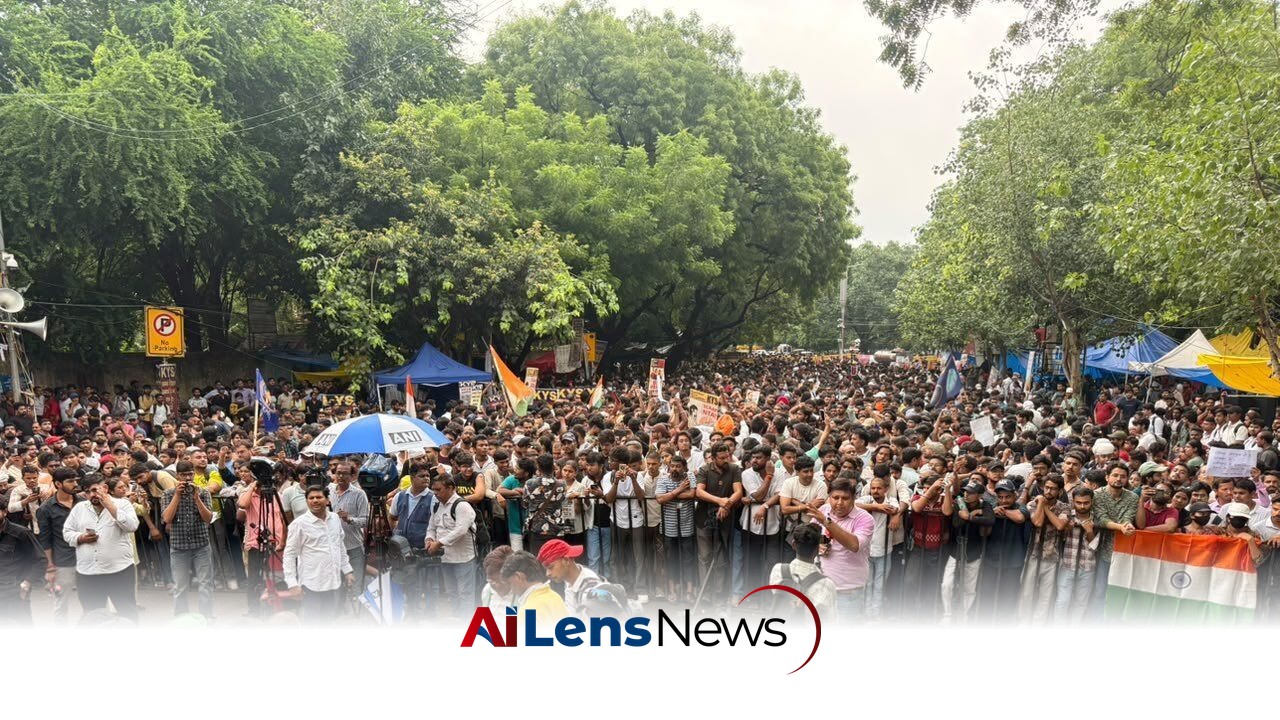


CJP and Congress express strong disapproval of PM Modi's proposed legislation on examination irregularities, calling for the removal of Union Education Minister Dharmendra Pradhan.
Itanagar, India Jul 24, 2026 ALN: The Cockroach Janta Party (CJP) and opposition party Indian National Congress reacted sharply after Prime Minister Narendra Modi addressed the controversy surrounding examination irregularities, announcing a bill to impose stringent actions against paper leaks, set to be introduced in Parliament next week.
In a video message on Thursday, Modi stated that the proposed legislation would be discussed by the Union Cabinet and presented to Parliament when the second week of the Monsoon Session begins on Monday. He emphasized the urgency of passing the bill, highlighting that paper leaks are a serious issue causing distress to lakhs of students and their families.
"The cabinet will discuss the issue of paper leaks on Friday, and after taking suggestions from cabinet colleagues, further actions will be finalized," Modi said, assuring that strong provisions would be included in the legislation to combat such offences.
The Prime Minister noted that several measures had already been implemented since allegations of irregularities in the NEET-UG 2026 examination emerged approximately two-and-a-half months ago. He claimed that those responsible had been arrested and were in jail, while the government ensured that nearly 22 lakh students could appear for the re-test without losing an academic year.
Modi also mentioned that the results of the medical entrance re-test were declared on July 19 and directed authorities to establish fast-track courts to expedite cases related to examination malpractice.
The issue of paper leaks has gained significant attention in recent years, particularly in the context of high-stakes examinations such as the National Eligibility cum Entrance Test (NEET) and other competitive assessments. These leaks not only undermine the integrity of the examination process but also raise concerns about fairness and equity in access to educational opportunities.
In response to the announcement, CJP national spokesperson Ashutosh Ranka stated that the "strictest action" the government could take would be to remove Union Education Minister Dharmendra Pradhan. "Modi ji, remove Dharmendra Pradhan tomorrow. That's the strictest action you can take," Ranka asserted. This sentiment reflects a growing frustration among opposition parties regarding the perceived lack of accountability within the government.
CJP founder Abhijeet Dipke criticized the proposed legislation, sharing an image on social media depicting a man locking a gate without boundary walls, suggesting that the bill would not address the root causes of examination irregularities. This metaphor highlights the concern that legislative measures alone may not be sufficient to tackle systemic issues within the education sector.
The Congress party accused the Prime Minister of responding too late to the controversy and questioned the government's commitment to accountability. Congress general secretary Jairam Ramesh remarked that Modi had finally ended his "two-month-long silence" on paper leaks through a video message but failed to address the concerns raised by students.
"The desperate and hassled-looking Pradhan Mantri finally broke his two-month-long silence late last night via a video message to speak on paper leaks," Ramesh stated in a post on X. This comment underscores the opposition's criticism of Modi's delayed response to a pressing issue that has affected many students across the nation.
Claiming that the government had previously denied any leak in the NEET-UG 2026 examination, Ramesh alleged that both the Education Ministry and Union Education Minister Dharmendra Pradhan had avoided acknowledging the issue. He insisted that any meaningful resolution must begin with "sack Mantri Pradhan; punish those who beat them; apologise," referring to student protests over the alleged examination irregularities. This call for accountability points to the broader implications of governance and the responsibilities of public officials in addressing grievances.
The Congress leader also pointed out that the Prime Minister's statement made no mention of the student demonstrations or the police action against protesters, which he described as evidence of the government's unwillingness to accept accountability. This omission raises questions about the government's approach to dissent and the treatment of students who have voiced their concerns regarding examination integrity.
Examination malpractices, particularly in competitive exams, have been a longstanding issue in India, exacerbated by the increasing pressure on students to secure admission into prestigious institutions. The NEET exam, in particular, has faced scrutiny due to its significance in determining medical college admissions. The recent allegations of paper leaks have not only sparked outrage among students but have also prompted discussions about the need for comprehensive reforms in the examination process.
The proposed anti-paper leak bill, while seen as a step towards addressing these concerns, has faced skepticism from various stakeholders. Critics argue that without addressing the underlying systemic issues, such as the lack of transparency and accountability within examination bodies, the legislation may fall short of achieving its intended goals. Furthermore, the effectiveness of the proposed fast-track courts in expediting cases related to examination malpractice remains to be seen, as the judicial process can often be slow and cumbersome.
As the Monsoon Session of Parliament approaches, the debate surrounding the anti-paper leak bill is likely to intensify. Opposition parties are expected to continue pressing for accountability and transparency in the government's handling of examination irregularities. The outcome of this legislative initiative could have far-reaching implications for the education sector and the trust that students and parents place in the examination process.
In conclusion, the controversy surrounding the NEET-UG 2026 examination and the subsequent announcement of the anti-paper leak bill highlight the urgent need for reforms in the education system. While legislative measures are necessary, they must be accompanied by a commitment to accountability, transparency, and genuine engagement with the concerns of students and their families. The government’s response to this issue will not only shape the future of examination integrity but also influence public perception of its commitment to education and youth welfare.
To learn more about the latest developments in Political Controversies, stay updated with our exclusive reports and analyses on AiLensNews.

