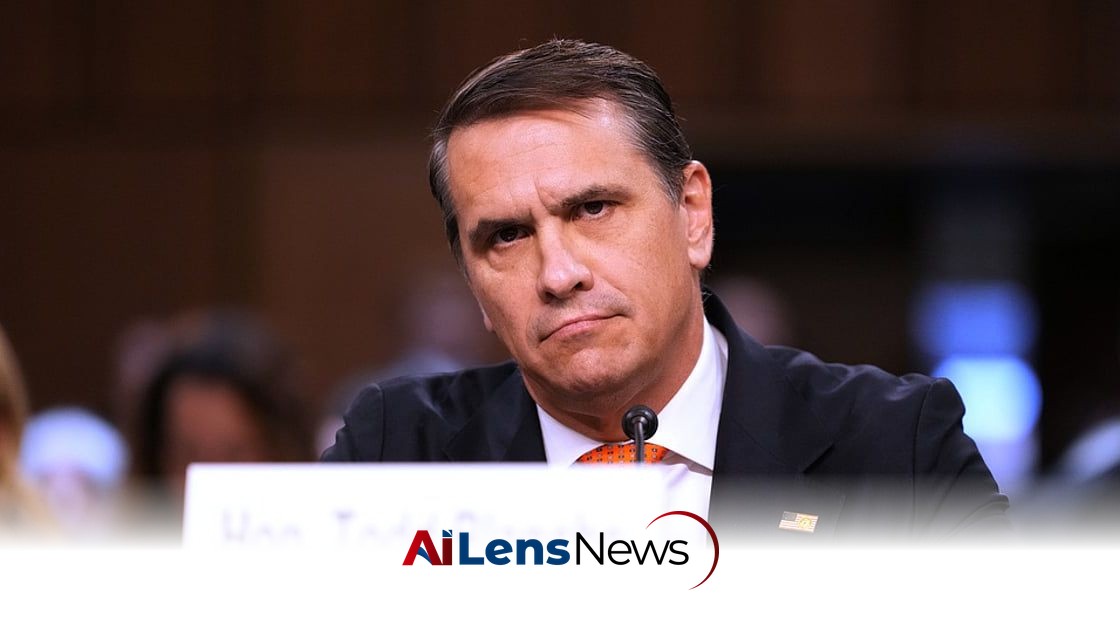


Todd Blanche, the acting attorney general, has reached a deal with senators to scrap a contentious $1.8 billion compensation fund, clearing a path for his Senate confirmation.
New Delhi, India Aug 3, 2026 ALN: The US acting attorney general, Todd Blanche, announced on Sunday that he has reached an agreement with lawmakers to officially rescind a controversial $1.8 billion compensation fund. This decision comes amidst a standoff regarding his Senate confirmation, which has been complicated by a dispute with Republican Senators John Cornyn of Texas and Thom Tillis of North Carolina.
The fund in question was designed as part of a broader response to claims of politically motivated prosecutions, particularly those involving former President Donald Trump and his associates. The announcement from Blanche followed a delay in the Senate Judiciary Committee's vote on his nomination, which had been postponed due to the ongoing disagreements over this fund.
Senators Cornyn and Tillis had made it clear that they would withhold their support for Blanche's nomination until the Trump administration formally rescinded the plans for the $1.8 billion "anti-weaponization" fund. This fund was intended to compensate individuals who claimed to be victims of politically motivated legal actions, a concept that has sparked significant debate among lawmakers and legal experts alike.
In a statement shared via social media platform X, Blanche expressed that his team had engaged in productive discussions with committee members and Senators over the past several weeks. He emphasized that these discussions had addressed any concerns and outstanding questions related to the fund and its implications. "We have enjoyed good faith discussions, and as a result, issue the following order and update with regard to the May IRS settlement," he wrote.
Accompanying his announcement was a signed order stating: "The Attorney General's May 18, 2026 Order establishing the Anti-Weaponization Fund... is rescinded and shall have no force or effect. This Order establishes, beyond any doubt, that there is no Fund." This formal rescission is intended to alleviate the concerns raised by Cornyn and Tillis, although the specifics of the agreement and the discussions leading to it have not been fully disclosed.
The origins of the anti-weaponization fund can be traced back to an extraordinary settlement between Trump and his administration concerning the illegal disclosure of his tax records. As part of this settlement, the fund was proposed to provide broad protections to the president, his family, and his businesses against tax audits and other government claims. Critics of the fund have argued that it lacks a clear legal foundation and adequate public oversight, raising concerns that it could be misused to benefit political allies, including individuals convicted of crimes related to the January 6, 2021, assault on the US Capitol.
Blanche had previously indicated that the fund would not move forward, but the insistence from Cornyn and Tillis for a formal written commitment was necessary to ensure that the fund would not be revived in the future. These demands reflect a broader concern among some lawmakers regarding the potential for political favoritism and the implications of such a fund on the integrity of the legal system.
As of now, there have been no immediate responses from Senators Cornyn and Tillis regarding Blanche's announcement on Sunday. Their reactions will likely be closely scrutinized, as their support is crucial for Blanche’s confirmation. The Senate Judiciary Committee is scheduled to vote on Blanche's nomination on Tuesday, and the outcome of that vote could have significant implications for the future direction of the Department of Justice under his leadership.
In a related development, former President Trump has suggested that he might temporarily withdraw the nomination of Blanche, who previously served as his personal lawyer, and consider renominating him after Cornyn and Tillis leave office in January. This statement has raised eyebrows among political observers, as it indicates a willingness to play a strategic game in the Senate confirmation process, potentially leveraging the timing of nominations to secure favorable outcomes.
The implications of this situation extend beyond Blanche's nomination. The debate surrounding the anti-weaponization fund touches on broader themes of political accountability, the role of the Department of Justice, and the ongoing tensions between political parties in the United States. The fund's original intent—to provide compensation for those claiming politically motivated legal actions—has been met with skepticism, as many see it as a potential tool for retaliation against perceived political enemies.
Critics have pointed out that the fund could create a dangerous precedent, where the government might be perceived as financially rewarding individuals based on their political affiliations or grievances. This concern is particularly pronounced in the context of the current political climate, where accusations of weaponization of the legal system are rampant. The notion that the Department of Justice could be influenced by partisan interests raises alarms about the sanctity of the rule of law and the impartiality of legal proceedings.
Furthermore, the political maneuvering surrounding Blanche's nomination reflects the broader challenges faced by the Biden administration in securing appointments amidst a divided Congress. With the Senate split along party lines, securing bipartisan support for nominations has become increasingly difficult. This situation is compounded by the contentious atmosphere surrounding many of the issues that have dominated national discourse, including the January 6 Capitol riot, election integrity, and the handling of sensitive legal matters involving high-profile political figures.
As the Senate Judiciary Committee prepares to vote on Blanche's nomination, the outcome will not only determine his future but also reflect the current state of bipartisan cooperation and conflict in Congress. The committee's decision could set a precedent for how future nominations are handled, particularly in an era where partisan divides are stark and increasingly entrenched.
In conclusion, the agreement to rescind the $1.8 billion compensation fund marks a significant development in the ongoing saga of Todd Blanche's nomination as acting attorney general. It underscores the complexities of navigating political alliances and the challenges of addressing contentious issues that resonate deeply within the American political landscape. As the Senate Judiciary Committee moves forward with its vote, all eyes will be on the dynamics at play and how they may shape the future of the Department of Justice and its role in upholding the rule of law in a highly polarized environment.
The implications of this situation will likely reverberate beyond the immediate context of Blanche's confirmation. It raises questions about the future of the Department of Justice's approach to politically charged cases and how the agency will navigate the murky waters of public perception and political influence. The outcome of this nomination could serve as a litmus test for the Biden administration's ability to assert its authority and maintain the integrity of the justice system in an increasingly partisan landscape.
To learn more about the latest developments in Elections, stay updated with our exclusive reports and analyses on AiLensNews.

