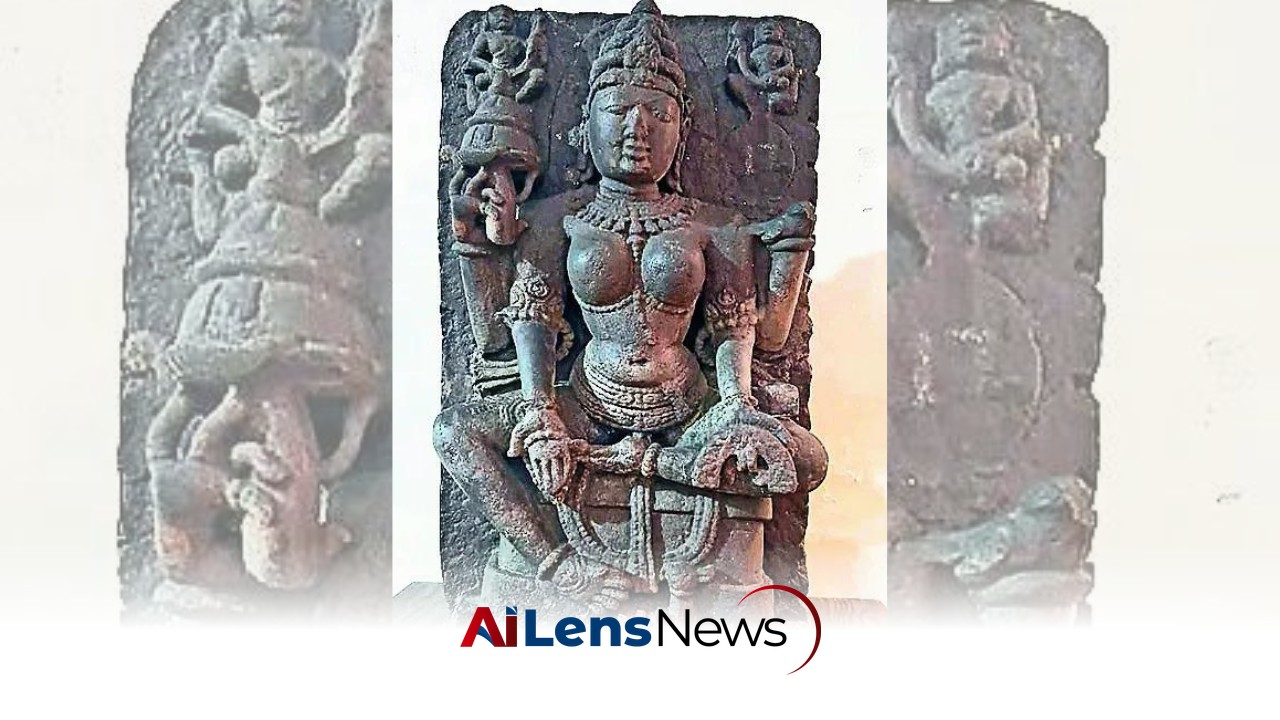


A significant re-identification of a 12th-century sculpture in Dhar reveals it as Gayatri, not Saraswati, highlighting the importance of digital documentation.
New Delhi, India Jul 13, 2026 ALN: A 12th-century sculpture that has long been misidentified as Saraswati has now been correctly recognized as Gayatri, thanks to advances in digital documentation and 3D mapping techniques. This revelation not only corrects a historical error but also sheds light on the intricate iconography that has been overlooked for centuries. The process of re-evaluating historical artifacts through modern technology is becoming increasingly common, reflecting a broader trend in the field of art history and archaeology.
The sculpture, unearthed in Dhar, Madhya Pradesh, has been a subject of fascination for historians and art enthusiasts alike. Traditionally associated with knowledge and music, Saraswati is often depicted with a veena, a stringed musical instrument. However, the absence of this attribute in the sculpture was a crucial clue that led researchers to reconsider its identification. This misidentification underscores the complexities involved in interpreting ancient art, where iconography can be subtle and multifaceted.
The use of digital tools has transformed the way historical artifacts are analyzed. In this case, 3D mapping allowed experts to examine the sculpture from various angles, revealing iconographic details that had previously gone unnoticed. These details played a pivotal role in the re-identification process. With the help of high-resolution imaging and digital modeling, researchers could observe the finer aspects of the sculpture's carvings and the positioning of the figure, which are essential for accurate identification.
This technological advancement is part of a larger movement in archaeology and art history that seeks to utilize digital methods to preserve and analyze cultural heritage. By creating detailed digital records of artifacts, scholars can ensure that even if the physical object is damaged or lost, its digital twin remains for future study. This approach not only aids in the preservation of history but also democratizes access to cultural artifacts, making them available for study and appreciation by a global audience.
Gayatri, a representation of Vedic wisdom, holds immense cultural and spiritual significance. The Gayatri Mantra, one of the oldest and most revered mantras in Hindu tradition, is dedicated to the Gayatri deity, who embodies the essence of the Vedas and is often associated with enlightenment and knowledge. The rediscovery of this sculpture not only corrects a long-standing misconception but also enriches Madhya Pradesh's digital heritage mission. It emphasizes the importance of preserving and accurately documenting cultural artifacts.
The implications of this re-identification extend beyond mere academic interest. It can influence cultural tourism in Madhya Pradesh, as accurate representations of historical figures can attract visitors eager to learn about the region's rich heritage. Furthermore, it can inspire local communities to engage with their cultural history, fostering a sense of pride and ownership over their heritage.
The misidentification of religious and mythological figures is not an isolated incident. Throughout history, many artifacts have been wrongly labeled due to a lack of understanding of the intricate symbolism and iconography associated with different deities. This can happen for various reasons, including the passage of time, changes in religious practices, and the influence of colonial perspectives that often imposed Western interpretations on Eastern art forms.
In , where a rich tapestry of gods and goddesses exists, the challenge of correctly identifying figures is particularly pronounced. Each deity has specific attributes, symbols, and narratives that are essential for their recognition. Misidentifications can lead to a skewed understanding of cultural and religious practices, affecting both academic scholarship and public perception.
The re-identification of the sculpture as Gayatri highlights the crucial role that scholars and technology play in cultural preservation. Art historians, archaeologists, and digital technologists must collaborate to ensure that cultural artifacts are accurately documented and understood. This interdisciplinary approach is essential for the future of heritage studies, where the integration of traditional scholarship with modern technology can lead to more comprehensive insights into our past.
As researchers continue to explore and document our cultural heritage, such revelations will contribute to a more nuanced understanding of our history. The ongoing advancement of digital technologies promises to further enhance our ability to study and preserve artifacts, allowing for deeper exploration of the narratives they embody.
This re-identification serves as a reminder of the evolving nature of historical scholarship and the vital role of technology in uncovering the past. The intersection of art history and digital technology is reshaping how we perceive and interact with cultural heritage. As we advance into an increasingly digital age, the importance of accurate historical representation becomes paramount, not only for scholars but also for society as a whole.
The case of the 12th-century sculpture exemplifies how modern methodologies can rectify historical misconceptions and enhance our appreciation of cultural artifacts. It invites us to reflect on the importance of ongoing research and technological innovation in the preservation of our shared heritage, ensuring that future generations can engage with and learn from the past in a meaningful way.
The implications of this discovery extend into various domains, including education, tourism, and cultural identity. By accurately representing cultural artifacts, we not only honor the past but also create pathways for future generations to connect with their heritage. This not only enriches the academic landscape but also fosters a sense of belonging and continuity within communities.
In an era where globalization often leads to the dilution of local cultures, the emphasis on preserving and accurately interpreting historical artifacts becomes increasingly significant. It serves as a counter-narrative to cultural homogenization, allowing diverse voices and histories to be recognized and celebrated. The re-identification of the sculpture as Gayatri is a testament to the resilience of cultural heritage and the ongoing quest for knowledge and understanding in the face of historical inaccuracies.
As scholars continue to engage with both traditional methods and innovative technologies, we can anticipate further advancements in the field of art history and archaeology. Each new discovery not only adds to our understanding of the past but also enriches the present, providing context and meaning to contemporary cultural practices and beliefs. The journey of uncovering the true identity of this sculpture is merely one of many that highlight the dynamic interplay between history, culture, and technology.
To learn more about the latest developments in Political Controversies, stay updated with our exclusive reports and analyses on AiLensNews.

