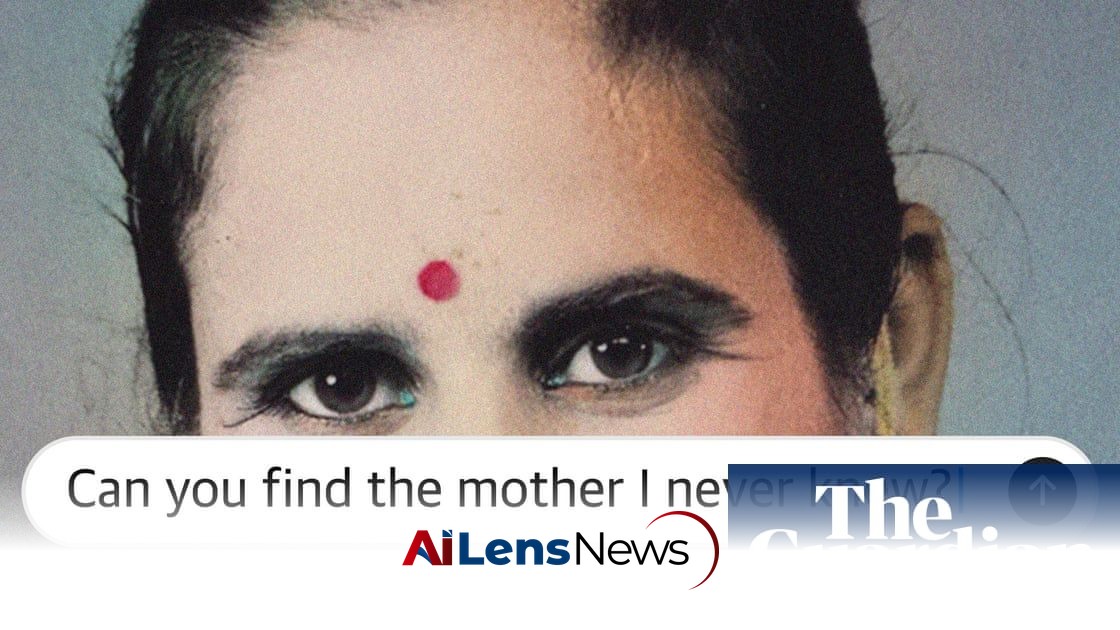


Avtar Singh and Nicci Dhamu, separated by continents and decades, find each other with the help of AI, uncovering a family history filled with secrets and love.
London, United Kingdom Jul 25, 2026 ALN: As a small boy growing up in Amritsar, India, in the 1960s, Avtar Singh used to hear whispers. Your mum isn’t really your mum, the rumors would say. Your mum lives abroad. Avtar didn’t really pay any attention to it. “I thought, the neighbors are just making up stories.” But the stories were true: the woman raising Avtar was actually his grandmother. When he was too young to remember it, his father had emigrated to Canada to work as a teacher, leaving Avtar in the care of his paternal grandparents. His grandfather, a police officer, was a fearsome authoritarian, but his grandmother brought him up with tenderness, as if he were her own son. She called him by his nickname, Titu. He felt loved.
When Avtar was around eight years old, he was told about his family in Canada: his dad, his mum, and a little brother were waiting for him there, and he would soon travel to join them. Just after his ninth birthday, Avtar found himself sitting on a plane, dressed in a three-piece suit and tie. He was traveling alone. He had never flown before. He didn’t speak a word of . He landed in Halifax, Nova Scotia, on Christmas Eve, 1968; his family met him at the airport and took him home. “I didn’t know what to think,” Avtar, now 66, tells me in a video call from his home in Abbotsford, British Columbia. “Before I knew it, it was the first week of January, and I was put in school.”
Unable to communicate with any of the other pupils, Avtar watched what they did and followed along, storing his snow boots in the cloakroom, standing up to sing the Canadian national anthem and God Save the Queen. But with his long hair tied in the topknot often worn by Sikh boys, he stood out. His parents offered to buy him a hockey stick and a pair of ice skates if he agreed to get his hair cut. He learned . His nickname changed from Titu to the more Canadian “Tito.” He began to blend in.
But Avtar didn’t fit in at home. He was much paler than everyone else – “the white sheep of the family,” he jokes. And they treated him like an outsider, an afterthought. When he was 14, his family went on holiday without him, leaving Avtar home alone for two weeks. He got on well enough with his father, but didn’t gel at all with his mother. “She didn’t have any of the warmth that my grandma had. She absolutely hated me.” She seemed much more like a stepmother than a mother.
That feeling was confirmed when Avtar got married and his grandparents flew over to stay with him and his new wife, Rosie. His grandma “whispered into my wife’s ear” that Avtar was the product of his father’s first marriage. “She didn’t say what my mother’s name was. She just said, ‘Her family was from Africa, and she left the child with us and went back to Africa. She might have gone to live in the UK.’ That’s it.” It didn’t feel right to ask his grandparents for more information: this was clearly a family secret that no one wanted to discuss with Avtar.
When his son was set a school assignment to complete his family tree, Avtar felt emboldened to approach his father. “I said, ‘Dad, you’ve got to tell me at least what my mother’s name was.’” His dad eventually relented: her first name was Savinder. But he would not give Avtar any more information, no matter how many times he asked. “I was stonewalled.” Avtar had no idea why his parents had split up. “All I really understood was that my mother’s family encouraged her to give up custody of me so it would be easier for them to remarry her.”
He thought about his mother constantly. When Rosie was pregnant with their daughter, there were anomalies in some of the antenatal tests, and Rosie and Avtar were referred to a geneticist. Avtar was asked about his parents’ medical history. “I couldn’t tell them anything about my mother’s family history. It hit me right in the heart. That’s when I thought, I’ve got to do something.”
He Googled and Facebooked, but there was almost nothing to go on; Savinder is a fairly common Punjabi Sikh name. In 2009, Avtar flew to London to visit the National Archives at Kew with the hope of finding immigration or marriage records that might lead him to his mother. “I couldn’t find anything at all.” On a later visit to London, he emailed Sunrise Radio, a British Asian station, asking if they could put out an appeal to find his mother, but they told Avtar they don’t do that kind of thing, out of respect for people’s privacy. That gave Avtar pause. “I thought, maybe I should just cool off. If my mother has some other family, I don’t want to disrupt her life.” Still, it niggled. Three or four years ago, he asked a British south Asian work colleague for advice; she suggested contacting the ITV show Long Lost Family. He watched a few episodes and decided it wasn’t for him. But he longed to know his mother. “The thought of her did not leave my mind, ever.”
The one thing Avtar did not do was a DNA test. He is retired now, but he used to be a chartered accountant, and he knows enough about technology, data and privacy to be wary of giving up his genetic code to a corporation. “They can sell it. Not only that – if they see something in my DNA, that affects my kids. I don’t want that information up there.” He deactivated his Facebook account 12 years ago for similar reasons. “I don’t have faith that these companies have the proper safeguards.”
Then, on 8 May this year, Avtar and Rosie were on holiday in the south of France. Avtar had been battling cancer; their long-awaited trip to Europe came after he had finished his treatment. “It was early morning, and I had read all the news. I was bored. I had nothing else to do. I thought, I’ve tried Google and everything else, why don’t I give AI a shot?”
He typed a prompt into ChatGPT, based on the little he knew, and what else he could infer. He assumed that his mother would be around the same age as his father (who died 10 years ago); he knew that Sikh women of her generation were generally given the middle name Kaur.
Avtar Can you find any information about a Savinder Kaur?
Avtar She would be between 87 and 97 years old and would have lived in India and Africa and possibly in the UK
ChatGPT The strongest match, based upon your clues, is this …
ChatGPT Savinder Kaur Nagi, born in 1936 in Kisumu, Kenya, to Indian Sikh parents.
ChatGPT The article mentions family roots near Jammu and Kashmir in India and later migration connections to the UK.
“I know that AI can just make up stuff. So I thought, OK, that’s nice,” says Avtar. “But it actually referenced an article. I thought, I’ll look at that, at least. Just to see.”
“I wrote it out of grief,” Nicci Dhamu tells me, in a cafe in west London. “Mummy never really had a voice, and that article was all about giving her one. I wanted to create a digital legacy for my mum.”
Nicci is the jewellery designer behind the brand Sohavi. “Sohavi means beautiful in Gurmukhī, the Sikh script. I learned about making things beautiful from Mum.” Her article, published on both the Sohavi blog and the South Asian Heritage Month website, was a celebration of her mother’s creativity. “She suffered loss, and decisions were made for her when she was young and wasn’t able to assert her own voice, like many south Asian women of her generation. But she lives on through me and the profound influences she had on me throughout my life,” Nicci wrote.
Savinder Kaur Nagi died in her sleep in December 2024, aged 88. For the last five years of her life, she had dementia. Nicci, 58, had been her carer; they lived together and were very close. Nicci’s family moved to the UK from Kenya in 1973. She has an older sister and a younger brother, as well as three half-sisters from her dad’s first marriage; he was widowed before he met Savinder. “We grew up as one family. I didn’t know until I was about 10 or 11 years old that my sisters were my half-sisters, and that was only because one of my sisters told me.” Theirs was a family that did not speak about the past.
“I remember once, Mum was in the kitchen making roti, and I asked her, ‘Mummy, you were, like, 25 years old when you got married to Dad. Wasn’t that a little old for somebody of your generation?’ I knew that something was different about our family, but I didn’t have the vocabulary to label it. My father never spoke to us about his wife who had died, and my mum never spoke about her life before him.”
When Nicci was in her 40s, an older cousin casually revealed that Savinder had been married to another man before she met Nicci’s dad. “She was married off, very young. And it probably wasn’t what she wanted,” Nicci tells me. “My grandfather took her and her sisters out of school in Kenya and took them back to Punjab to a place called Dhariwal, just outside Amritsar.” Later in life, her mother would openly lament leaving school – she could read and write, and loved studying – but never explained why she had been forced to give up her education. She did not discuss her first marriage. She never told her children they had an older half-brother.
“My cousin told me in that conversation that she had a son.” Nicci’s eyes are bright at the memory. But she never felt able to ask her mother about him. “I couldn’t. There was intrinsic pain there.”
There were times, Nicci says, when her mother would sink into a depression. “She would sit quietly, or take to bed because she was upset.” Nicci would bring Savinder her dinner and encourage her to sit up and eat. “Towards the end of Mum’s life, she used to cry, ‘Mera bacha’ [‘My child’, in Punjabi]. The dementia was bringing up all these memories for her.”
It was then – a couple of years before her mum’s death – that Nicci resolved to find the child her mother was crying for. But she did not know his name, and her mother was unwell so Nicci couldn’t ask her. Instead, she turned to her wider family.
She began with her mother’s young brother, who lives in Birmingham. “He knew my mum’s child as a two- or three-year-old,” Nicci says. She picked his brains, and also her cousins’. She learned that her mother’s first husband was called Mohan Singh, a very educated man who taught at the Sri Guru Ramdas Khalsa school in Amritsar. Mohan’s father had been a police officer, and “quite a difficult man”. Savinder had told her father that her husband wasn’t treating her well. “I think my grandad thought, this is not a good place for my daughter to be. He went around and took his daughter back to his home, and she must have picked up her little boy, too.”
Her mother raised the boy until he was three years old, Nicci was told. “As someone who is also divorced, I often reflect on the stigma my mother may have faced as a south Asian woman of her generation,” she tells me. “I think there was a lot of pressure from the family: let’s get her married. Somebody as young as her was going to have a very difficult life as a single mother. She was too young to be on her own. Her son’s family wanted him back. So they must have taken the child from her.”
Savinder returned to Kenya, alone. At first, she stayed with her eldest brother. Nicci’s cousins have vivid memories of her time in their home. “She would take his baby clothes out and cry. She never forgot him.” She was soon introduced to Nicci’s father, a man 16 years her senior. “I think she carried that trauma throughout her life, but did a very good job of holding her head up high, making her life work, raising three more children.” Family in Kenya heard “through the grapevine” that Savinder’s first husband had moved to Canada, but they couldn’t tell Nicci when. And no one knew the name of Savinder’s little boy. They only knew his nickname: Titu.
“No one’s going to call themselves Titu on LinkedIn, are they?” says Nicci with a deep laugh. That didn’t stop her trying to find him online, and his father and grandfather, too, Googling the names of teachers and police officers in Amritsar. “I didn’t capture anything. How do you find somebody without a name? It’s impossible.”
Three or four months before her mother died, she submitted Savinder’s DNA to Ancestry.com. “I set up a profile for her, saying, ‘Profile managed by daughter, looking for her son, name is Titu, possibly living in Canada.’” She got some interesting tidbits back about her mother’s ancestral roots in Kashmir, Afghanistan, and Uzbekistan, which would explain her light complexion, but no useful matches.
A month after her mother died, Nicci contacted friends who knew people who had worked for the magistrates court in Amritsar, in the hope of finding records of the divorce. “If there were divorce papers, there would be names – and maybe a child’s name.” But she was told that would be virtually impossible; a needle in a haystack.
Then, in a twist of fate, Avtar and Nicci's paths crossed through the very technology that had once seemed so distant. Avtar's inquiry into ChatGPT led him to a breakthrough that would change both their lives forever. The AI provided him with a name and a connection that would ultimately lead him to Nicci, who had been searching for her long-lost half-brother.
Through a series of messages and shared stories, Avtar and Nicci discovered their intertwined histories, piecing together the fragments of their pasts that had been hidden for so long. The reunion was not just a meeting of two long-lost relatives; it was a healing of old wounds and a celebration of family ties that transcended time and distance.
In the end, both Avtar and Nicci found solace in knowing their family story, a narrative that had once been shrouded in mystery and silence. They realized that sometimes, technology can bridge the gaps that life creates, bringing people together in unexpected and beautiful ways.
To learn more about the latest developments in Human Interest, stay updated with our exclusive reports and analyses on AiLensNews.

