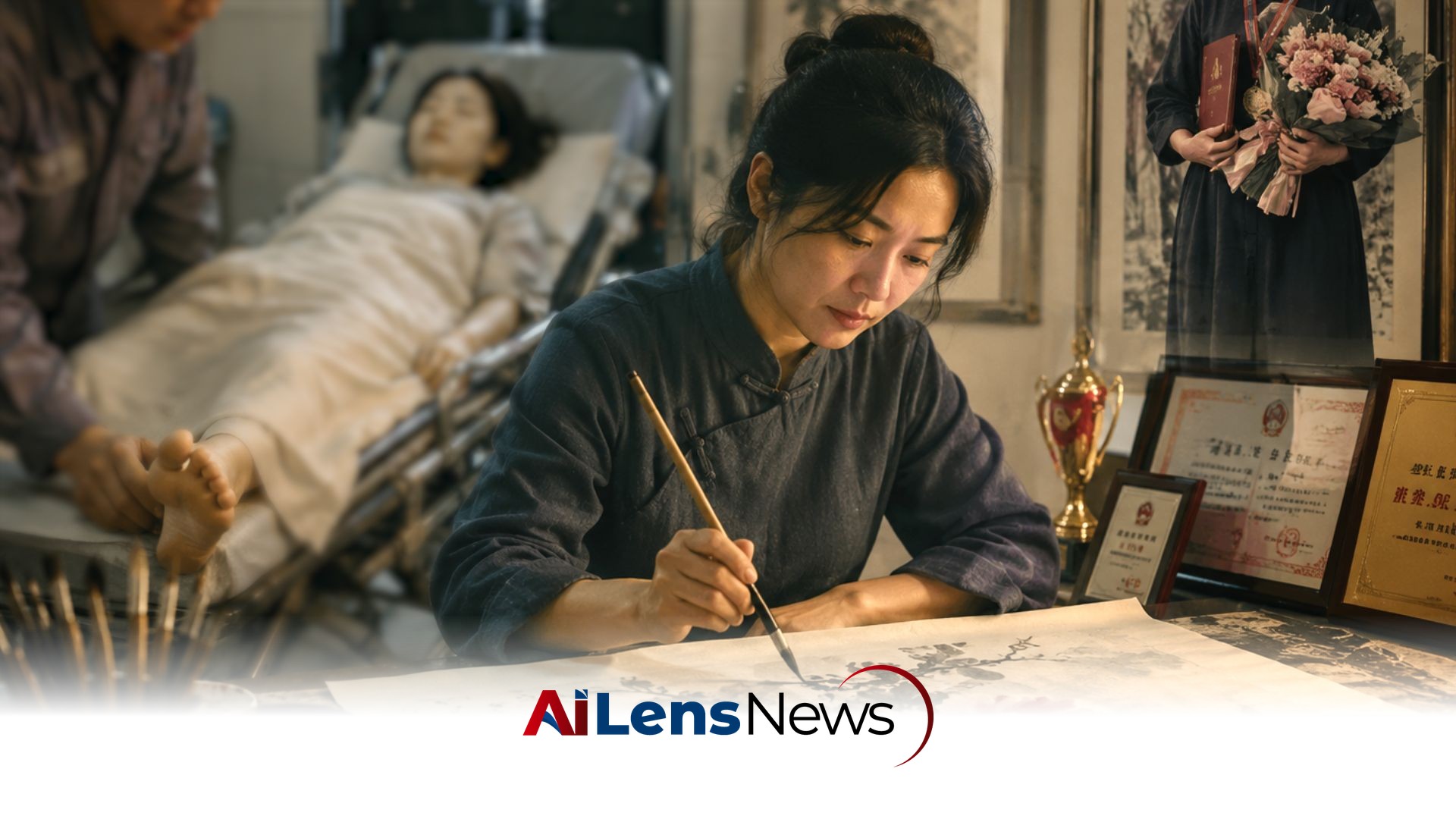


Chen Cuiju, a Chinese woman who was mistakenly declared dead, turned her near-tragic experience into a powerful artistic journey, inspiring many through her resilience.
Singapore, Singapore Jul 22, 2026 ALN: A Chinese woman who was mistakenly declared dead and nearly cremated before a funeral worker realised she was still alive has gone on to become an award-winning painting artist in her life today. This remarkable story of survival and transformation highlights not only the resilience of the human spirit but also the profound impact of compassion and kindness from others.
The woman’s story has resurfaced online more than three decades later, drawing much interest on Chinese social media platforms. The resurgence of this narrative has sparked conversations about the value of life, the importance of vigilance in the medical community, and the power of art as a means of healing and self-expression.
What began as a tragic mistake became a powerful example of compassion, second chances, and personal grit, as reported by the South China Morning Post (SCMP) on July 18. Chen Cuiju’s journey from a near-death experience to becoming a celebrated artist serves as a poignant reminder of the fragility of life and the extraordinary potential for recovery and growth.
Chen Cuiju, now 49, grew up in a poor family in Guizhou province, a region known for its mountainous terrain and rural communities. At the age of 18, she left her home in 1995 to seek employment in a factory in Dongguan, Guangdong province, which is often referred to as the "world's factory" due to its extensive manufacturing base. The long hours and poor working conditions in the factory took a toll on her health, leaving her severely malnourished and vulnerable.
On a fateful day, while suffering from a fever, Chen collapsed near a river and slipped into a coma. Days passed before a boatman discovered her unconscious body on the riverbank. Without identification and barely showing signs of life, she was mistakenly taken to a funeral home, where she was presumed dead.
As a crematorium worker prepared to cremate her, he noticed a slight movement of one of her feet. This crucial observation led him to realise that she was still alive. He promptly alerted the police, and Chen was rushed to a hospital for emergency medical care.
Upon arrival, doctors treated her for severe malnutrition, dehydration, and multiple organ failure. Despite the challenges posed by her lack of identification and the absence of family nearby, the hospital staff showed remarkable dedication and compassion, continuing her treatment and covering the medical costs. This act of kindness underscores the ethical responsibilities of medical professionals and the importance of human compassion in healthcare.
After more than three months in intensive care, Chen made a miraculous recovery and was eventually reunited with her family, thanks to the assistance of local authorities. This reunion marked the beginning of a new chapter in her life, one filled with opportunities that she had previously thought lost.
News of Chen’s extraordinary survival experience, often described as her "returning from death," spread rapidly across China. She began receiving letters from strangers offering encouragement and even job opportunities, illustrating the power of community support in times of crisis. One letter, in particular, changed the trajectory of her life.
This letter came from Chen Zhonglian, an art teacher based in Jinhua, Zhejiang province. Deeply moved by Chen’s experience, Chen Zhonglian extended an invitation for her to study painting, offering to cover her education and living expenses. He believed that learning a skill could help her build an independent future and avoid similar hardship, demonstrating the profound impact that mentorship can have on individuals seeking to rebuild their lives.
After moving to Jinhua in 1996, Chen Cuiju faced the dual challenges of grappling with painful memories and struggling with low self-confidence. Some people in her new environment treated her as if she brought bad luck, a stigma that often accompanies survivors of traumatic experiences. However, her teacher played a crucial role in her recovery, encouraging her to engage with classmates, nurturing her artistic talent, and persuading her to enter painting competitions.
Chen’s artistic journey began to flourish, and she won her first major painting award in 1999, marking the beginning of her rise in China’s art community. Her focus on traditional Chinese painting allowed her to connect with her cultural heritage and express her personal narrative through her art. Over the years, she received dozens of awards at national and international exhibitions, solidifying her reputation as a talented artist.
Several of her works were collected by prestigious art institutions, and she was recognised as a national first-class artist in traditional Chinese painting. This recognition not only validated her talent but also provided her with a platform to share her story and inspire others.
In 2006, Chen returned to Dongguan to express her gratitude to the funeral home workers and hospital staff who had saved her life. She presented them with a painting of blooming peonies beside broken, withered branches, a powerful symbol of resilience and rebirth after hardship. This gesture not only served as a thank-you but also illustrated how art can convey complex emotions and narratives that words often fail to capture.
The resurgence of Chen’s story on Chinese social media this month has prompted many to praise both the funeral worker whose careful observation saved her life and the medical team that provided her with care without asking for payment first. This reflects a growing recognition of the importance of empathy and altruism in society, particularly within the context of healthcare.
Many also highlighted Chen herself, noting that her determination transformed a second chance into a meaningful life filled with purpose and creativity. Her journey serves as a testament to the idea that individuals can rise above their circumstances and create a fulfilling life, even after experiencing profound trauma.
Stories like Chen’s remind us that compassion can change a life in ways nobody can predict. One worker’s attentiveness, a hospital’s willingness to help, and a teacher’s generosity all played a pivotal role in her recovery. Chen’s determination and resilience did the rest. Together, they illustrate that hope, resilience, and inspiration can all begin with one simple act of human kindness, reinforcing the notion that every life is valuable and deserving of a second chance.
To learn more about the latest developments in Human Interest, stay updated with our exclusive reports and analyses on AiLensNews.

