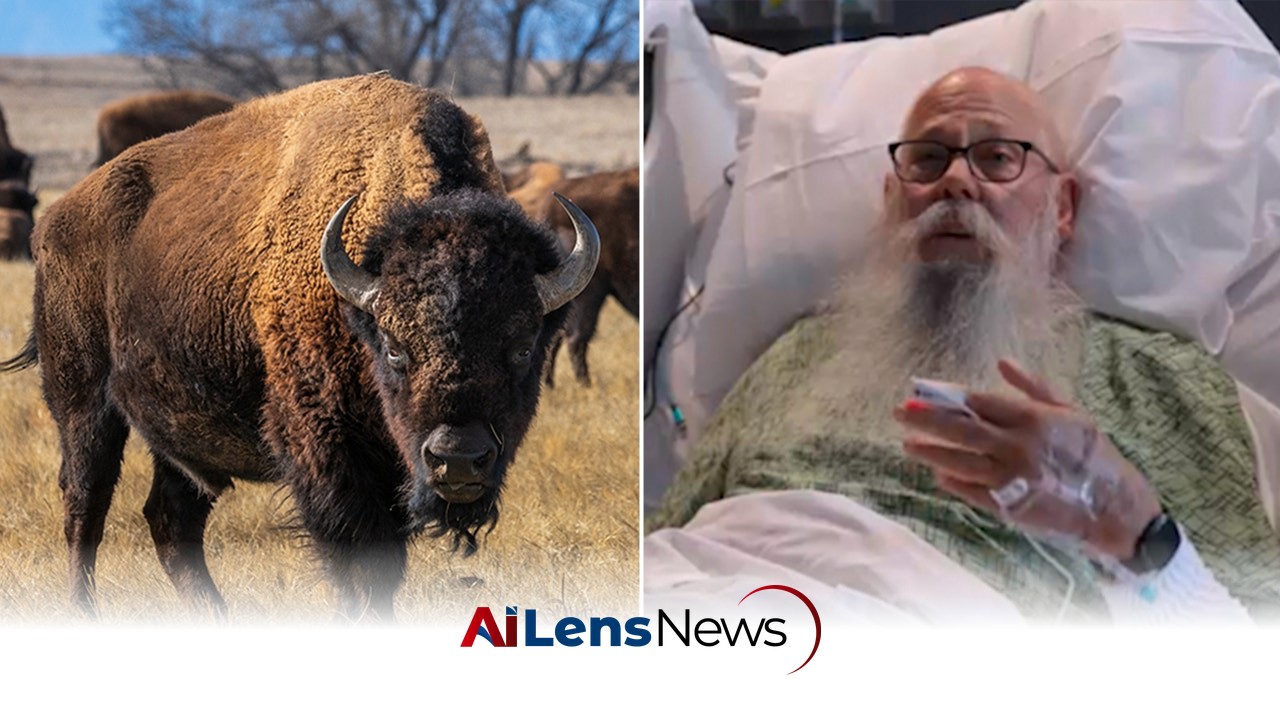


Carl Isom-McDaniel recounts his terrifying encounter with a bison at Yellowstone National Park, resulting in serious injuries as he protected his grandson.
Washington DC, United States Jul 21, 2026 ALN: In a shocking incident that underscores the unpredictable nature of wildlife encounters in national parks, Carl Isom-McDaniel, a grandfather from Kendall, Washington, is recovering from a severe bison attack that left him with a broken leg. The attack occurred on July 10 at Yellowstone National Park, a popular destination known for its diverse wildlife, including bison, which are often seen roaming freely in the park's vast landscapes.
Yellowstone National Park, established in 1872, is not only the first national park in the United States but also one of the most iconic in the world. It spans over 3,400 square miles across Wyoming, Montana, and Idaho and is renowned for its geothermal features, stunning landscapes, and rich biodiversity. Among its inhabitants are approximately 4,000 bison, which are the largest land mammals in North America. While these animals are generally docile, they can become aggressive, particularly during mating season or when they feel threatened.
In a video recorded from his hospital room at Bozeman Health, located in Southwest Montana, Isom-McDaniel recounted the events leading up to the attack. He described how he and his grandson were enjoying their time at Bridge Bay Campground near Yellowstone Lake when they encountered the bison. "We saw the bison and he was down. He wasn't showing aggression or anything like that until it picked a target. That target happened to be me," he explained. His description reveals a common misconception among park visitors who may underestimate the speed and agility of bison, which can run up to 35 miles per hour.
Isom-McDaniel's experience highlights the importance of understanding wildlife behavior while visiting national parks. Bison, despite their seemingly placid demeanor when grazing or wallowing, can react unpredictably if they perceive a threat. In this instance, the bison had already charged a group of teenagers before targeting Isom-McDaniel, indicating that the animal was already agitated. "Less than even a minute after I started filming, the bison charged a bunch of teenagers that were at a safe distance," said Mike McLeod, a photographer who witnessed the attack. This incident serves as a reminder that wildlife encounters can escalate quickly, and individuals should maintain a safe distance from animals and heed park guidelines.
As the bison charged, Isom-McDaniel attempted to protect his grandson. He recalled telling him, "You need to get up to the amphitheater. I will deal with this down here." This instinct to safeguard his grandson illustrates the profound bond between grandparents and their grandchildren, as well as the lengths to which individuals will go to protect loved ones in times of danger. The attack resulted in Isom-McDaniel breaking his femur in four places, necessitating surgery and an extended recovery period at the hospital.
Medical professionals at Bozeman Health confirmed the severity of his injuries, with one doctor stating, "It was definitely clear that he had a pretty painful injury. It's actually broken in multiple pieces." The recovery process for such injuries can be lengthy and challenging, particularly for an active individual like Isom-McDaniel, who was likely looking forward to enjoying time in the park with his family.
Eyewitness Mike McLeod played a crucial role during the attack. After witnessing Isom-McDaniel being thrown into the air by the bison, he immediately stopped filming and rushed to help. "Once I saw the victim in the air, I stopped filming and ran with some other men to haze the bison away and to render aid," he recounted. His quick actions, along with those of other campground visitors, were instrumental in ensuring that the bison retreated, allowing for Isom-McDaniel to receive the necessary medical attention.
Remarkably, throughout the ordeal, Isom-McDaniel remained conscious and aware, which is a testament to his resilience. "The victim never lost consciousness during the attack despite suffering multiple broken bones," reported Fox News. This composure during a traumatic event speaks to his character and possibly his prior experiences in outdoor settings. However, it also raises questions about the psychological impact such traumatic events can have on individuals, especially in a place that is typically associated with recreation and tranquility.
In the aftermath of the attack, Isom-McDaniel expressed gratitude for the care he received at the hospital, stating, "I always felt safe and secure. I wasn't ever terrified." This statement highlights the importance of quality medical care and the comfort it can provide during recovery. It also reflects a broader sentiment among park visitors who may have similar encounters, emphasizing the need for ongoing education about wildlife safety in national parks.
The incident involving Isom-McDaniel serves as a stark reminder of the inherent risks associated with wildlife encounters in national parks. Park officials consistently advocate for visitors to maintain a safe distance from wildlife, ideally at least 25 yards from bison and elk, and at least 100 yards from bears and wolves. These guidelines are in place to protect both the animals and the visitors, as interactions can lead to dangerous situations for all parties involved. The National Park Service frequently reminds visitors that wildlife is unpredictable, and even seemingly calm animals can act aggressively when they feel threatened or cornered.
As Isom-McDaniel continues his recovery, his story may serve as a cautionary tale for others who visit Yellowstone and similar parks. It underscores the need for awareness and respect for the wildlife that inhabits these natural spaces. By sharing his experience, Isom-McDaniel contributes to the ongoing dialogue about wildlife safety, potentially preventing future incidents and ensuring that national parks remain safe and enjoyable for all visitors. The implications of this incident extend beyond personal injury; they highlight the delicate balance between human activity and wildlife conservation, a theme that resonates deeply within the context of national park stewardship.
To learn more about the latest developments in Crime & Law, stay updated with our exclusive reports and analyses on AiLensNews.

