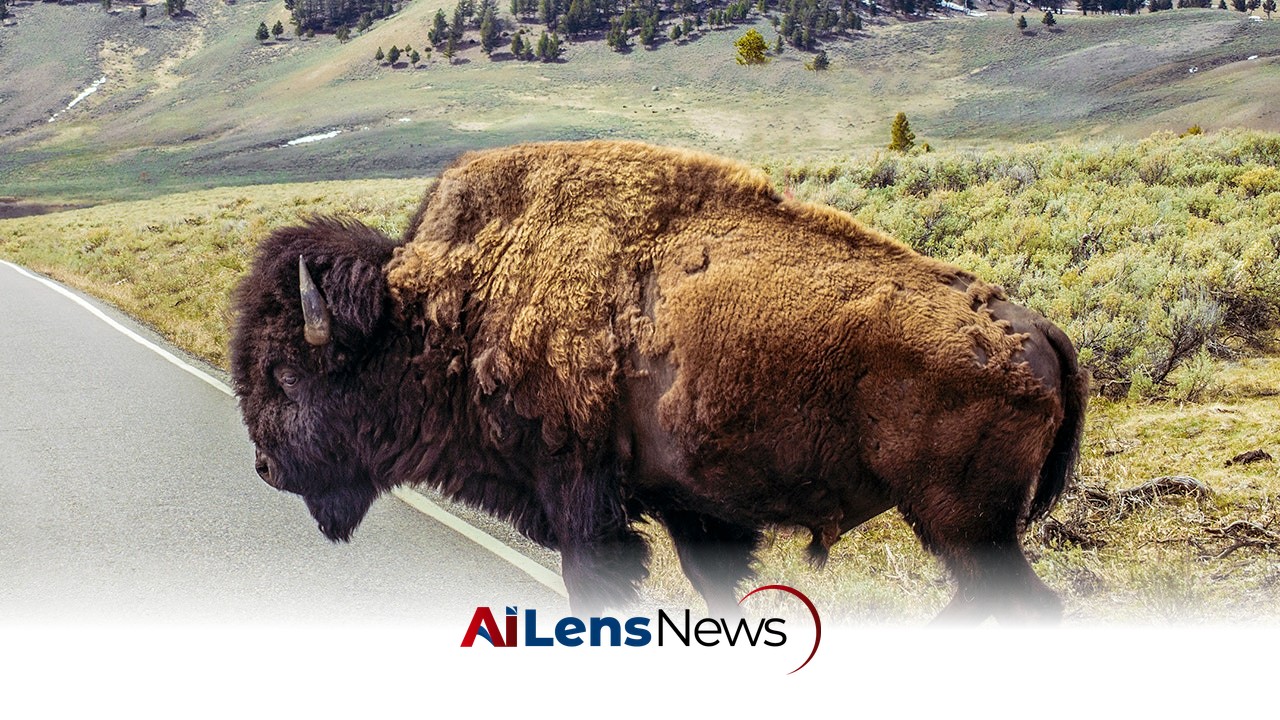


Yellowstone National Park officials have confirmed that the bison involved in a recent attack will not be euthanized, despite serious injuries inflicted on a visitor.
Washington DC, United States Jul 15, 2026 ALN: The decision not to euthanize the bison involved in a serious attack on a visitor in Yellowstone National Park has sparked a significant amount of discussion regarding wildlife management, visitor safety, and human-animal interactions in national parks. The incident, which resulted in serious injuries to a man, has drawn attention not only to the specific event but also to broader issues surrounding the coexistence of humans and wildlife in protected areas.
Yellowstone National Park, established in 1872 as the first national park in the United States, is home to a diverse array of wildlife, including bison, elk, bears, and wolves. The park spans over 3,400 square miles and attracts millions of visitors each year who come to experience its natural beauty and unique geological features. However, this popularity also brings challenges, particularly in managing interactions between wildlife and park visitors.
In the recent incident, the bison charged at Carl Isom-McDaniel, a grandfather who was walking with his grandson in a campground area. The attack resulted in multiple broken bones for McDaniel, who required surgery to treat his injuries. The decision by park officials to allow the bison to remain in the park, despite its aggressive behavior, reflects a complex approach to wildlife management that prioritizes the preservation of natural behaviors and ecosystems. This decision also highlights the challenges faced by park officials in balancing human safety with the ethical considerations surrounding the treatment of wildlife.
The attack was captured on video by wildlife photographer Mike MacLeod, who was present during the encounter. His footage, which quickly went viral, shows the bison charging at McDaniel and tossing him into the air, a moment that many viewers found alarming. MacLeod later recounted how he and others intervened to drive the bison away and provide aid to McDaniel, underscoring the unpredictable nature of wild animals. Such incidents remind us that wildlife, while often viewed as majestic and serene, can also pose significant risks, especially in areas where human presence is frequent.
Prior to the attack on McDaniel, the bison had exhibited aggressive behavior by charging at a group of teenagers, raising questions about the animal's state of mind and the potential for future encounters. Such behavior can be influenced by a variety of factors, including the animal's environment, stress levels, and the presence of humans. MacLeod noted that McDaniel and his grandson did not provoke the bison, which adds to the complexity of understanding what led to the attack. The incident serves as a reminder of the importance of vigilance and respect for wildlife, as animals can react unpredictably to human presence.
The decision not to euthanize the bison has significant implications for how wildlife management is approached in national parks. Park officials often face the difficult task of balancing the safety of visitors with the need to protect and preserve wildlife populations. Euthanizing an animal that has attacked a human is a controversial decision, as it raises ethical questions about the value of wildlife versus human safety. The decision to allow the bison to remain in the park indicates a commitment to understanding the animal's behavior and the context of the attack rather than resorting to lethal measures as a first response.
Yellowstone National Park has established guidelines for visitor behavior around wildlife, including maintaining a safe distance of at least 25 yards from bison. These guidelines are in place to protect both visitors and the animals themselves, as close encounters can lead to dangerous situations. Bison, which can weigh up to 2,000 pounds and run at speeds of 30 mph, are particularly unpredictable during the mating season when they may exhibit heightened aggression. The park's management strategies emphasize education and prevention, aiming to reduce the likelihood of dangerous encounters through informed visitor behavior.
The incident has prompted discussions about the responsibilities of park visitors when it comes to wildlife encounters. Many visitors may not fully understand the risks associated with getting too close to wild animals, and incidents like this can serve as a wake-up call for increased awareness and education regarding wildlife safety. It highlights the need for ongoing efforts to communicate the importance of respecting wildlife and understanding their natural behaviors, which can ultimately contribute to safer park experiences for everyone.
In the aftermath of the attack, Carl Isom-McDaniel is reportedly recovering from his injuries, and his first thoughts were for his grandson's safety. The bond between the two during this traumatic experience has resonated with many, highlighting the importance of family and support during difficult times. Fortunately, McDaniel's grandson escaped the incident without injury, which has brought some relief to the family amidst the chaos. Community support for McDaniel has been evident, with many expressing their concern for his well-being and recovery.
The community's response to the incident has been largely supportive, with many expressing concern for McDaniel's well-being. Online platforms, particularly Reddit, have seen a surge of comments from individuals sharing their thoughts on the attack and the interactions between humans and wildlife. Some users have recounted their own experiences with wildlife in the park, emphasizing the need for caution and respect for the animals that inhabit these areas. This collective reflection can serve as a valuable resource for educating future visitors about the realities of wildlife encounters.
As discussions continue regarding the attack and the management of the bison, it is clear that education plays a crucial role in preventing future incidents. National parks like Yellowstone are not only places for recreation but also ecosystems that require careful stewardship. Park officials often implement educational programs and signage to inform visitors about the best practices for safely enjoying the park while respecting wildlife. These initiatives are vital in fostering a culture of safety and responsibility among park visitors.
Increased awareness can help mitigate risks and ensure that both visitors and wildlife can coexist peacefully. This incident serves as a reminder of the unpredictable nature of wild animals and the importance of adhering to park guidelines. As more visitors flock to national parks, the need for effective communication about wildlife safety becomes even more critical. Park officials may consider enhancing their educational outreach efforts, utilizing social media and technology to reach a broader audience and reinforce safety messages.
In conclusion, the decision not to euthanize the bison involved in the attack on Carl Isom-McDaniel reflects a broader commitment to wildlife conservation and management within Yellowstone National Park. While the incident raises important questions about visitor safety and animal behavior, it also highlights the need for ongoing education and awareness to foster a safe environment for both humans and wildlife. As the park continues to navigate the complexities of human-wildlife interactions, the lessons learned from this incident may inform future policies and practices aimed at protecting both visitors and the natural world. The ongoing dialogue surrounding this event can contribute to a greater understanding of how to balance human enjoyment of natural spaces with the preservation of wildlife and their habitats.
To learn more about the latest developments in Local & Regional, stay updated with our exclusive reports and analyses on AiLensNews.

