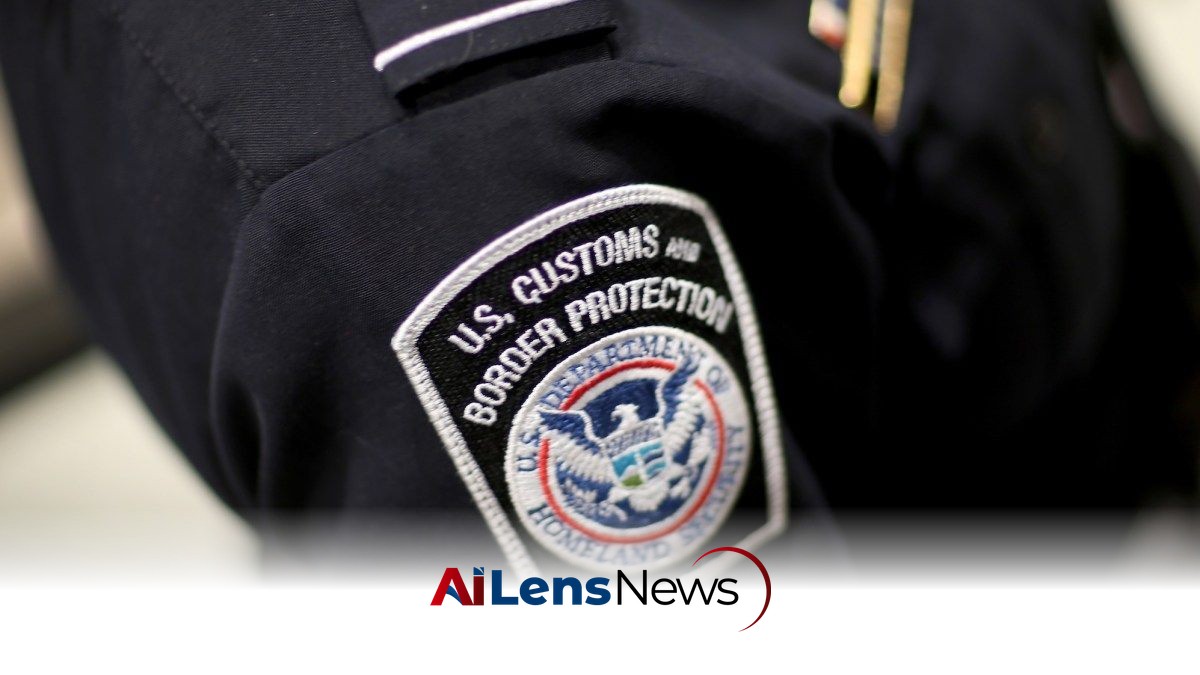


A U.S. citizen is contesting charges for allegedly providing a passcode that wiped his phone during a border search, raising constitutional questions.
Washington DC, United States Jul 24, 2026 ALN: The U.S. Justice Department is prosecuting an American for allegedly providing U.S. border authorities with a passcode that wiped the contents of his phone, according to an indictment and media reports.
This is thought to be the first known case in the United States where federal prosecutors have charged someone for the alleged destruction of data using a so-called “duress” password built into a phone’s software.
According to The Guardian, which covered the story earlier this week following the court’s first hearing on Monday, Atlanta resident Samuel Tunick is fighting the charges. Tunick’s attorneys said that it was unlawful for U.S. Customs and Border Protection to seize his phone as he arrived back in the U.S. last year, and that any evidence — including the alleged wiping of his phone — should be thrown out.
The case centers on a feature included in GrapheneOS, a custom Android operating system that runs in place of the software on most modern Google Pixel devices. Tunick’s attorneys confirmed GrapheneOS was running on his phone.
The software feature allows the device owner to set a passcode that deliberately wipes the contents of that device if entered instead of the user’s unlock passcode.
Tunick’s case also raises ongoing questions about what constitutional rights can be invoked at the border, which the U.S. government has long asserted is not U.S. soil until a person is authorized to enter.
The government’s indictment, which contains a typo (“Untied States Code”), accuses Tunick of allegedly providing a passcode to border agents that caused the phone to “delete the digital contents,” prior to the device being seized.
Tunick’s attorneys filed a motion to suppress the evidence, claiming that the detention and seizure were unlawful. The motion said U.S. border authorities took Tunick into a secondary inspection at Atlanta’s Hartsfield-Jackson airport as he returned from overseas on January 24, 2025, but that he was repeatedly denied access to an attorney and was not informed of his legal rights.
Tunick’s attorneys accused the government of demanding access to his phone under the pretext of searching for child exploitation imagery, but without providing evidence to justify its suspicion. His motion to suppress argued that the government was instead investigating him over his association with a long-running environmental movement called Defend the Atlanta Forest, which opposes the development of a sprawling training campus for law enforcement in Atlanta dubbed “Cop City.”
The motion said that the border agents claimed they did not need a warrant to search Tunick’s phone because he had not yet crossed the U.S. border. The U.S. government has long claimed it can search and seize people’s devices without a search warrant or court order until they are permitted entry to the United States.
When Tunick provided his passcode and the authorities entered it, “the screen went blank, flashed several times and the phone appeared to restart.” The authorities seized his phone anyway, before telling him that he was free to go and could enter the United States.
Prosecutors later charged Tunick under a federal statute that makes it unlawful to knowingly destroy or damage property to prevent authorities from seizing it. Tunick has pleaded not guilty.
Matthew Dodge, an assistant federal public defender on Tunick’s legal team, told that it was incredibly rare to see the federal statute used in an indictment.
Security experts also said they had not seen charges brought in this way before.
Bill Budington, a senior staff technologist at the Electronic Frontier Foundation, and Runa Sandvik, a digital security expert who works to protect at-risk people as the founder of security consultancy firm Granitt, told that they had not seen similar cases involving the use of duress passwords.
“I have not seen this before, though I’ve discussed the potential scenario with activists and journalists over the years,” said Sandvik. “I think this case serves as a reminder that authorities may argue you knowingly destroyed data, so it’s better to not have that data on you when you cross certain borders.”
“With a little planning ahead of time, you can always download the data you need once you get to where you’re going,” said Sandvik.
The Electronic Frontier Foundation has guides on how to protect your data and security at the U.S. border, and explaining what rights you have.
The Atlanta federal court overseeing the case is expected to rule on Tunick’s motion to suppress later this year. A Justice Department spokesperson did not respond to ’s request for comment.
This case has broader implications for the intersection of technology, privacy rights, and law enforcement practices at the border. As technology advances, the methods of data protection and the legal frameworks surrounding them must also evolve. The use of duress passwords, as featured in Tunick's case, highlights the growing complexity of digital privacy in an age where mobile devices contain extensive personal and sensitive information.
Legal experts have noted that this case could set a precedent for how similar situations are handled in the future. If the court rules against Tunick, it may embolden law enforcement agencies to take a more aggressive stance in their searches of personal devices at the border, potentially infringing on citizens' rights to privacy and due process.
Conversely, a ruling in Tunick's favor could reinforce the notion that individuals have the right to protect their data from government intrusion, even at border crossings. This could encourage more individuals to adopt similar security measures on their devices, knowing that they can legally invoke their rights to privacy.
Furthermore, the case underscores the ongoing debate about the balance between national security and individual privacy rights. As border security measures tighten in response to perceived threats, the rights of individuals may be increasingly challenged. This tension reflects a broader societal question: how much privacy are individuals willing to sacrifice for the sake of security?
The implications of this case extend beyond the immediate circumstances of Tunick's situation. It raises awareness about the potential vulnerabilities individuals face when traveling, particularly those involved in activism or dissenting movements. Activists may be particularly at risk of having their devices searched and their data scrutinized, which can have a chilling effect on free speech and the right to protest.
As the legal proceedings continue, civil liberties organizations are closely monitoring the case, advocating for the protection of individual rights in the face of increasing governmental surveillance and control. The outcome of Tunick's case may influence future legal strategies employed by both individuals and legal advocates seeking to defend against unwarranted searches and seizures.
In conclusion, Samuel Tunick's case not only challenges the legal boundaries surrounding data privacy at the U.S. border but also serves as a critical juncture in the ongoing dialogue about technology, individual rights, and the role of law enforcement in an increasingly digital world. As society grapples with these complex issues, the legal system will play a pivotal role in shaping the future of privacy rights and the protection of personal data against government intrusion.
To learn more about the latest developments in Crime & Law, stay updated with our exclusive reports and analyses on AiLensNews.

