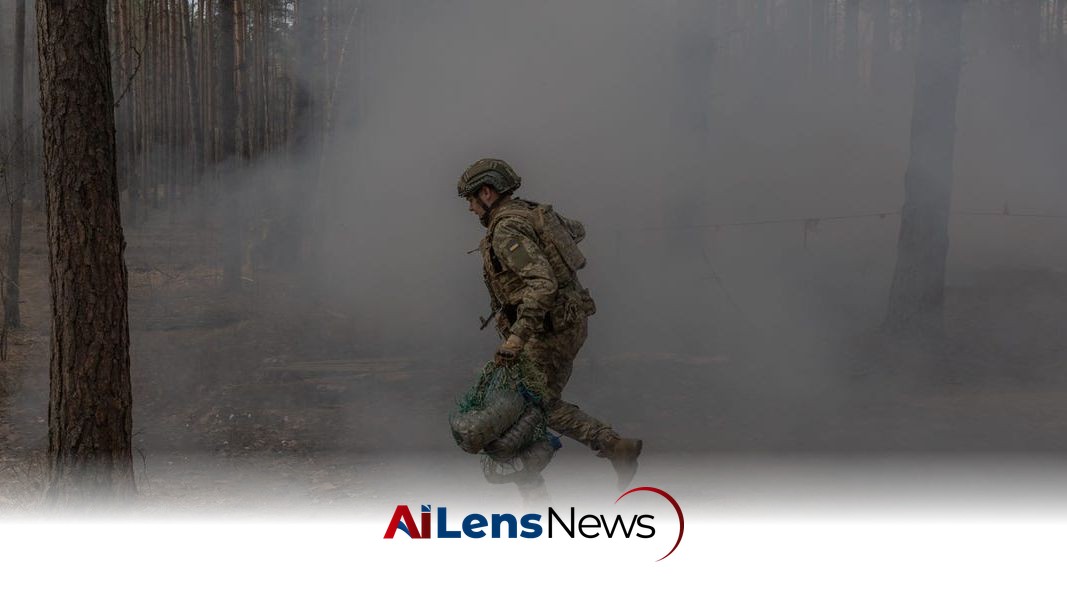


Ukrainian special operators are changing their strategies to counter increased drone activity, adopting new safety measures and utilizing shotguns for defense.
Washington DC, United States Jul 22, 2026 ALN: The ongoing conflict between Ukraine and Russia has seen a significant evolution in warfare tactics, particularly with the increasing use of drones by Russian forces. As the battlefield landscape changes, Ukrainian forces, especially special operations units, are adapting their strategies to counter this new threat. The rise in Russian drone activity has prompted these special operators to implement new safety measures that emphasize distance and mobility, highlighting the challenges they face in the modern combat environment.
In recent months, Ukrainian special operations forces have reported a marked increase in the deployment of first-person-view (FPV) drones, particularly those utilizing fiber-optic control systems. These drones are capable of striking targets from considerable distances, making traditional military tactics increasingly perilous. A special operator from the 4th Ranger Regiment, who spoke under the call sign Gur for security reasons, noted that the landscape of warfare has fundamentally shifted. He stated, "Things have changed. There are many more FPV drones now, especially fiber-optic ones. So there are more drones that can hit our vehicles or our personnel from farther away." This statement reflects a broader recognition among military analysts that the integration of drone technology into combat operations has transformed the nature of threats faced by ground troops.
To mitigate the risks posed by these drones, Ukrainian soldiers have altered their movement patterns. Gur explained that soldiers now walk more frequently and maintain a greater distance from one another, typically between 10 to 20 meters. This spacing is crucial for minimizing the potential impact of drone strikes on groups of soldiers. The tactical shift towards foot movement rather than relying solely on vehicles is a direct response to the increased vulnerability of armored units in the face of drone attacks. As Gur elaborated, "We walk more now. And we keep more distance between the soldiers in the group." This adaptation underscores the urgency with which Ukrainian forces are responding to the evolving threats on the battlefield.
In addition to changes in movement, Ukrainian special operators have also begun to equip themselves with pump-action shotguns as a last-resort measure against drone threats. These shotguns are particularly valuable against FPV drones, which may be less susceptible to electronic warfare jamming techniques. Gur remarked, "Before, there just wasn't as much need for that," indicating that the current operational environment has necessitated a reevaluation of the tools and tactics employed by Ukrainian forces. The introduction of shotguns into their arsenal reflects a practical response to a unique challenge presented by the modern battlefield.
Ukrainian special forces operate in what is referred to as the "kill zone," an area along the front lines that is heavily saturated with drones and ground robots capable of targeting military personnel and vehicles. The dynamics within this zone are complex and hazardous, as soldiers often seek cover to enhance their chances of survival. The kill zone typically extends 10 to 20 kilometers from the line of contact, but reports suggest that it is expanding, with some areas potentially reaching up to 40 or 50 kilometers. This expansion not only increases the danger for Ukrainian troops but also complicates their operational planning and execution.
In the face of these challenges, Ukrainian soldiers may spend days navigating through the kill zone to reach their objectives. This arduous journey can often be the most perilous aspect of their missions. Oleksiy Vyskub, Ukraine's first deputy defense minister, previously stated that the kill zone could double in size within the year, further complicating the operational landscape for Ukrainian forces. Gur indicated that missions often commence from locations 50 to 60 kilometers away from the front lines, emphasizing that even the initial stages of their operations are fraught with danger due to the proximity of Russian drone capabilities.
Once Ukrainian special operators dismount from their vehicles, they typically operate in small teams, which enhances their maneuverability and makes them more difficult for drones to detect. Gur explained, "At the moment, we infiltrate in small groups — usually two, three, or four soldiers." This tactical approach allows them to better navigate the risks posed by the saturated aerial environment. Additionally, to maintain operational effectiveness, Ukrainian forces rotate teams for infiltration missions, ensuring that soldiers have adequate time to rest, train, and prepare for subsequent operations. A single group may spend a week conducting search-and-strike operations before being relieved by another team, maintaining a continuous presence in the kill zone while managing fatigue and operational readiness.
The intense saturation of drones in the kill zone has also led Ukrainian special operators to explore the use of ground robots to assist with logistics and casualty evacuations. Gur noted that the danger of conducting these missions has escalated to the point where robots can safely transport wounded personnel from the front lines. He explained, "If someone is wounded, say, 500 meters from the line of contact or somewhere inside the kill zone, a ground robot can evacuate them." This innovative approach not only reduces the risk to human operators but also reflects the increasing reliance on technology in modern warfare.
The integration of ground robots into operational procedures is a relatively new development for Ukrainian forces. Gur acknowledged this shift, stating, "It's still something new for us, but we're training more soldiers to operate these systems, and we're building up our experience." As the conflict continues, it is likely that the use of robotic systems will become more prevalent, further transforming the nature of ground operations and the tactics employed by Ukrainian forces.
In conclusion, the rising threat of Russian drone activity has compelled Ukrainian special operators to adapt their tactics and strategies significantly. The shift towards increased foot movement, the use of shotguns for defense, the operation of small teams, and the integration of ground robots are all indicative of a military force that is responding dynamically to the challenges of modern warfare. As the conflict evolves, the ability of Ukrainian forces to innovate and adapt will be crucial in their ongoing efforts to counter the threats posed by drone technology and maintain operational effectiveness in a rapidly changing battlefield environment.
To learn more about the latest developments in Crime & Law, stay updated with our exclusive reports and analyses on AiLensNews.

