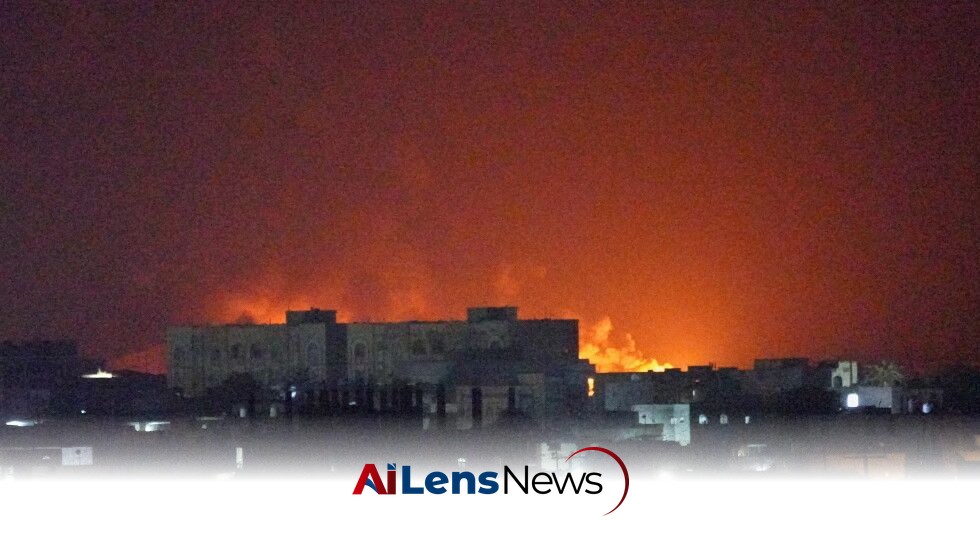


The United Arab Emirates has accused Iran of launching drone strikes on two tankers in the strategic Strait of Hormuz, escalating tensions in the region.
Washington DC, United States Aug 15, 2026 ALN: The United Arab Emirates (UAE) has officially blamed Iran for the recent drone attacks on two tankers operated by a state-owned oil company while they were transiting through the Strait of Hormuz. This incident marks a significant escalation in the ongoing tensions between the UAE and Iran, particularly in a region that is crucial for global oil shipments. The Strait of Hormuz is not only a strategic chokepoint for oil transportation but also a flashpoint for geopolitical conflicts, making any incidents in this area particularly sensitive.
According to reports, the attacks occurred during the early hours of the morning, with both tankers sustaining damage. Fortunately, there were no casualties reported among the crew members. The UAE's Ministry of Foreign Affairs condemned the attacks, stating that they pose a serious threat to maritime security and the safety of navigation in the region. The nature of the attacks, being drone strikes, highlights a shift in tactics that could have broader implications for maritime security. Drones, as unmanned aerial vehicles, have become increasingly accessible and are being used in asymmetric warfare, allowing state and non-state actors to project power without direct confrontation.
This incident is not isolated; it reflects a growing trend where drone technology is being employed in conflicts around the world. The use of drones allows for precision strikes with a lower risk to personnel, but it also raises the stakes in terms of potential miscalculations and escalations. As drone technology becomes more widely available, the implications for international security are profound, particularly in regions already rife with tension.
In response to the allegations, Iranian officials have denied any involvement in the attacks, labeling the accusations as unfounded. They emphasized their commitment to maintaining peace and stability in the region, while also warning against any escalation that could lead to further conflict. Iran's denial is consistent with its historical pattern of rejecting accusations of aggression, particularly from its regional adversaries. The Iranian government often frames its military actions as defensive, aimed at protecting its sovereignty and interests against perceived threats from the U.S. and its allies in the Gulf.
Iran's position is bolstered by its strategic interests in the region, where it has sought to expand its influence through various means, including support for proxy groups and military alliances. The Iranian leadership perceives itself as a counterbalance to U.S. influence and is likely to continue its assertive posture in response to what it views as provocations from its neighbors.
The Strait of Hormuz is a vital waterway through which a significant portion of the world's oil supply passes. Approximately 20% of the world's oil trade transits through this narrow strait, making it one of the most important maritime corridors globally. Any disruption in this area can have far-reaching implications for global energy markets. Analysts suggest that this incident could lead to increased military presence from both the UAE and Iran, further heightening tensions in an already volatile region. The potential for a military escalation raises concerns about the risk of miscalculations that could lead to broader conflict, especially given the presence of various international naval forces in the Gulf region, including those from the United States, the UK, and other allied nations.
In the context of international relations, the Strait of Hormuz has been a focal point for naval operations and military exercises by various nations. The U.S. has conducted freedom of navigation operations in the area to assert its stance against perceived threats to maritime commerce. This ongoing military presence serves as both a deterrent and a potential flashpoint for confrontations, particularly if misunderstandings occur between naval forces from different nations.
International reactions have varied, with several countries expressing concern over the potential for escalation. The United States has reiterated its commitment to ensuring freedom of navigation in international waters and has called for restraint from both parties. The U.S. has historically maintained a strong naval presence in the Gulf, which it views as essential to protecting its interests and those of its allies. Other nations have also urged both the UAE and Iran to seek diplomatic solutions to de-escalate tensions. The European Union, for instance, has been vocal about the need for dialogue and has expressed its commitment to ensuring stability in the region.
Diplomatic channels remain crucial in addressing the fallout from this incident. The international community is likely to monitor the situation closely, as any further military actions could destabilize not only the Gulf region but also impact global energy supplies. The role of regional organizations, such as the Gulf Cooperation Council (GCC), may also become more pronounced as member states seek to navigate the complex dynamics between Iran and its neighbors.
This incident does not occur in a vacuum; it is part of a larger pattern of hostility and conflict in the Gulf region, particularly between Iran and its neighbors. The UAE and Iran have a long history of strained relations, exacerbated by Iran's nuclear ambitions, its support for proxy groups in the region, and its involvement in conflicts in Syria and Yemen. The UAE, along with Saudi Arabia, has often viewed Iran as a primary threat to its national security, leading to an arms race and increased military expenditures in both countries. Additionally, the UAE's normalization of relations with Israel through the Abraham Accords has further complicated the regional dynamics, with Iran viewing this as a direct challenge to its influence.
The historical grievances between the UAE and Iran are rooted in territorial disputes, particularly over the three islands in the Persian Gulf—Abu Musa, Greater Tunb, and Lesser Tunb—currently controlled by Iran but claimed by the UAE. This territorial contention adds another layer to the complex relationship, making diplomatic resolutions more challenging. Furthermore, Iran's support for groups like the Houthis in Yemen and Hezbollah in Lebanon has raised alarm in the UAE and other Gulf states, leading to a perception of encirclement and vulnerability.
The economic implications of such attacks can be significant, affecting not only the immediate parties involved but also global markets. Oil prices are sensitive to any signs of instability in the Gulf, and an increase in military tensions could lead to fluctuations in oil prices, impacting economies worldwide. Investors often react quickly to geopolitical risks, and a sustained period of heightened tensions could lead to increased volatility in energy markets, potentially affecting global inflation rates and economic recovery efforts in various countries.
In addition to direct impacts on oil prices, the broader economic ramifications could include disruptions to shipping routes, increased insurance costs for maritime transport, and potential sanctions or trade restrictions imposed by other nations. Companies operating in the region may also reconsider their investments and operations, leading to longer-term economic consequences for the UAE and its partners.
This latest incident underscores the fragile security situation in the Gulf region. As both the UAE and Iran navigate this crisis, the international community watches closely, hoping for a peaceful resolution to prevent further conflict. The path forward will likely depend on diplomatic efforts, regional alliances, and the willingness of both sides to engage in dialogue. The role of external powers, particularly the United States and European nations, will also be crucial in mediating tensions and fostering an environment conducive to negotiations.
In conclusion, the attack on the tankers in the Strait of Hormuz is a stark reminder of the precarious nature of security in one of the world's most critical maritime regions. As the situation develops, it will be essential for all stakeholders to prioritize dialogue and restraint to avoid a potential escalation that could have dire consequences for regional and global stability. The ongoing geopolitical dynamics, coupled with historical grievances and economic interdependencies, will play a critical role in shaping the future of UAE-Iran relations and the broader security landscape in the Gulf.
To learn more about the latest developments in World News & International Affairs, stay updated with our exclusive reports and analyses on AiLensNews.

