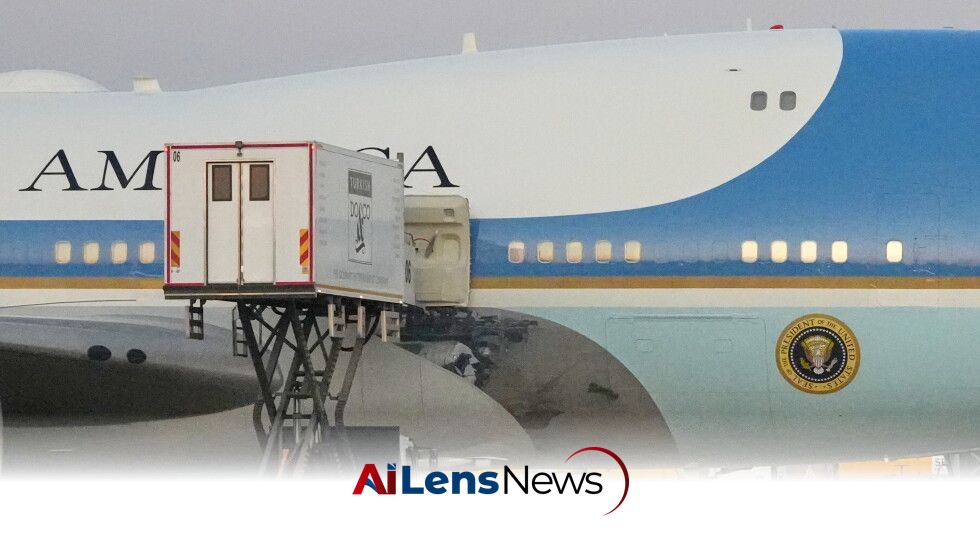



President Trump disclosed that he was advised to leave Air Force One during a recent trip to Turkey due to security threats, confirming reports of a decoy plan.
Washington DC, United States Aug 13, 2026 ALN: In a surprising revelation, former President Donald Trump stated that during his recent trip to Turkey, both the Secret Service and military officials expressed concerns about his safety, suggesting he should leave Air Force One. Trump described how he managed to slip away from the aircraft, confirming reports that he was advised to board a different plane due to a perceived threat. This incident has raised eyebrows and sparked discussions about the security measures in place for high-profile figures, particularly during international visits.
This incident, which has garnered significant attention, highlights the complexities and challenges of security protocols surrounding the President. According to Trump, he was informed that Air Force One was to be sent into the sky as a decoy while he was to be transported separately. Such measures are not uncommon in high-risk situations, where the safety of the President is paramount. The use of decoys is a well-documented strategy employed by the Secret Service to protect the President from potential threats, especially in unpredictable environments.
Trump's comments came during a press interaction, where he elaborated on the circumstances surrounding his departure from the plane. He mentioned that the Secret Service's concerns were taken seriously, leading to the unusual decision to switch planes. This revelation sheds light on the ongoing security measures that are in place for high-profile figures, especially during international visits. The Secret Service, tasked with the protection of the President and other high-profile individuals, employs a range of strategies to mitigate potential threats.
These strategies often include risk assessments that consider various factors, including the political climate of the host country, intelligence reports, and the presence of any known adversaries. Turkey, with its complex geopolitical landscape and historical tensions, presents a unique set of challenges for security personnel. The country has been a focal point in international relations, particularly due to its strategic location bridging Europe and Asia, and its involvement in various regional conflicts.
The former President's remarks not only confirm earlier reports but also raise questions about the protocols followed during such trips. The incident underscores the balance between security and the need for transparency in communication with the public. In an era where information travels rapidly and public scrutiny is intense, the implications of security decisions can be far-reaching. Ensuring the safety of the President while maintaining a level of openness with the media and the public is a delicate task. This balance is critical, as miscommunication can lead to public unrest or misinformation.
Moreover, the use of decoys, such as sending Air Force One into the sky while the President departs in a different aircraft, is a tactic that has been used in the past. This method is designed to confuse potential threats and provide an additional layer of security. However, it also raises questions about the effectiveness of such measures and the potential for miscommunication or misinformation in the public domain. The public's perception of security protocols can greatly influence how they view the administration and its handling of international relations.
As the story continues to unfold, it remains to be seen how these revelations will impact public perception of security measures taken during presidential travels. The public's understanding of the risks involved in international diplomacy is crucial, especially in an age where global tensions can escalate quickly. Additionally, this incident may prompt further discussions around the protocols in place for protecting not only the President but also other officials traveling abroad. The safety of government officials is a multi-faceted issue that encompasses not just physical security but also the political ramifications of security decisions.
The implications of this incident extend beyond just the immediate concerns for Trump’s safety. It reflects the broader context of presidential security, which has evolved significantly over the decades. Following various assassination attempts and threats against past presidents, the Secret Service has continually adapted its strategies to address emerging threats. The agency's protocols are often scrutinized, particularly in high-stakes environments where international relations are at play. For instance, the assassination of President William McKinley in 1901 led to the establishment of the Secret Service as the primary agency responsible for presidential protection.
Furthermore, this incident serves as a reminder of the political ramifications that can arise from security concerns. The perception of danger can influence public opinion and political narratives, potentially affecting the President's standing domestically and internationally. As such, the communication of security measures and the rationale behind them becomes an essential aspect of governance and public relations. When security concerns are communicated effectively, it can foster public trust in the administration's ability to protect its leaders and maintain stability.
In conclusion, Trump's revelation about the concerns raised by the Secret Service and military officials during his trip to Turkey opens a window into the intricate world of presidential security. The complexities of safeguarding a sitting president during international travel are compounded by geopolitical realities and the ever-present threat landscape. As discussions about security protocols and transparency continue, the balance between protecting national leaders and informing the public remains a critical issue in the realm of political discourse. This incident not only highlights the importance of security measures but also emphasizes the need for effective communication strategies that can reassure the public while safeguarding the interests of the nation.
To learn more about the latest developments in Politics, stay updated with our exclusive reports and analyses on AILensNews.

