

More
Checking your session
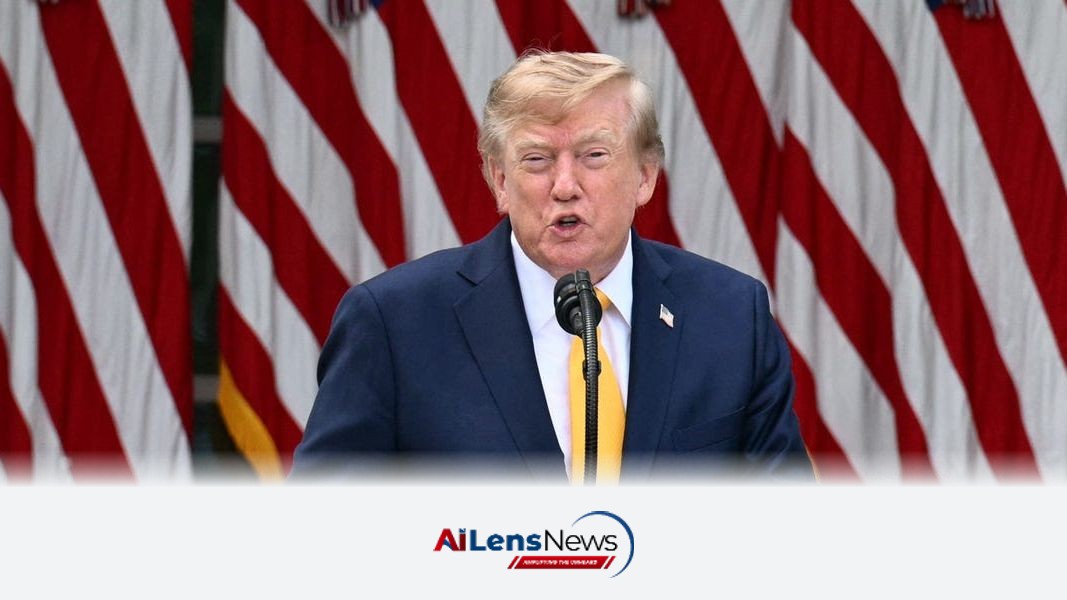



In a controversial move, President Trump has signed an executive order to rename Lake Ontario as 'Lake America,' escalating tensions with Canada.
Washington DC, United States Aug 28, 2026 ALN: President Donald Trump's ongoing tensions with Canada have taken a new turn as he signed an executive order on Thursday, renaming Lake Ontario to 'Lake America.' This change, which Trump claims is immediate, has been met with resistance from Canadian officials who have stated they will not recognize the new name. The decision to rename such a significant geographical feature highlights the complexities of international relations and domestic policy under the Trump administration.
The executive order mandates that the US government adopt 'Lake America' as the official name for federal maps, contracts, and documents. However, it does not compel private map providers to follow suit. Companies like Apple and Google have yet to respond regarding potential updates to their mapping services. The implications of this move could be far-reaching, influencing not only how Americans perceive the lake but also how it is referenced in international discourse and tourism.
This decision comes amid rapidly deteriorating relations between Washington and Ottawa. Trade negotiations between the two nations broke down recently, leading to new tariffs imposed by the US, which Canada has countered. Trump has threatened additional tariffs of up to 50% on Canadian auto and steel imports, set to take effect on January 1. These economic tensions have been compounded by political disagreements over issues such as immigration, environmental policies, and military cooperation, which have historically been points of collaboration between the two countries.
Trump has previously hinted at renaming the lake, stating in a video on Truth Social that the process only requires 'a good pen and some intelligence.' He was seen crossing out the name on a paper map while making the announcement, a gesture that underscores his unconventional approach to governance and public communication. This method of interacting with the public and media continues to be a hallmark of his presidency, often blurring the lines between official policy and personal opinion.
Interior Secretary Doug Burgum expressed support for the move on social media, stating, 'The places and waters that border our nation and support our economy should reflect the greatness of the United States.' This sentiment reflects a broader nationalist narrative that has gained traction in various political circles, suggesting that the renaming is not just about geography but also about national identity and pride.
In response to the renaming, several Democratic leaders have mocked the decision. Wisconsin Governor Tony Evers posted a video of himself signing a restaurant napkin that declared Lake Michigan as 'Lake Wisconsin,' quipping, 'See, I can sign napkins that say things, too.' This lighthearted mockery indicates a significant political divide and showcases how the renaming could be perceived as a trivialization of important geographical and cultural landmarks.
New York Governor Kathy Hochul offered a more straightforward rebuttal, asserting that New York will not recognize the new name. This refusal highlights the potential for conflict between state and federal authorities, particularly in a region where local identity is closely tied to natural landmarks. The Great Lakes are not just bodies of water; they represent significant ecological, economic, and cultural resources for the states and provinces that border them.
Lake Ontario, now referred to as 'Lake America' by the US government, is the smallest of the Great Lakes by surface area and runs along the northwest border of New York State and the southwest border of Ontario. It plays a crucial role in the regional ecosystem and is vital for transportation, commerce, and recreation. The lake's waters support a diverse range of wildlife and are a key resource for millions of people living in the surrounding areas.
The executive order also highlights that the US has invested nearly $4 billion in protecting the Great Lakes ecosystem over the past decade, including funding for nine of the eleven ice-breaking vessels. This investment underscores the importance of the Great Lakes to the US economy and environment, as well as the federal government's commitment to preserving these vital resources despite the contentious political climate.
According to a recent update from the US Geological Survey, the Geographic Names Information System will be updated to reflect this name change. This technical adjustment is part of a broader governmental process that ensures consistency in how geographical names are recorded and used in official documentation. However, the practical implications of such a change could be more complicated, particularly if local and Canadian authorities refuse to adopt the new nomenclature.
This is not the first time Trump has renamed a significant body of water during his presidency. In January 2025, he signed an order to rename the 'Gulf of Mexico' to the 'Gulf of America.' Such actions have raised questions about the authority of the executive branch in matters of geographical nomenclature and the potential for overreach in domestic policy. Critics argue that these renamings are superficial gestures that do not address the underlying issues in US-Canada relations or the challenges facing the Great Lakes region.
As this name change unfolds, it could extend beyond federal records and appear on widely used digital maps. Google has previously cited GNIS name changes as a reason to update names on its platform. When Mexico threatened legal action over the 'Gulf of America' changes, Google clarified that the updates would only be visible to US users, while users in Mexico would continue to see 'Gulf of Mexico.' This raises important questions about digital sovereignty and how technology companies navigate international naming disputes.
Google has not yet responded to inquiries regarding this latest name change. The tech giant’s decision will likely depend on a combination of legal considerations, user feedback, and its own policies regarding geographical accuracy and representation. The outcome of this situation may set a precedent for how future geographical name changes are handled in the digital age, particularly in an era where information is rapidly disseminated and can have significant implications for international relations.
To learn more about the latest developments in World News & International Affairs, stay updated with our exclusive reports and analyses on AILensNews.

A new roadmap has been established through international mediation to implement …

Tim Cook announces Apple's donation to aid flood relief and rebuilding efforts i…

The death toll from the devastating floods in Nepal and Tibet has risen to over …

Rescue efforts in Nepal are on hold as officials report rising water levels in a…

Qatar has welcomed the inaugural field verification mission of the Expanded Join…