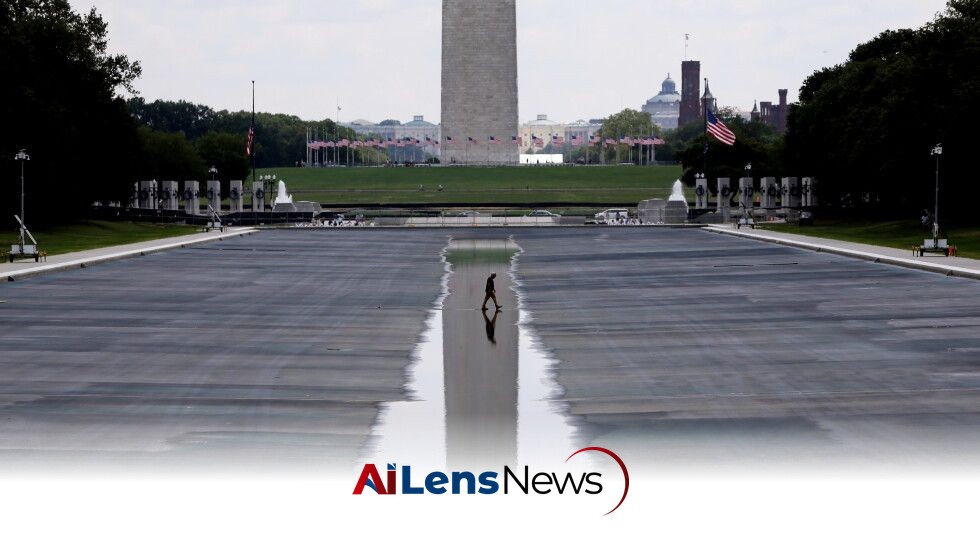


Former President Donald Trump has publicly criticized U.S. Attorney Jeanine Pirro after she attributed damage to the Lincoln Memorial Reflecting Pool to poor construction rather than vandalism, contradicting Trump's claims.
Washington DC, United States Aug 2, 2026 ALN: Former President Donald Trump has launched a sharp critique against U.S. Attorney Jeanine Pirro following her comments regarding the damage to the Lincoln Memorial Reflecting Pool. Trump had previously claimed that the damage was a result of vandalism, but Pirro asserted that it stemmed from substandard construction during a recent renovation. This disagreement not only underscores differing perspectives on the cause of the damage but also reflects broader themes of accountability and preservation of national monuments.
In a statement, Trump expressed his disappointment with Pirro's assessment, emphasizing that he believed the damage was intentional. He stated, "It's hard to believe that someone would suggest that the damage was anything other than vandalism. This is a national landmark, and we must protect it at all costs." Trump's comments are indicative of his longstanding commitment to the preservation of American historical sites, a theme that has resonated with many of his supporters who view such landmarks as symbols of national pride and heritage.
Pirro, on the other hand, defended her position, stating that her expertise in law and construction led her to conclude that the issues with the Reflecting Pool were due to inadequate workmanship rather than malicious intent. "As someone who has seen many construction projects, I can tell you that poor quality work can lead to significant problems, and that's what we are witnessing here," she explained. Her perspective brings forth the critical issue of construction standards and the importance of quality assurance in public works, especially in projects that involve historical sites.
The Reflecting Pool, a significant feature of the Lincoln Memorial, has been a subject of controversy since its renovation. Many have expressed concern over the state of the pool, which was drained for maintenance, revealing cracks and other damage. The Reflecting Pool, which stretches approximately 2,028 feet long and 846 feet wide, serves not only as a visual centerpiece for the Lincoln Memorial but also as a site for national gatherings and reflections on American history. Its maintenance is crucial, as it symbolizes the values of democracy and unity that Abraham Lincoln espoused.
The renovation of the Reflecting Pool, which was completed in the early 2000s, aimed to restore its original grandeur and enhance its structural integrity. However, the subsequent reports of damage have raised questions about the quality of the work performed and the oversight provided during the renovation process. The National Park Service, which oversees the maintenance of the Lincoln Memorial and its surrounding areas, has faced scrutiny over its ability to manage such significant historical sites effectively.
Trump's comments have sparked a debate among his supporters and critics alike, with some siding with his assertion of vandalism while others agree with Pirro's assessment of construction flaws. This incident highlights the ongoing tensions within the Republican Party, particularly regarding the narratives surrounding national symbols and their preservation. The party has often been characterized by its strong emphasis on patriotism and the protection of American heritage, and this disagreement may reflect deeper ideological divides about how best to achieve those goals.
As the discussion continues, both Trump and Pirro remain firm in their respective positions, with the public closely watching how this disagreement unfolds. The discourse surrounding the Reflecting Pool is not merely about the physical structure but also about the values and priorities that Americans place on their historical landmarks. The response from the public and political figures may influence future decisions regarding funding, maintenance, and policy related to national monuments.
Furthermore, this incident raises questions about the role of public figures in shaping narratives around national heritage. Trump, as a former president, wields significant influence and his comments can sway public opinion and mobilize support among his base. Conversely, Pirro's background in law and her focus on construction quality brings a different perspective to the conversation, emphasizing the importance of expertise and accountability in public projects.
The Reflecting Pool is not just a body of water; it is a symbol of reflection, both literally and metaphorically, representing the ideals of American democracy. The pool is often used for ceremonies and gatherings, including those that commemorate significant events in American history. Its condition, therefore, is of paramount importance to many who view it as a sacred space that honors the legacy of Lincoln and the values he stood for.
In light of the ongoing debate, it is essential to consider the implications of both perspectives. If the damage is indeed the result of vandalism, as Trump suggests, it raises serious concerns about the security of national monuments and the need for enhanced protective measures. On the other hand, if Pirro's assertion of construction flaws holds true, it points to the necessity for rigorous standards in public works, especially when dealing with sites of historical significance. This could lead to calls for reform in how such projects are managed and executed, emphasizing the need for accountability and transparency.
Moreover, the implications of this disagreement extend beyond the immediate issue of the Reflecting Pool. It reflects a broader cultural conversation about how Americans perceive their history and the symbols that represent it. As society grapples with questions of historical interpretation and preservation, the stakes become higher, as these discussions can influence future generations' understanding of their heritage.
In conclusion, the dispute between Trump and Pirro regarding the Lincoln Memorial Reflecting Pool serves as a microcosm of larger discussions about national identity, heritage preservation, and the responsibilities of those who oversee such important sites. As this debate evolves, it may set the stage for future conversations about how America values and protects its historical landmarks, ensuring that they continue to serve as symbols of unity and reflection for generations to come. The outcome of this discussion may also influence policy decisions at various levels of government, as stakeholders seek to balance the need for preservation with the realities of maintenance and funding in the face of competing priorities.
To learn more about the latest developments in Politics, stay updated with our exclusive reports and analyses on AiLensNews.

