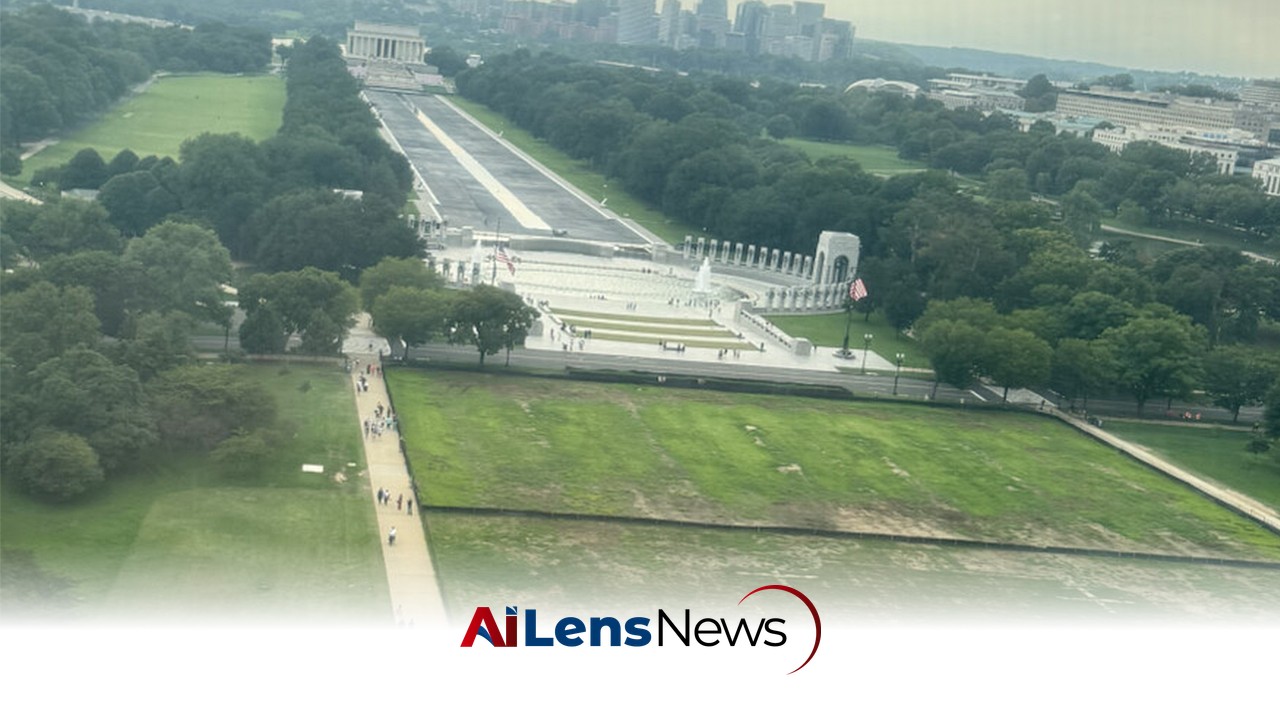


President Trump claims vandalism caused dead grass on the National Mall, where he hosted a July 4 celebration, without providing evidence for his assertion.
Washington DC, United States Aug 17, 2026 ALN: President Donald Trump has recently made headlines by attributing extensive patches of dead grass on the National Mall to acts of vandalism, particularly in the vicinity of the World War II Memorial, which was the focal point of his July 4 celebration. This assertion comes amidst ongoing debates surrounding the preservation of national monuments and the responsibilities of event organizers in maintaining public spaces.
In a post on Truth Social, Trump shared a photo that illustrated the stark contrast between the once-vibrant green turf and the now brown patches of grass. He wrote, "Look what VANDALS did to the grass connecting the vandalized World War II Monument and the vandalized Reflecting Pool, which will be opened again, and better than ever, shortly." His comments reflect a broader narrative he has employed in the past, where he often suggests that damage to public property is the result of malicious intent rather than natural wear and tear or the consequences of large events.
During the Independence Day event, a significant amount of infrastructure was erected on the National Mall, including a large stage and seating arrangements. After the event concluded, these structures were dismantled, exposing the underlying condition of the grass. While some images show the damage, they do not provide conclusive evidence to attribute the degradation solely to vandalism. The presence of heavy equipment and large crowds during the event could also contribute to the deterioration of the grass, raising questions about the role of event logistics in the maintenance of public spaces.
Trump's history of linking damage to vandalism has been noted in various instances. For example, earlier this month, he criticized U.S. Attorney for the District of Columbia, Jeanine Pirro, after her office dismissed a vandalism case. The dismissal was based on new evidence suggesting that the damage was due to flawed installation rather than intentional acts of destruction. This pattern of attributing damage to vandalism without robust evidence may influence public perception and the discourse surrounding the preservation of national landmarks.
On the same day Trump made his claims regarding the grass, law enforcement made an arrest related to vandalism at the World War II Memorial. The accused, Melissa Farris, faces felony charges for allegedly painting graffiti on the monument. However, it is important to note that the charging documents do not mention the area of grass that Trump highlighted, indicating a disconnect between the ongoing legal proceedings and the claims made by the former president.
In addition to his allegations about the grass, Trump shared another image that he claimed depicted threatening numbers associated with vandalism. He described the situation as a "pure case of VANDALISM, that included the grass," while also acknowledging that there could be complications arising from contractor-related issues. This dual focus on vandalism and potential contractor difficulties suggests a complex narrative where multiple factors might contribute to the state of the National Mall.
The implications of Trump's assertions extend beyond the immediate physical damage observed on the National Mall. They raise important questions about the responsibilities of event organizers when utilizing public spaces for large gatherings. The potential for damage during such events necessitates a careful consideration of logistics, including the selection of materials, the duration of installation, and the impact of foot traffic on the landscape. Furthermore, as discussions about vandalism continue, they highlight the tensions between the preservation of national monuments and the public's right to access and enjoy these spaces.
As the debate unfolds, it is crucial to examine the broader context surrounding the preservation of national monuments in the United States. The National Mall, home to numerous memorials and monuments, serves as a symbol of national identity and collective memory. The maintenance of these sites is not only a matter of aesthetics but also of cultural significance. Vandalism, whether perceived or real, poses a challenge to the integrity of these landmarks and can influence public sentiment regarding their preservation.
In conclusion, while Trump’s claims regarding vandalism on the National Mall have generated significant attention, they also prompt a deeper examination of the responsibilities associated with hosting large public events and the preservation of national monuments. As discussions continue, it is essential to approach the topic with a nuanced understanding of the various factors at play, recognizing that the stewardship of public spaces requires collaboration between government entities, event organizers, and the community at large.
To learn more about the latest developments in Politics, stay updated with our exclusive reports and analyses on AiLensNews.

