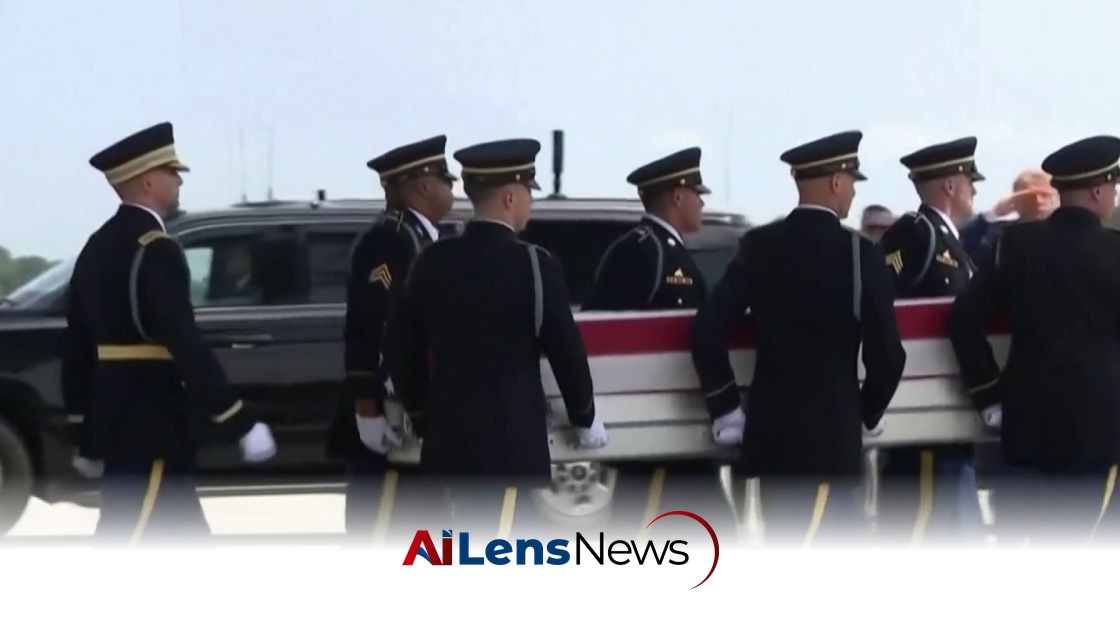


President Trump was present at Dover Air Force Base for the dignified transfer of four military personnel killed in the Middle East amid escalating tensions with Iran.
Washington DC, United States Jul 23, 2026 ALN: President Trump attended a solemn ceremony at Dover Air Force Base in Delaware today, honoring the lives of four U.S. military personnel who were killed in recent days in the Middle East. This event comes as tensions between the United States and Iran have intensified, leading to increased military engagements in the region. The ceremony, known as the dignified transfer, is an important tradition in the U.S. military, symbolizing the nation's respect and gratitude for the ultimate sacrifice made by its service members.
The dignified transfer ceremony is a significant and emotional occasion, where the remains of fallen service members are returned to their homeland with full military honors. The ceremony typically involves a procession where the casket is carried by a military honor guard, accompanied by the playing of taps and a rifle salute. The President's presence underscores the gravity of the sacrifices made by these individuals and their families, serving as a poignant reminder of the cost of war.
During the ceremony, families of the fallen were given the opportunity to pay their respects. One of the families was then escorted back to their home in Georgia aboard Air Force One, accompanied by President Trump. This gesture is meant to provide support and comfort to the grieving families during this difficult time. Such actions by the President are often seen as a way to connect with military families and show that their sacrifices are recognized at the highest levels of government.
The recent fatalities highlight the ongoing risks faced by U.S. troops deployed in volatile regions, particularly as military operations continue in response to threats from Iran. The U.S. has maintained a military presence in the Middle East for decades, with the aim of promoting stability and protecting U.S. interests in the region. However, the complexities of the geopolitical landscape, including the rise of militant groups and the aggressive posture of Iran, have made these operations increasingly dangerous.
The President's visit serves as a reminder of the human cost of conflict and the commitment of the U.S. to honor those who serve. Each loss reverberates not only through the military community but also across the nation, prompting discussions about the implications of U.S. foreign policy and military engagement. The ceremony at Dover Air Force Base is not just a moment of mourning; it is a call to reflect on the broader consequences of military actions abroad.
As the situation in the Middle East evolves, the administration faces increasing scrutiny over its military strategies and diplomatic efforts. Critics argue that the U.S. involvement in the region has not always been effective in achieving long-term peace and stability. The loss of life in these operations raises important questions about the future of U.S. involvement in the region and the measures being taken to ensure the safety of American personnel. Advocates for a more measured approach to foreign policy emphasize the need for diplomatic solutions over military interventions, suggesting that a reevaluation of strategy may be necessary.
The dignified transfer ceremony also serves to remind the American public of the sacrifices made by service members and their families. It is easy to overlook the personal stories behind the statistics of military casualties, but each individual represents a family, a community, and a nation that mourns their loss. The emotional weight of such ceremonies is felt deeply by those who have served and by their loved ones, who often bear the burden of grief long after the media coverage has faded.
In conclusion, the dignified transfer ceremony at Dover Air Force Base not only honors the fallen but also reflects the broader implications of U.S. military actions abroad. The President's participation signifies a commitment to recognizing the sacrifices of service members and their families amidst ongoing geopolitical challenges. As the U.S. navigates its role on the world stage, the stories of those who have made the ultimate sacrifice will continue to shape the national conversation about military engagement, foreign policy, and the responsibilities of leadership in times of conflict.
Furthermore, the ceremony acts as a reminder of the importance of supporting veterans and their families, who often face challenges long after their service has ended. The transition from military to civilian life can be difficult, and the emotional toll of losing comrades in arms is a reality that many veterans grapple with. Ensuring that these individuals receive the support and resources they need is crucial in honoring their service and sacrifice.
As the U.S. continues to confront complex challenges in the Middle East, the legacy of those who have fallen will undoubtedly influence future decisions regarding military engagement. The hope is that their sacrifices will lead to a more peaceful world, where diplomacy prevails over conflict, and where the lives of service members are valued and protected. The dignified transfer ceremony serves as a poignant reminder of the ongoing commitment to honor and remember those who have served, as well as a call to reflect on the path forward in a world fraught with challenges.
The history of U.S. military involvement in the Middle East is extensive and complex, dating back several decades. The U.S. has been involved in various conflicts in the region, including the Gulf War in the early 1990s, the wars in Afghanistan and Iraq, and more recent operations against ISIS and other extremist groups. Each of these engagements has brought its own set of challenges and consequences, shaping the geopolitical landscape of the region and influencing U.S. foreign policy.
In recent years, the relationship between the United States and Iran has been particularly fraught, characterized by a series of escalating tensions, including military confrontations, sanctions, and diplomatic disputes. The U.S. has positioned military assets in the region in response to perceived threats from Iran, leading to a cycle of confrontation that has raised concerns about the potential for broader conflict. The loss of American lives in this context serves as a stark reminder of the stakes involved in U.S. military operations and the need for careful consideration of the implications of such actions.
Moreover, the dignified transfer ceremony is not just a moment of remembrance; it is also an opportunity for reflection on the policies that lead to military engagement. As the nation grapples with the consequences of war, there is a growing discourse about the importance of prioritizing diplomatic solutions and understanding the long-term impacts of military interventions. The hope is that by honoring the sacrifices of those who have fallen, the nation will be inspired to pursue paths that promote peace and stability rather than conflict.
In this context, the role of the President during such ceremonies is significant. It underscores the leadership's responsibility to acknowledge the sacrifices made by service members and to engage with the broader implications of military actions. The presence of the President at these solemn events sends a message of solidarity with the families and communities affected by the loss of life, reinforcing the idea that their sacrifices are not forgotten and that their stories are an integral part of the national narrative.
As the U.S. moves forward, the lessons learned from past conflicts and the sacrifices made by service members will continue to shape discussions about military engagement and foreign policy. The challenge for leaders is to balance the need for national security with the imperative to honor the lives lost in service to the country. The dignified transfer ceremony serves as a powerful reminder of this responsibility, urging all to consider the human cost of war and the importance of pursuing peace through diplomatic means.
To learn more about the latest developments in Politics, stay updated with our exclusive reports and analyses on AiLensNews.

