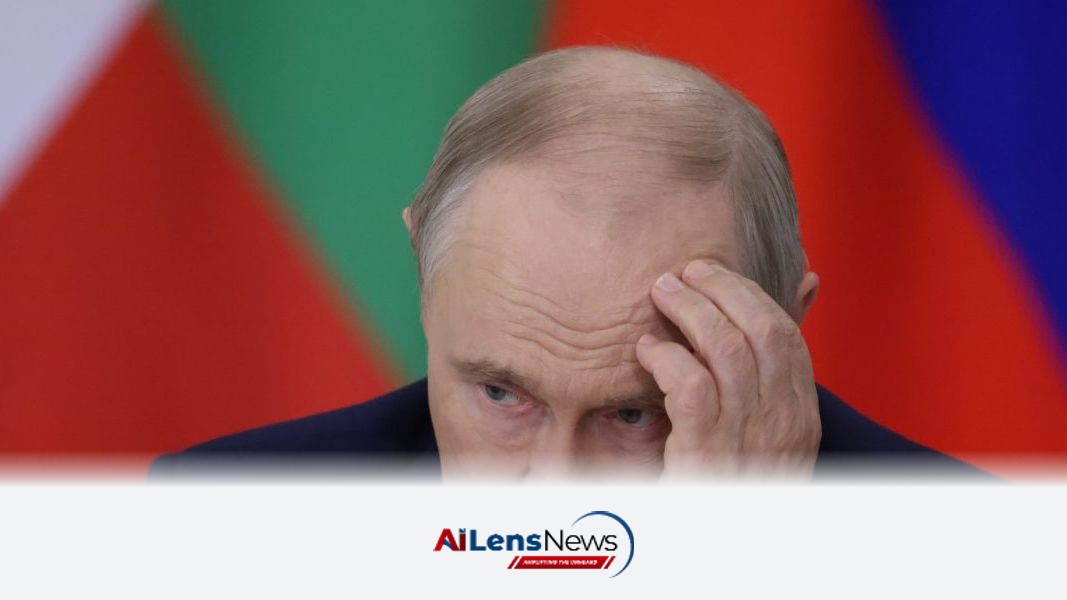



As depositors withdraw funds in fear of seizure, Russia's financial stability is threatened, impacting its ability to finance the ongoing war.
Washington DC, United States Aug 24, 2026 ALN: A financial crisis that has long been predicted by Russia experts and Kremlin insiders appears to have finally arrived as banks see depositors scramble to pull out their money amid fears it may be seized. This situation has escalated in recent months, reflecting broader economic challenges facing the country as it continues to engage in a protracted military conflict.
In the first half of August, Russians withdrew $3.4 billion (286.4 billion rubles), according to central bank data cited by the Washington Post. This followed a significant withdrawal of $7.3 billion in July and $4.5 billion in June, indicating a troubling trend of financial instability. The rapid pace of withdrawals suggests that many citizens are losing faith in the banking system, which is often seen as a critical pillar of economic stability.
“Drones are flying. Things are burning down. Nervousness is growing. And people’s everyday wisdom may be kicking in that they need to have cash under their pillow and not somewhere in banks where it may never be returned,” a former finance official told the Post. This sentiment reflects a growing mistrust among the populace regarding the safety of their deposits, particularly in light of the ongoing military operations in Ukraine, which have heightened fears of economic collapse and governmental overreach.
The situation echoes the iconic scene from the movie It’s a Wonderful Life, when panicked depositors show up at the Bailey Bros. Building & Loan demanding their cash, only to learn that it’s not all there. While the Russian bank run may not be as dramatic or precipitous, the stampede out of lenders this year is on track to nearly double the $24.7 billion pace that was seen in 2022, when Vladimir Putin launched his invasion of Ukraine. This historical context is crucial, as it illustrates the rapid deterioration of public confidence in the financial system since the onset of the conflict.
Back then, Russia was flush with cash and expected to pay for a short war. However, more than four years later, the invasion has turned into a quagmire that has crushed the Kremlin’s finances. The Russian government is now grappling with a myriad of financial pressures, including a budget that is sinking into deeper deficits, a sovereign wealth fund that has been nearly depleted, and tax hikes that are straining consumers who are already struggling with high inflation. These factors contribute to a vicious cycle where economic instability fuels further financial anxiety among the populace.
Moscow has directed banks to offer capital to the defense industry, but many of those loans have turned into bad debts. The financial sector’s loss of deposits has created a liquidity crunch so severe that it threatens Russia’s ability to fund its war. This liquidity crisis is compounded by the fact that many banks are now unable to secure the necessary funds to invest in government bonds, which are essential for the Kremlin’s financing strategy.
Taras Skvortsov, a senior executive at top retail lender Sberbank, stated that many banks don’t have cash on hand to buy government bonds. This lack of liquidity has significant implications for the government’s ability to raise funds, especially as the finance ministry halted bond auctions indefinitely last month amid higher borrowing costs and weak investor demand. The auctions are the Kremlin’s main source of domestic borrowing to fill its budget deficit, which hit $76 billion at the end of July. The inability to conduct these auctions signals a critical juncture for the Russian economy, as it struggles to maintain the necessary financial resources to support both its domestic needs and military expenditures.
As the government’s sources of funding dry up, ordinary Russians fear their money may be next. The leader of Russia’s Communist Party recently expressed concerns in parliament, stating that 130 trillion rubles held in bank accounts should be “mobilized” to address the country’s economic and budget woes. This call for mobilization of private savings highlights the desperation of the government in addressing its financial challenges and raises concerns about potential state intervention in personal finances.
Meanwhile, the finance ministry is preparing legislation that could allow it to gain access to $40 billion in pension savings held in privately managed funds. This move has raised alarms among citizens who are wary of government overreach into private savings, further exacerbating the sense of insecurity in the financial landscape. The prospect of the government seizing pension funds is particularly troubling for many, as it undermines the notion of financial independence and security that individuals have long held.
This financial turmoil comes on the heels of significant asset seizures from Russian oligarchs, with $51.5 billion in assets nationalized for the state last year. Such actions have not only impacted the wealthy elite but have also sent ripples through the broader economy, contributing to an atmosphere of uncertainty and fear. “If the government needs cash, Putin will just do a grab for assets. He doesn’t care,” an associate of a Russian billionaire told the Post. “And that’s where I think it’s heading.” This perspective underscores the potential for further state intervention in the economy, raising questions about the future of private property rights in Russia.
Warnings about Russia’s financial stability continue to grow as the country grapples with the consequences of its prolonged military engagement and the resulting economic strain. As the situation evolves, the implications for the Russian populace, the banking sector, and the broader economy are profound. The combination of military expenditures, a contracting economy, and eroding public trust in financial institutions creates a precarious situation that could lead to further instability. Without significant reforms or changes in strategy, the outlook for Russia’s economy remains bleak, with potential repercussions that could extend beyond its borders.
To learn more about the latest developments in Economy, stay updated with our exclusive reports and analyses on AILensNews.

