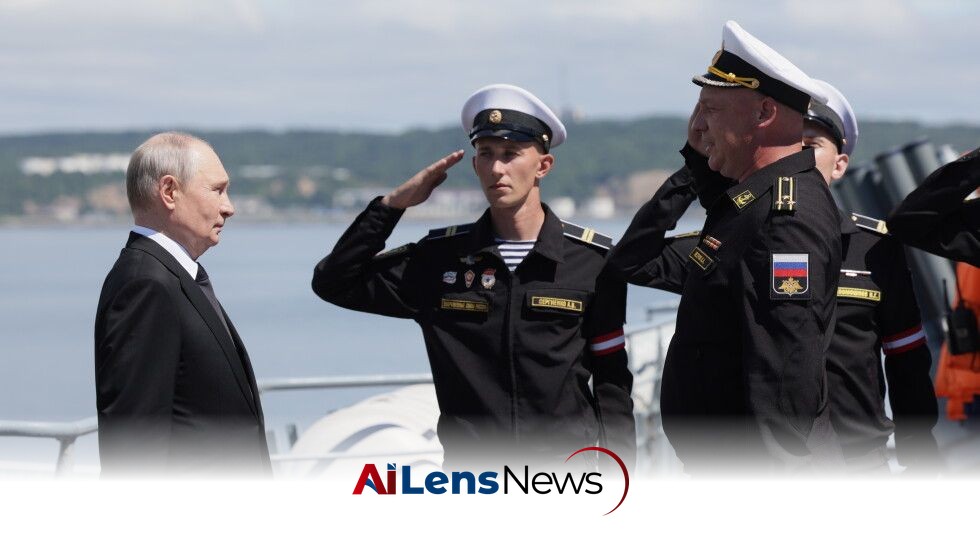


Russian President Vladimir Putin has condemned the seizure of Russian commercial vessels by Western nations, labeling the actions as 'piracy' and threatening retaliation.
Washington DC, United States Aug 13, 2026 ALN: In a strong statement, Russian President Vladimir Putin has threatened to retaliate against Western nations following their recent seizures of Russian commercial vessels. During a visit to the Varyag missile cruiser, Putin denounced these actions as acts of 'piracy' and warned that Russia would respond appropriately.
The tensions between Russia and Western countries have escalated in recent months, particularly in the maritime domain. Putin's remarks come amidst ongoing geopolitical conflicts and sanctions imposed on Russia due to its actions in Ukraine. The situation has been exacerbated by a series of incidents at sea, with Russian vessels being targeted in what many see as a coordinated effort by Western nations to undermine Russia's economic capabilities. This maritime tension is not an isolated incident but rather part of a broader context of strained relations that have developed over the past several years, particularly following Russia's annexation of Crimea in 2014 and its subsequent involvement in the conflict in Eastern Ukraine.
The annexation of Crimea marked a significant turning point in East-West relations, leading to widespread condemnation from the international community and the imposition of sanctions against Russia. These sanctions have targeted various sectors, including finance, energy, and military, aiming to cripple the Russian economy and diminish its capacity to conduct military operations abroad. The maritime seizures represent a continuation of this strategy, as Western nations seek to exert pressure on Russia by targeting its shipping and energy sectors, which are vital for the country's economy.
Western nations have targeted Russian vessels as part of broader sanctions aimed at crippling Russia's economy. These seizures have included cargo ships and tankers, which are crucial for Russia's trade and energy exports. The maritime seizures have been justified by Western governments as necessary measures to enforce sanctions against Russia, particularly in light of its military actions in Ukraine. The vessels, often carrying oil and gas, represent a significant source of revenue for Russia, and their confiscation could have serious implications for the Russian economy. In recent months, several high-profile incidents have drawn attention, including the detention of a Russian oil tanker in a European port, which sparked outrage in Moscow and prompted calls for retaliatory actions.
The seizures are not only a financial blow to Russia but also symbolize a broader effort by Western nations to challenge Russia's influence in global energy markets. By targeting Russian vessels, Western governments aim to disrupt the flow of oil and gas exports, thereby weakening Russia's economic stability and reducing its ability to fund military operations. This tactic has been met with strong resistance from Moscow, which views such actions as aggressive and unjustified.
Putin's visit to the Varyag missile cruiser was not just a show of naval strength but also a message to the West. He emphasized the importance of maintaining a robust military presence in the region and hinted at potential military responses to protect Russian interests. The Varyag, a guided-missile cruiser, symbolizes Russia's naval capabilities and serves as a platform for projecting power in contested waters. By choosing this venue for his statement, Putin aimed to convey a sense of readiness and determination to defend Russian sovereignty against perceived threats.
The Russian military has been increasingly active in the Black Sea and the Arctic regions, areas that are strategically important for both military and economic reasons. The Black Sea is a critical artery for energy transport and trade, while the Arctic is becoming increasingly significant due to melting ice caps revealing new shipping routes and untapped natural resources. Analysts suggest that Putin's military posture reflects a broader strategy to assert Russia's influence in international waters and deter further Western actions that could threaten Russian assets.
The international community is closely monitoring the situation, with many analysts predicting that further escalations could lead to more severe confrontations at sea. NATO and EU officials have expressed concern over Russia's military maneuvers and its implications for regional security. The United States and its allies have reiterated their commitment to supporting Ukraine and have warned Russia against further aggression. Diplomatic channels have been activated in an attempt to de-escalate tensions, but the rhetoric from both sides indicates a hardening of positions.
Some experts suggest that the maritime seizures could lead to a cycle of retaliation, with both sides engaging in tit-for-tat actions that could destabilize the region further. The potential for military encounters at sea raises alarms about the risks of miscalculations that could escalate into larger conflicts. The presence of military assets from both Russia and NATO in close proximity increases the likelihood of confrontations, particularly in areas where interests overlap.
The implications of Putin's threats and the ongoing maritime tensions extend beyond immediate regional concerns. They raise questions about the future of international maritime law and the rules governing freedom of navigation. As nations increasingly assert their claims over territorial waters and economic zones, the potential for conflict in disputed areas grows. The United Nations Convention on the Law of the Sea (UNCLOS), which governs maritime rights and responsibilities, is being tested as countries pursue their national interests in contested waters.
Furthermore, the situation underscores the fragility of global trade routes, particularly those reliant on maritime transport. Disruptions caused by military confrontations could have far-reaching effects on global supply chains, energy markets, and the stability of international trade. The maritime domain has become a focal point for geopolitical rivalries, with countries seeking to secure their interests and assert their influence over critical shipping lanes.
As tensions rise, the world watches to see how both sides will navigate this precarious situation. Putin's threats of retaliation highlight the ongoing volatility in international relations and the potential for conflict in the maritime arena. The situation remains fluid, and while diplomatic efforts are underway to mitigate the risks, the underlying issues driving the conflict remain unresolved. The coming weeks and months will be critical in determining whether dialogue can prevail over confrontation or whether the situation will escalate into a broader conflict. The stakes are high, not only for Russia and the West but for global security and economic stability as well.
To learn more about the latest developments in Politics, stay updated with our exclusive reports and analyses on AiLensNews.

