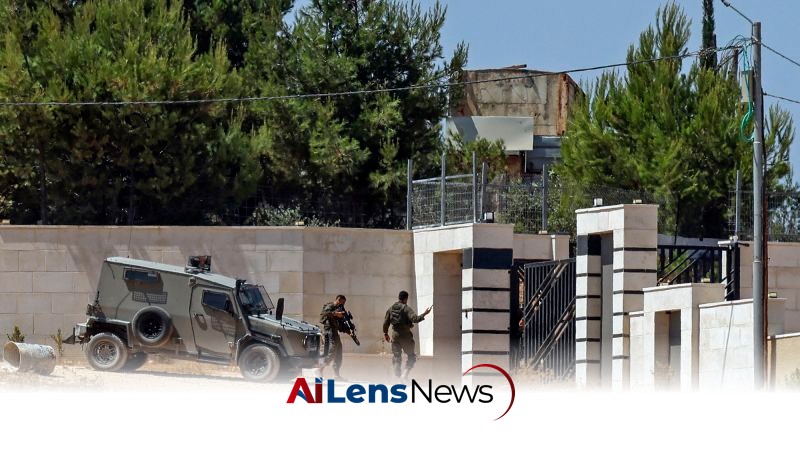


In Qusra, West Bank, Palestinian families face siege by Israeli settlers, leading to dire living conditions and fears of forced displacement.
Washington DC, United States Aug 14, 2026 ALN: Loui Ridi began building a home in his native town of Qusra, in the occupied West Bank, for his two daughters. The girls grew up in Ohio, but family trips made them fall in love with their father’s Palestinian roots. This longing for a familial connection to their heritage is a common sentiment among many Palestinians in the diaspora, who seek to maintain ties to their ancestral lands. The construction of a home in Qusra was not just about creating a physical structure; it was about preserving family history and cultural identity.
“Can we have a home where grandmother lives, where you were born and raised?” his daughters had asked him, Ridi told CNN. This question encapsulates the deep emotional ties that Palestinians have to their land, especially in the context of displacement and ongoing conflict. For many, the act of building a home is a declaration of belonging and resistance against the backdrop of a protracted struggle for rights and recognition.
However, that dream is now on hold as a group of Israeli settlers lay siege to the hilltop where Ridi’s and two other homes sit in a bid to kick out the Palestinian residents. The situation in Qusra is emblematic of the broader tensions that have escalated in the West Bank, particularly in areas where Israeli settlements encroach on Palestinian land.
The settlers pitched a tent, cut off water and electricity lines, and blocked roads, preventing anyone from reaching the residents. This tactic of isolating Palestinian families is not new and has been employed in various forms across the West Bank. Settlers often use intimidation and harassment to force Palestinians out of their homes, leveraging the support of the Israeli military and government to legitimize their actions.
Trapped inside are Ridi’s brother, Qusai, and Qusai’s son, with only enough food to last two or three more days. The dire situation highlights the humanitarian implications of such settler actions, as families are left without basic necessities. The psychological toll on those besieged is profound, as they face uncertainty and fear for their safety and future.
“They have their eyes set on the house and on this hilltop; they want to take it,” Qusai said. His words reflect a reality that many Palestinians face in the West Bank, where land disputes are often intertwined with issues of identity, survival, and resistance. The struggle for land is not merely a physical battle; it is a fight for existence and dignity.
“We will not surrender and we will not leave, even if we have to drink salt and water in this house and if there’s not a single piece of bread left,” Qusai declared. This statement underscores the resilience of Palestinian families who refuse to be displaced from their homes, even in the face of overwhelming odds. Their determination is a testament to the deep-rooted connection that Palestinians have to their land, which is often seen as an extension of their identity.
Ridi watched in horror from Ohio on security cameras and began contacting the Israeli authorities, which are responsible for security in this part of the West Bank. This reliance on the authorities for protection, however, often proves futile. Many Palestinians report that the Israeli military frequently sides with settlers, exacerbating the vulnerability of Palestinian residents.
To his disbelief, Israeli soldiers arrived, warmly greeted the settlers, and then joined them in prayer. Such actions raise concerns about the impartiality of the Israeli military, as their apparent collaboration with settlers undermines the trust that Palestinian communities have in the security forces. The perception of bias can further inflame tensions and exacerbate the cycle of violence and retaliation.
Israeli soldiers and border police arrived at the hilltop on Wednesday, dismantled the settlers’ tent, and began trying to remove the settlers from the area. However, their efforts failed. Dozens of additional settlers arrived, moving boulders into the road and throwing rocks at the security forces, who were seen firing sound grenades and spraying settlers with pepper spray before withdrawing. This chaotic scene illustrates the volatile nature of the conflict, where confrontations between settlers and the military can escalate rapidly, often to the detriment of Palestinian civilians caught in the crossfire.
We arrived at the scene hours later, driving up the hill to Ridi’s house before being stopped by two Israeli soldiers flanked by a half-dozen Israeli settlers. “This is a closed military area,” one of the soldiers told us. “You’re interfering with military activity.” This statement reflects the complexities of access and movement in the West Bank, where military zones often serve to restrict Palestinian movement while allowing settlers to operate freely.
That order also applies to the settlers, but so far it has only been enforced against Palestinians, Israeli human rights activists, and journalists who have tried to reach the hilltop. The differential treatment highlights the systemic inequalities that exist within the region, where Palestinians often face restrictions that do not apply to Israeli settlers. This disparity raises questions about the rule of law and human rights in the occupied territories.
Unable to reach the home, we spoke to Qusai via video call from the bottom of the hill. “They are monstruous, so I don’t expect them to leave so easily,” Qusai said of the settlers. His characterization of the settlers reflects the heightened emotions and fears that residents experience as they confront the threat of displacement. The language used by individuals in such situations often conveys a sense of urgency and desperation, as families grapple with the reality of their precarious living conditions.
The Israeli military launched a more forceful operation on Thursday morning, deploying an infantry battalion “to protect the residents and maintain security in the area.” This move, while ostensibly aimed at safeguarding Palestinian residents, raises concerns about the actual effectiveness of such operations in preventing settler violence. The use of military force in these contexts often leads to further escalation rather than resolution.
One of the military’s first moves was kicking more than a dozen Palestinian families in the area out of their homes, including Qusai, who moved in with his neighbor. The soldiers said they needed to use their homes as temporary bases to operate against the settlers. This action underscores the precariousness of Palestinian housing rights in the West Bank, where military orders can displace families at a moment's notice. The use of homes for military purposes often leaves families vulnerable and without shelter.
“I hope this is not a ploy that will eventually lead to the soldiers installing settlers in my home,” Qusai told CNN. His fears reflect a common concern among Palestinians that military actions may be a precursor to further encroachments on their land and homes. The history of settlement expansion in the West Bank has created a climate of distrust and anxiety among Palestinian communities.
Hours later, as news spread, the military reversed course, saying: “The soldiers were instructed that the Qusra residents will remain in their homes.” This reversal, while seemingly positive, raises questions about the consistency and reliability of military actions and statements in such situations. For many Palestinians, assurances from the military often ring hollow, given the history of broken promises and continued encroachments by settlers.
What’s happening in Qusra isn’t an isolated incident. The tactics employed by settlers in Qusra are reflective of a broader strategy that has been observed in various parts of the West Bank. Settler violence has increased significantly in recent years, often targeting Palestinian families in an effort to intimidate them into leaving their homes.
Qusai and the others living on the besieged hilltop have good reason to fear they will never be allowed back into their homes if they leave. The same group of settlers who have surrounded that hilltop did the same to another Palestinian family in a neighboring village last month. And there, they were successful. The pattern of behavior by settlers indicates a coordinated effort to exert pressure on Palestinian families, often leading to forced displacement.
For over two weeks, they surrounded Mahmoud Tubasi’s home in Jalud, eventually forcing him and his family to leave. CNN visited the home and witnessed settlers going in and out of the home, standing on the rooftop where a messianic flag had been planted. The flag is brandished by settlers and frequently flown atop seized Palestinian property. It symbolizes a religious-nationalist claim to the land, viewed by extremist settlers as part of a divinely ordained Jewish return. This appropriation of Palestinian homes not only displaces families but also serves to reinforce the ideological claims of settlers, further entrenching divisions within the region.
Tubasi’s neighbors said the settlers have threatened them as well, telling them they are next. Such threats create an atmosphere of fear and uncertainty, as families worry about their safety and the potential loss of their homes. The psychological impact of such intimidation can be profound, leading to anxiety and distress among affected families.
Palestinians in the West Bank say they’ve faced what amounts to collective punishment since the Hamas attack on Israel in October 2023 – a sharp rise in settler attacks, forced displacement, and Israeli military operations. This escalation of violence has drawn international attention, as human rights organizations and activists highlight the plight of Palestinian communities facing displacement and violence. The situation in the West Bank remains precarious, with ongoing tensions between settlers and Palestinian residents exacerbated by broader political dynamics in the region.
To learn more about the latest developments in Crime & Law, stay updated with our exclusive reports and analyses on AiLensNews.

