

More
Checking your session
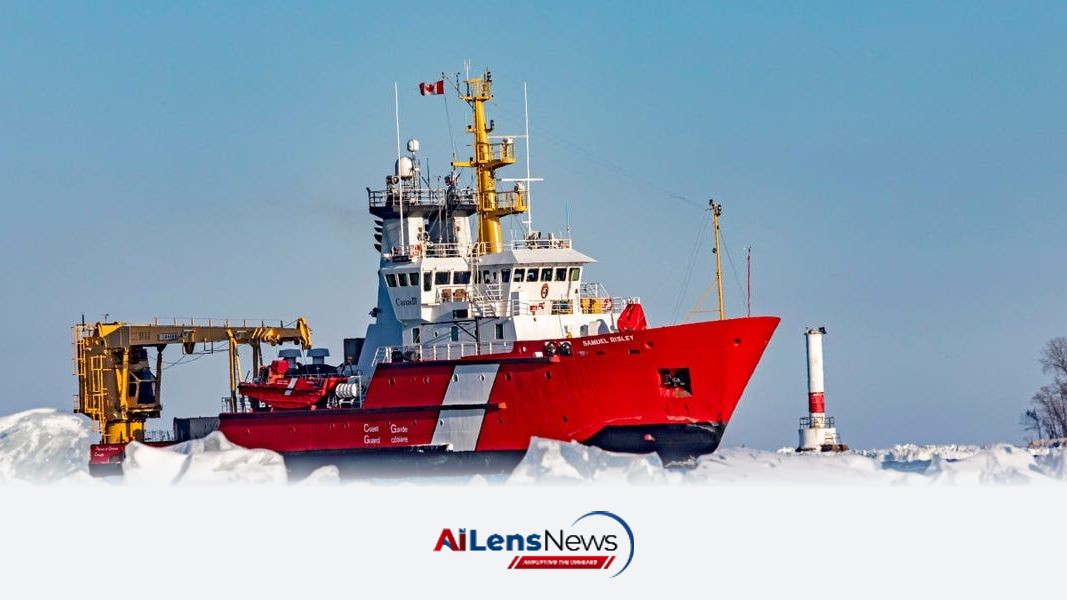



Canada's investment in new icebreakers underscores the intertwined interests of the U.S. and Canada in Arctic operations, as trade relations face challenges.
Washington DC, United States Aug 25, 2026 ALN: As trade tensions between the U.S. and Canada escalate, Mark Carney has emphasized a crucial area of cooperation: icebreakers. The former Bank of England governor pointed out that these specialized vessels are among the "many, many, many things" the U.S. requires from Canada. Icebreakers play a vital role in ensuring safe navigation through icy waters, which is increasingly important as climate change continues to alter the Arctic landscape.
During a news conference in Quebec, Carney announced a significant contract worth 11.3 billion Canadian dollars (approximately $8.2 billion) with shipbuilder Chantier Davie to construct six new icebreakers for the Canadian Coast Guard. This investment is part of Canada’s strategy to enhance its presence in the Arctic, a region that is seeing heightened geopolitical interest due to its untapped natural resources and new shipping routes emerging as polar ice melts.
Carney took the opportunity to critique the size of the U.S. icebreaker fleet, which is currently limited. "You know, the United States has a handful, and I'm being generous, of icebreakers," he remarked, highlighting the urgency of expanding capabilities in the region. The U.S. Coast Guard's current fleet includes only three operational polar icebreakers, a number that falls significantly short of what experts recommend for effective Arctic operations.
In response to this gap, the U.S. has initiated contracts for 11 new Arctic Security Cutters, which are designed to enhance its operational capacity in icy waters. This effort includes collaboration with Canada and Finland, leveraging international expertise to bolster icebreaker capacity. The construction of these cutters is split between Finland and Texas, with Davie Defense, part of the same industrial group as Davie Shipbuilding, set to deliver five of them. This initiative is part of a broader effort to enhance U.S. capabilities in the Arctic, an area where experts have noted significant gaps in surveillance and naval assets.
Carney's comments come at a time when U.S.-Canada relations have soured, particularly regarding trade. Recent negotiations have faltered, and new tariffs of 50% on approximately $20 billion worth of Canadian imports have been implemented. These tariffs are part of a larger trend of protectionist measures that have characterized recent U.S. trade policy under the current administration. Canada has announced plans to retaliate dollar-for-dollar starting September 8, which could exacerbate tensions between the two countries.
In a statement, President Donald Trump indicated that tariffs on Canadian vehicles and related products would rise to 50% by January 1, 2027, further straining the bilateral relationship. This escalation in trade disputes reflects a broader trend of increasing nationalism and protectionism in global trade, with many countries reassessing their trade agreements and partnerships.
The implications of these trade tensions extend beyond economics; they also affect security and environmental policies in the Arctic. As the region becomes more accessible due to melting ice, the potential for conflict over resources and territorial claims increases. Both the U.S. and Canada have vested interests in maintaining stability and security in the Arctic, making cooperation on icebreakers and other maritime assets essential.
Moreover, the Arctic is not only a site of geopolitical competition but also a region facing significant environmental challenges. Climate change is accelerating the melting of polar ice, leading to rising sea levels and altering ecosystems. This environmental degradation poses risks not just to wildlife but also to indigenous communities who depend on these ecosystems for their livelihoods. The need for effective icebreakers becomes even more critical as they are essential for conducting search and rescue operations, environmental monitoring, and scientific research in the region.
As both nations navigate these turbulent waters, the need for collaboration on icebreakers serves as a reminder of their interconnected interests in the Arctic. The construction of new vessels is not merely a matter of enhancing military capabilities; it represents a commitment to preserving the Arctic environment and ensuring safe navigation in a region that is becoming increasingly vital to global trade and security.
In conclusion, while trade relations between the U.S. and Canada face significant challenges, the emphasis on icebreakers highlights an area where both countries can find common ground. The ability to work together on Arctic issues could serve as a foundation for rebuilding trust and cooperation in other areas, potentially mitigating the effects of current trade tensions and fostering a more collaborative approach to shared challenges in the future.
To learn more about the latest developments in Politics, stay updated with our exclusive reports and analyses on AILensNews.