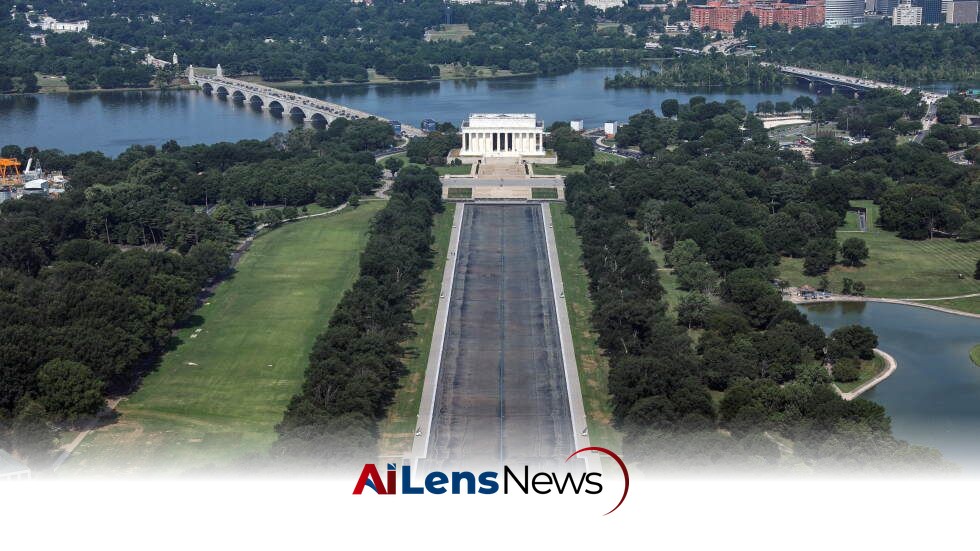


The iconic Reflecting Pool at the Lincoln Memorial, once described as 'American flag blue' by former President Trump, has now faded to a grayish hue.
Washington DC, United States Jul 16, 2026 ALN: The Lincoln Memorial Reflecting Pool, a significant landmark in Washington, D.C., has undergone a noticeable change in its appearance. Originally dubbed 'American flag blue' by former President Donald Trump, the pool's liner has faded to a color resembling gray. This transformation has sparked discussions among visitors and historians alike, as the Reflecting Pool holds a deep symbolic meaning in American history. It serves as a site for reflection and remembrance, particularly during significant national events and gatherings.
The Reflecting Pool, which stretches over 2,000 feet, is situated between the Lincoln Memorial and the Washington Monument. This location is not merely a picturesque setting; it is steeped in historical significance. The pool has been a backdrop for numerous historic events, including Martin Luther King Jr.'s iconic 'I Have a Dream' speech during the 1963 March on Washington. This event was pivotal in the American civil rights movement and marked a turning point in the struggle for racial equality. The Reflecting Pool, therefore, is not just a body of water; it is a symbol of hope, change, and the ongoing quest for justice in America.
The Reflecting Pool was designed by architect Daniel Burnham and constructed in 1922 as part of the Lincoln Memorial's grand design. It was intended to provide a serene setting that would enhance the experience of visitors coming to pay their respects to President Abraham Lincoln. The pool's design draws inspiration from classical Roman architecture, reflecting the ideals of democracy and freedom that Lincoln championed during his presidency. The pool's reflective surface creates a mirror image of the Lincoln Memorial, amplifying its grandeur and serving as a reminder of Lincoln's enduring legacy.
Over the decades, the Reflecting Pool has witnessed countless gatherings, protests, and ceremonies, each contributing to its rich tapestry of American history. It has served as a stage for civil rights demonstrations, anti-war protests, and memorial services, making it a vital part of the national narrative. The pool's connection to pivotal moments in U.S. history underscores its importance as a site of collective memory and national identity. Each ripple in its water tells a story of the struggles and triumphs of the American people, reminding us of the ongoing journey toward a more perfect union.
Recent observations from visitors reveal that the pool's once vibrant blue liner has dulled significantly. The change in color has raised questions about the maintenance and care of this important national monument. The fading liner may be attributed to a combination of environmental factors, including exposure to sunlight, weathering, and the accumulation of algae and debris. Such changes highlight the challenges of preserving outdoor monuments that are subject to the elements. The effects of climate change, particularly increased temperatures and extreme weather events, may also contribute to the deterioration of such historical sites.
Maintenance of national monuments like the Reflecting Pool is crucial not only for aesthetic reasons but also for historical integrity. The National Park Service, which oversees the upkeep of the Reflecting Pool and other national landmarks, faces the ongoing challenge of balancing preservation efforts with budgetary constraints. As federal funding for maintenance and restoration projects can be limited, the condition of the Reflecting Pool raises broader questions about the prioritization of national heritage sites. There is a growing recognition that these sites are not just relics of the past but living symbols that require ongoing care and attention to remain relevant and impactful.
As discussions continue regarding the pool's condition, the National Park Service is expected to evaluate the situation. Plans for restoration or replacement of the liner may be considered to restore the pool to its former glory. Such efforts would not only enhance the visual appeal of the Reflecting Pool but also reaffirm the nation's commitment to preserving its historical landmarks. Restoration projects could involve extensive research into the original materials and methods used in the pool's construction to ensure that any updates align with its historical significance.
The potential restoration of the Reflecting Pool raises important considerations about the methods and materials used in such projects. Preservationists advocate for using materials that are historically accurate and environmentally sustainable, ensuring that any repairs honor the original design while also addressing contemporary environmental challenges. This approach not only respects the past but also engages with modern ecological concerns, promoting a sustainable future for national monuments.
In conclusion, the fading of the Reflecting Pool's liner from blue to gray serves as a reminder of the importance of preserving national landmarks. As the nation reflects on its history, it is crucial to ensure that these symbols remain vibrant and meaningful for future generations. The Reflecting Pool is more than just a decorative feature; it is a testament to the values and struggles that define the American experience. As such, maintaining its integrity is vital for fostering a sense of national pride and continuity amidst an ever-changing societal landscape. The ongoing dialogue around the Reflecting Pool's condition highlights the need for a collective commitment to preserving the stories and symbols that shape our national identity.
To learn more about the latest developments in Local & Regional, stay updated with our exclusive reports and analyses on AiLensNews.

