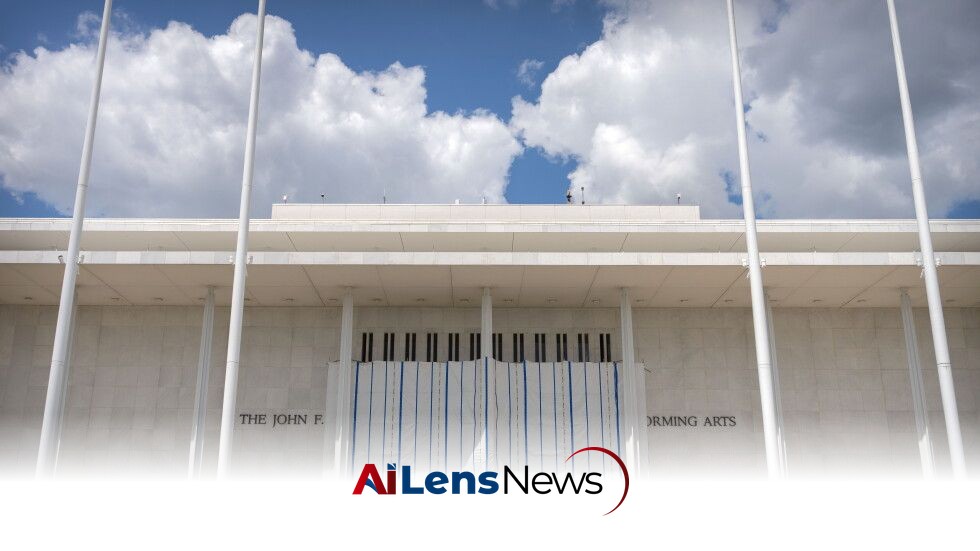


The Kennedy Center's board has voted to restore Donald Trump's name to its facade, defying a judge's order and announcing a two-year closure for renovations.
Washington DC, United States Aug 14, 2026 ALN: The Kennedy Center is at the center of a heated debate following a recent decision by its board members to restore Donald Trump’s name to the building’s facade. This move comes despite a judge's order that had previously mandated the removal of his name. The decision has reignited discussions about the intersection of politics, culture, and the arts in America.
On Thursday, board members aligned with Trump voted in favor of the restoration, which will see the center closed for two years as renovations are undertaken. The decision has sparked significant backlash from various community groups and political figures who argue that the move undermines the center's mission of inclusivity and artistic integrity. The Kennedy Center, established in 1971, was designed to be a beacon of cultural expression and a gathering place for artists and audiences alike, making the implications of this decision particularly poignant.
The Kennedy Center, officially known as the John F. Kennedy Center for the Performing Arts, has long been a symbol of American culture and arts. It is named after President John F. Kennedy, who was a strong advocate for the arts and culture during his presidency. The decision to initially remove Trump's name stemmed from concerns over his controversial presidency and the events surrounding the January 6 Capitol riots, which have been widely condemned as an attack on democracy itself.
Trump's presidency was marked by divisive rhetoric and policies that many believe contradicted the values of unity and artistic freedom that the Kennedy Center embodies. The board's initial decision to remove his name was seen as a response to these concerns, reflecting a desire to distance the center from the political turmoil that characterized his time in office. However, the recent vote to restore his name indicates a significant shift in the board's perspective, raising questions about the motivations behind this decision and its alignment with the center's historical mission.
Community leaders and artists have expressed their discontent with the board's decision. Many feel that restoring Trump's name sends a negative message about the values the Kennedy Center should represent. Artists, who often rely on the support and patronage of institutions like the Kennedy Center, are concerned that this decision could alienate audiences and diminish the center's role as a leader in the arts community.
Activists have called for protests and are urging the public to voice their opposition to the board's decision. Social media platforms have become a battleground for these discussions, with hashtags and campaigns aimed at mobilizing public sentiment against the name restoration. Prominent figures in the arts community have also spoken out, emphasizing the importance of maintaining a space that is welcoming and inclusive for all artists, regardless of their political affiliations.
Critics argue that the Kennedy Center should serve as a space that fosters creativity and dialogue, rather than one that endorses a particular political figure whose actions have polarized the nation. The decision has sparked discussions about the role of cultural institutions in addressing political issues and the extent to which they should engage with controversial figures.
The Kennedy Center's decision to proceed with the name restoration and the subsequent closure raises questions about its future direction. As the center prepares for renovations, it remains to be seen how this decision will affect its relationships with artists, patrons, and the broader community. The center has historically been a place where diverse voices can be heard, and the current controversy may challenge that tradition.
Moreover, the implications of this decision extend beyond the Kennedy Center itself. It raises broader questions about how cultural institutions navigate the complexities of political affiliations and public sentiment. As the arts community grapples with these issues, the Kennedy Center's actions may set a precedent for other institutions facing similar dilemmas.
Supporters of the name restoration argue that it is important to honor all individuals who have made significant contributions to the arts, regardless of their political actions. They contend that the Kennedy Center should be a place where all voices can coexist, including those that may be controversial. However, this perspective is met with skepticism from those who believe that certain actions and ideologies should not be celebrated or memorialized in cultural spaces.
The controversy surrounding the Kennedy Center is indicative of a larger trend in which cultural institutions are increasingly confronted with the political ideologies of individuals associated with them. This issue is not isolated to the Kennedy Center; similar debates have arisen in various contexts, including universities, museums, and other cultural organizations. The challenge lies in balancing the mission of these institutions to promote artistic expression and community engagement with the potential backlash from segments of society that may feel marginalized or offended by certain political affiliations.
In recent years, there has been a growing movement advocating for the accountability of cultural institutions to reflect the values of their communities. This has led to calls for greater transparency in decision-making processes and a more inclusive approach to programming and representation. As the Kennedy Center navigates this turbulent period, it must consider how its decisions resonate with the diverse populations it serves.
The Kennedy Center's board has taken a bold step by voting to restore Trump's name, a decision that has ignited a firestorm of controversy. As the center embarks on its two-year closure for renovations, the implications of this decision will likely resonate throughout the arts community and beyond. The ongoing debates surrounding this issue highlight the challenges faced by cultural institutions in an increasingly polarized society.
As the Kennedy Center navigates this turbulent period, it will be crucial for the board to engage with the community and consider the diverse perspectives of artists and patrons. The outcome of this situation may well influence the future of the Kennedy Center and its role in the cultural landscape of America. Ultimately, the center's ability to uphold its mission of inclusivity and artistic integrity will be tested in the coming months, as stakeholders from all sides of the debate continue to voice their opinions and advocate for their vision of the future of the arts in America.
To learn more about the latest developments in Politics, stay updated with our exclusive reports and analyses on AiLensNews.

