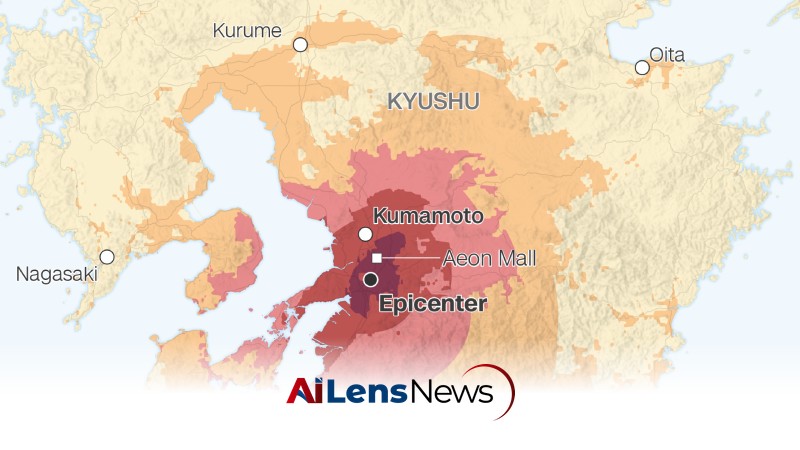


A significant earthquake in Japan's Kumamoto prefecture has caused extensive damage, injuries, and fatalities, as the region grapples with its seismic history.
Washington DC, United States Jul 29, 2026 ALN: A powerful 6.8 magnitude earthquake struck Japan’s southern Kumamoto prefecture on Tuesday, causing damage to buildings, killing several and injuring dozens in one of the most earthquake-prone countries in the world. This seismic event has once again highlighted the vulnerabilities that Japan faces due to its geographic location along the Pacific Ring of Fire, a region known for its high levels of tectonic activity.
The earthquake was recorded on Kyushu, the southwesternmost of Japan’s four main islands, about 550 miles from Tokyo, the capital city. The area is still reeling from a disastrous set of quakes in 2016 that killed hundreds, injured thousands, and caused widespread devastation to the economy and infrastructure, including the famous Kumamoto Castle landmark. The 2016 earthquakes were a stark reminder of the destructive power of seismic activity in Japan, leading to significant loss of life and extensive damage to buildings and roads. The rebuilding process has been slow, and many areas are still recovering from the aftermath.
Japan is renowned for its advanced earthquake preparedness and response systems. The country has invested heavily in infrastructure designed to withstand seismic events, including strict building codes and early warning systems that can provide precious seconds of alert before a quake strikes. However, the sheer force of a 6.8 magnitude earthquake can overwhelm these defenses, leading to catastrophic consequences. The engineering and architectural community in Japan continually works to improve building designs to enhance their resilience against earthquakes, yet the unpredictable nature of seismic activity means that absolute safety can never be guaranteed.
As of the latest reports, the earthquake has resulted in significant structural damage across Kumamoto, with emergency services mobilized to assess the situation and provide assistance to those affected. Hospitals are likely to be under strain as they treat the injured, and local authorities are working to ensure that those displaced by the earthquake have access to shelter and basic necessities. Emergency response teams, including the Self-Defense Forces, have been deployed to assist in rescue operations and provide medical aid to those in need. This mobilization is critical in the immediate aftermath of a disaster, as time is of the essence in saving lives and mitigating further injuries.
CNN is tracking the impact in maps and charts, providing real-time updates on the situation as it unfolds. The media coverage is crucial in keeping the public informed about the ongoing developments, including aftershocks and safety measures being implemented by local authorities. Accurate reporting helps to disseminate vital information regarding evacuation routes, resource distribution, and safety protocols that residents should follow in the wake of such an event.
The incident is among more than 200 “significant” quakes in Japan since 2000, and its estimated magnitude would place it on the higher end of that scale, according to the US Geological Survey. Earthquakes in Japan are not only frequent but can also vary greatly in intensity and impact. The US Geological Survey's data reflects a long history of seismic events that have shaped the landscape and communities across the nation. This history has led to a culture of preparedness among the Japanese people, who are often educated from a young age about the risks associated with living in a seismically active region.
Quakes such as Tuesday’s in Japan are measured on a magnitude scale, with this one, at 6.8, being classified as “strong.” Such a magnitude carries the potential for extensive damage, particularly in densely populated areas where buildings may not be adequately fortified against such forces. The implications of this earthquake extend beyond immediate physical damage; they can affect local economies, disrupt transportation networks, and lead to long-term psychological impacts on the affected populations. Businesses may face closures and supply chain disruptions, while the psychological toll on residents can manifest as increased anxiety, depression, and post-traumatic stress disorder (PTSD).
At least six additional quakes have been recorded in the region since the larger incident, with magnitudes ranging from 4.4 to 5.6, according to USGS. These aftershocks can pose additional risks to already weakened structures and complicate rescue and recovery efforts. Aftershocks are a common occurrence following a major earthquake, and they can continue for days or even weeks, adding to the anxiety and uncertainty faced by residents in the affected areas. This phenomenon can lead to a phenomenon known as 'earthquake fatigue,' where individuals become increasingly stressed and exhausted from the continuous threat of further tremors.
The Japanese government, along with various disaster response agencies, has been proactive in its approach to earthquake preparedness and recovery. Regular drills are conducted to educate the public on safety measures, and community resilience programs are in place to help neighborhoods prepare for potential disasters. These initiatives are crucial in fostering a culture of readiness and ensuring that individuals know how to respond effectively in the event of an earthquake. However, the unpredictable nature of earthquakes means that despite these efforts, the risk remains ever-present.
In the aftermath of such seismic events, the focus often shifts to rebuilding and recovery. This includes not only physical reconstruction but also emotional and psychological support for those affected. The mental health implications of experiencing a natural disaster can be profound, necessitating a coordinated response from health services and community organizations. Counseling services and support groups are often established to help individuals process their experiences and cope with the trauma of the event.
As Japan continues to navigate the challenges posed by earthquakes, the lessons learned from past events will be critical in shaping future preparedness strategies. The country’s resilience in the face of disaster is a testament to its commitment to safety and recovery, but the need for continuous improvement and adaptation to new challenges remains essential. Innovations in technology, such as advanced seismic monitoring systems and improved building materials, are key areas of focus for researchers and policymakers alike.
In summary, the 6.8 magnitude earthquake in Kumamoto prefecture serves as a stark reminder of Japan's vulnerability to natural disasters. As the nation grapples with the immediate aftermath of this event, the focus will undoubtedly be on recovery, rebuilding, and ensuring that lessons learned are applied to enhance future preparedness. The impact of this earthquake will resonate far beyond the physical damage, affecting the lives of countless individuals and the fabric of the community as a whole. The collective experience of resilience and recovery will define how the region moves forward, transforming challenges into opportunities for growth and improvement in disaster readiness.
To learn more about the latest developments in Crime & Law, stay updated with our exclusive reports and analyses on AiLensNews.

