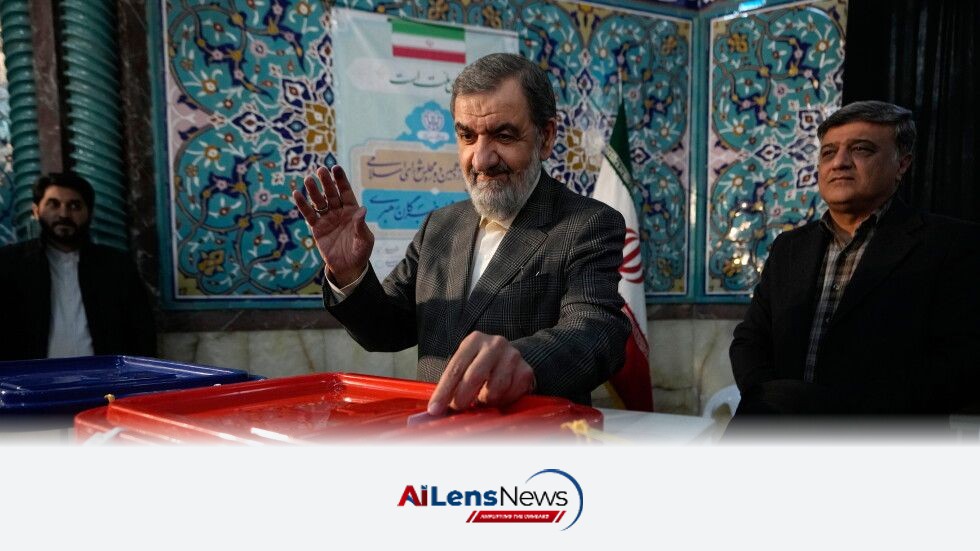



The new leader of Iran's security council has threatened neighboring countries against joining U.S. efforts to undermine Tehran's economy, escalating regional tensions.
Washington DC, United States Aug 23, 2026 ALN: The geopolitical landscape of the Middle East has become increasingly tense as Iran's new security chief, Mohsen Rezaei, has issued pointed warnings to neighboring countries regarding their potential cooperation with U.S. economic sanctions aimed at Tehran. This escalation comes at a time when the United States is intensifying its efforts to impose economic pressure on Iran, primarily due to its nuclear program and regional activities that the U.S. and its allies consider destabilizing.
Rezaei, who was appointed to lead Iran’s Supreme National Security Council earlier this month, is known for his hard-line views and has a history of involvement in Iran's military and political affairs. His recent statements reflect a broader trend in Iranian leadership towards a more aggressive posture in response to external pressures. In an interview with the state broadcaster IRIB, Rezaei warned that any countries that align themselves with U.S. initiatives to undermine Iran's economy would face repercussions. He specifically mentioned that Iran would retaliate against oil-shipping routes out of the Persian Gulf, which is a critical area for global oil transportation and trade.
The Strait of Hormuz, through which a significant percentage of the world’s oil supply is transported, has long been a focal point of tension between Iran and its neighbors, particularly in light of the ongoing U.S.-Iran hostilities. Rezaei's threats to target interests of neighboring countries that support U.S. actions could signal a shift in Iran's military strategy, potentially leading to increased maritime confrontations in an already volatile region.
In the context of these developments, Egypt has taken a unique stance by attempting to revive negotiations between Iran and the United States. This diplomatic overture highlights the complex dynamics at play in the region, where various nations are attempting to navigate their interests amid escalating tensions. Egypt's involvement could be seen as a balancing act, seeking to stabilize relations while also addressing its own national security concerns.
Moreover, Iraq has also been implicated in this situation, with both Iraq and Iran stating that Tehran has facilitated the transit of Iraqi oil through the Strait of Hormuz. This cooperation underscores the intricate relationships among these nations, particularly given Iraq’s reliance on Iranian support in various sectors, including energy. However, it also places Iraq in a precarious position, as it could be viewed as taking sides in the broader U.S.-Iran conflict.
In response to Iran's warnings, France and Saudi Arabia are reportedly considering discussions to bypass the Strait of Hormuz for their oil shipments. This potential move reflects a growing concern among Gulf nations about the security of their oil exports and the implications of Iranian threats. The Strait of Hormuz is not only a vital maritime route but also a strategic chokepoint, and any disruption could have significant repercussions for global energy markets.
Meanwhile, Israel has continued its military operations in the region, conducting strikes in Syria and Gaza, which adds another layer of complexity to the already tense environment. Israel's actions are often justified as preemptive measures against perceived threats from Iranian-backed groups, further complicating the security landscape in the Middle East.
The implications of Rezaei's statements are profound, as they not only threaten to escalate military tensions but also signal a potential shift in how Iran may respond to international pressures. The hardening of Iran's political and military stance could lead to a cycle of retaliation and conflict, particularly if neighboring countries feel compelled to align with U.S. policies.
Furthermore, the broader geopolitical context cannot be ignored. The U.S. has been engaged in a long-standing campaign to curb Iran's influence in the region, particularly following the withdrawal from the Joint Comprehensive Plan of Action (JCPOA) in 2018. The re-imposition of sanctions has severely impacted Iran's economy, leading to increased domestic unrest and calls for a more aggressive foreign policy.
As the situation develops, the international community will be watching closely. The potential for conflict in the Persian Gulf has implications not only for regional stability but also for global oil prices and international relations. Countries will need to weigh their economic interests against the risks of aligning with U.S. strategies that could provoke Iranian retaliation.
In conclusion, the recent statements from Iran's new security chief underscore the heightened tensions in the Middle East, driven by U.S. sanctions and regional rivalries. The potential for military escalation, coupled with the complex diplomatic maneuvers by countries like Egypt and Iraq, suggests that the coming months will be critical in shaping the future of Iran's role in the region and its relationships with its neighbors.
To learn more about the latest developments in World News & International Affairs, stay updated with our exclusive reports and analyses on AILensNews.

