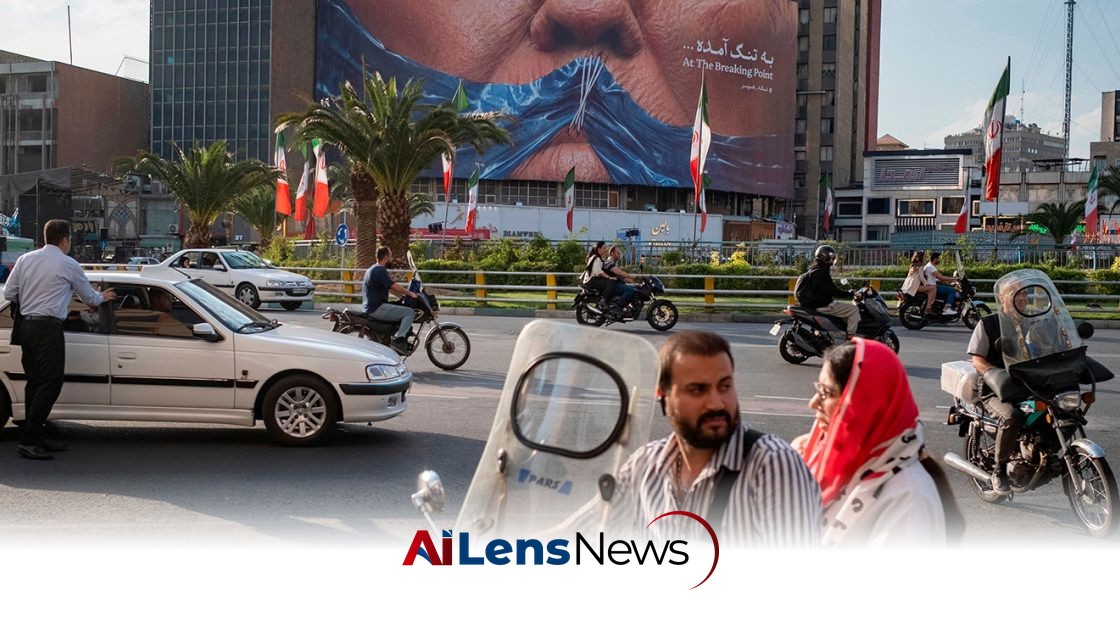


Following the death of Supreme Leader Khamenei, Iran's propaganda escalates with violent imagery on billboards, showcasing a stark anti-U.S. sentiment.
Washington DC, United States Aug 15, 2026 ALN: The recent surge in anti-U.S. propaganda in Iran, particularly through the use of violent billboards, reflects a broader strategy of state-sponsored messaging that has intensified amid ongoing conflict. The billboards, which are prominently displayed in Tehran, feature stark and provocative imagery aimed at vilifying American leaders and inciting anti-U.S. sentiment among the Iranian populace. One of the most striking examples includes an image of former President Donald Trump lying in a casket, a representation that starkly symbolizes the Iranian regime's desire for retribution following significant military engagements with the United States.
This escalation in rhetoric follows a pivotal moment in Iranian history—the death of Ayatollah Ali Khamenei, the country’s supreme leader, who was reportedly killed in an airstrike during the early days of a conflict initiated by the United States and Israel. This incident has acted as a catalyst for the Iranian government to amplify its anti-American messaging, transforming the tone and nature of public discourse. The billboards serve not only as a means of propaganda but also as a reflection of the national sentiment, which has been increasingly shaped by the realities of war.
In the heart of Tehran, the juxtaposition of these billboards against the backdrop of everyday life is striking. Images captured by local photojournalists reveal a stark contrast between the violent imagery displayed and the mundane activities of the citizens who pass by. For instance, a busy intersection near Tehran’s central Enghelab Square recently saw the replacement of a billboard featuring benign images of Khamenei with one of Trump in a casket, his hands folded in a manner reminiscent of traditional burial practices. This shift in imagery is not merely cosmetic; it signifies a shift in the political narrative that the Iranian government is propagating.
One particular billboard drew attention for its mock handwritten text referencing the deaths of sailors due to a torpedo attack on the Iranian warship Iris Dena by the USS Charlotte, an American submarine. This message, alongside an explicit death threat aimed at Trump, illustrates the aggressive tone that has characterized Iranian propaganda in the wake of heightened military tensions. Just weeks later, this billboard was replaced with another graphic depicting Trump being strangled by multiple hands, accompanied by the ominous message, "Revenge is inevitable." This phrase encapsulates the prevailing sentiment within the Iranian leadership, which seeks to frame the conflict as a matter of national honor and retribution.
The consequences of such propaganda are profound. As of mid-July, U.S. Central Command reported that 17 American service members had lost their lives since the onset of hostilities, while Iranian sources claimed that approximately 3,375 individuals had been killed in the conflict. These figures underscore the human cost of the ongoing war and the potential for further escalation as both nations grapple with their respective narratives and objectives.
Anti-American sentiment is deeply rooted in Iran's national identity, particularly since the 1979 Islamic Revolution, which established the Islamic Republic and led to the severance of diplomatic ties with the United States. The long-standing animosity has been perpetuated through various forms of media, including murals and graffiti that depict the U.S. in a negative light. One iconic mural in Tehran, which has been a staple for over three decades, features a parody of the American flag with skulls replacing the stars and bombs falling from the stripes, emblazoned with the phrase "Down With The U.S.A." This enduring image serves as a historical reminder of the Iranian regime's commitment to opposing American influence in the region.
In recent years, the Iranian government has also turned to modern technology to enhance its propaganda efforts. The use of artificial intelligence to create sophisticated and eye-catching images has allowed for a more dynamic approach to disseminating anti-U.S. rhetoric. For example, one billboard depicting the White House engulfed in flames features the phrase "blood for blood" in Persian, emphasizing the desire for vengeance and the cyclical nature of violence perpetuated by conflict.
This strategic use of visual propaganda is not merely an exercise in artistic expression; it is a calculated effort to galvanize public support for the regime and to unify the populace against a common enemy. The Iranian government has historically leveraged external threats to bolster internal cohesion, and the current conflict serves as a critical juncture for reinforcing nationalistic sentiments.
As the situation continues to evolve, the implications of such propaganda efforts extend beyond Iran’s borders. The heightened tensions and aggressive messaging could potentially exacerbate hostilities between the U.S. and Iran, complicating diplomatic efforts and increasing the risk of further military confrontations. Additionally, the portrayal of American leaders in such violent and degrading manners could influence public perception in both nations, fostering animosity and hindering the prospects for peaceful resolution.
In summary, the recent proliferation of violent anti-U.S. billboards in Iran is emblematic of a broader strategy of state-sponsored propaganda that seeks to reinforce national identity, incite public sentiment against perceived enemies, and justify ongoing military actions. The implications of this messaging extend into the realm of international relations, where the potential for escalation remains a significant concern as both the Iranian regime and the United States navigate the complexities of conflict in a rapidly changing geopolitical landscape.
To learn more about the latest developments in World News & International Affairs, stay updated with our exclusive reports and analyses on AiLensNews.

