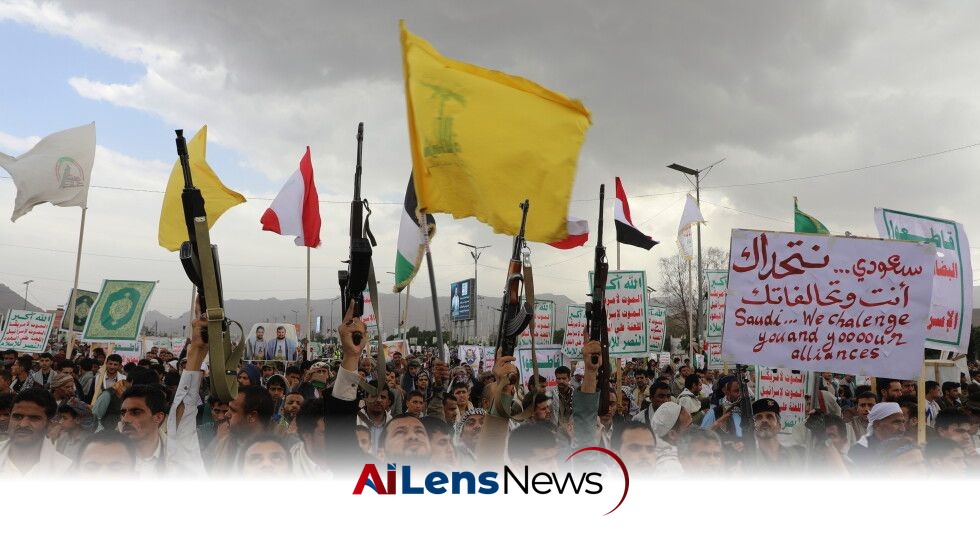


At least six people were killed when Iranian-backed Houthi rebels targeted a vessel in the Bab el-Mandeb strait, escalating tensions in the region.
Washington DC, United States Aug 12, 2026 ALN: Authorities in Yemen have reported that at least six individuals lost their lives when Iranian-backed Houthi rebels fired missiles at a vessel in the strategically significant Bab el-Mandeb strait. This incident marks a significant escalation in the ongoing conflict in the region, which has seen increased hostilities in recent months. The Bab el-Mandeb strait is a narrow passage that connects the Red Sea to the Gulf of Aden and is a critical chokepoint for global maritime trade, making this attack particularly alarming for international shipping routes.
The attack occurred as the vessel was navigating through the strait, a crucial maritime route for global shipping. Eyewitnesses reported hearing multiple explosions as the missiles struck the ship, leading to chaos and panic among those onboard. The nature of the attack suggests a level of sophistication and coordination that raises concerns about the Houthis' evolving military capabilities. Such incidents are not isolated; they reflect a broader trend of increasing aggression from Houthi forces, particularly in maritime operations, which have included drone attacks and missile strikes on vessels in the region.
Yemeni officials condemned the attack, calling it a blatant violation of international maritime law. They urged the international community to take action against the Houthi rebels, who have been increasingly aggressive in their military operations. The Yemeni government, which has been embroiled in a civil war against the Houthis since 2014, has consistently sought international support to counter the insurgency. This latest incident is likely to renew calls for international intervention or at least for increased naval presence in the region to ensure the safety of shipping lanes.
The Houthi movement, which has been engaged in a civil war against the Yemeni government since 2014, has received support from Iran. Their military capabilities have grown significantly, leading to fears of further destabilization in the region. The Houthis, who belong to the Zaidi sect of Shia Islam, initially took control of the Yemeni capital, Sana'a, in September 2014. Since then, they have been involved in a protracted conflict with the internationally recognized government of President Abdrabbuh Mansur Hadi, which has been backed by a Saudi-led coalition. The Houthis have leveraged their relationship with Iran to enhance their military capabilities, including the development of missile technology and drone warfare, which has transformed the dynamics of the conflict.
This attack raises concerns over the safety of maritime navigation in the Bab el-Mandeb strait, which connects the Red Sea to the Gulf of Aden. The strait is vital for oil shipments and other trade routes, making it a focal point for international shipping interests. Approximately 10% of global trade passes through this narrow passage, underscoring the strategic importance of maintaining security in the region. Increased hostilities in this area could lead to higher insurance costs for shipping companies, potential rerouting of vessels, and a broader impact on global oil prices. The international community, particularly nations dependent on these trade routes, may need to consider more robust measures to ensure the safety of maritime navigation.
As tensions continue to rise, analysts are closely monitoring the situation for potential escalations. The international community's response to this incident will be crucial in determining the future stability of the region. A failure to respond decisively could embolden the Houthis to carry out further attacks, while a strong response may escalate the conflict further. Diplomatic efforts will be necessary to de-escalate tensions, but the fractured nature of Yemeni politics and the involvement of external actors complicate the situation. The potential for a broader regional conflict remains a concern, especially given Iran's support for the Houthis and the Saudi-led coalition’s commitment to countering Iranian influence in Yemen.
The ongoing conflict in Yemen has resulted in one of the world's most severe humanitarian crises. Millions of Yemenis are facing famine, disease, and a lack of essential services due to the protracted violence and blockade imposed by the Saudi-led coalition. The United Nations has repeatedly called for ceasefires and peace talks, but progress has been slow and fraught with setbacks. The military capabilities of the Houthis, bolstered by Iranian support, have allowed them to maintain a significant presence and influence within the country, complicating any potential resolution to the conflict.
In related news, Iranian President Masoud Pezeshkian recently met with Pakistan’s Interior Minister Mohsin Naqvi in Tehran, discussing various regional issues, including security and cooperation. This meeting highlights the complex web of alliances and rivalries in the region, where Iran's support for the Houthis is viewed with suspicion by neighboring countries and Western powers. The implications of such meetings could further affect the dynamics of the Yemeni conflict and regional security.
As the situation unfolds, further updates will be provided regarding the implications of this attack and the ongoing conflict in Yemen. The international community must remain vigilant and proactive in addressing the challenges posed by the Houthi rebels and the broader geopolitical implications of their actions in the Bab el-Mandeb strait. The need for a comprehensive strategy that addresses both the humanitarian crisis in Yemen and the security threats posed by the Houthis is more urgent than ever.
In conclusion, the Bab el-Mandeb strait remains a critical juncture not only for Yemen but for global trade. The recent missile attack serves as a stark reminder of the vulnerabilities that exist in this region. As stakeholders navigate the complex interplay of local and international politics, the hope for a peaceful resolution seems distant. However, the international community's engagement and commitment to a diplomatic solution could pave the way for a more stable future for Yemen and its people.
To learn more about the latest developments in Crime & Law, stay updated with our exclusive reports and analyses on AiLensNews.

