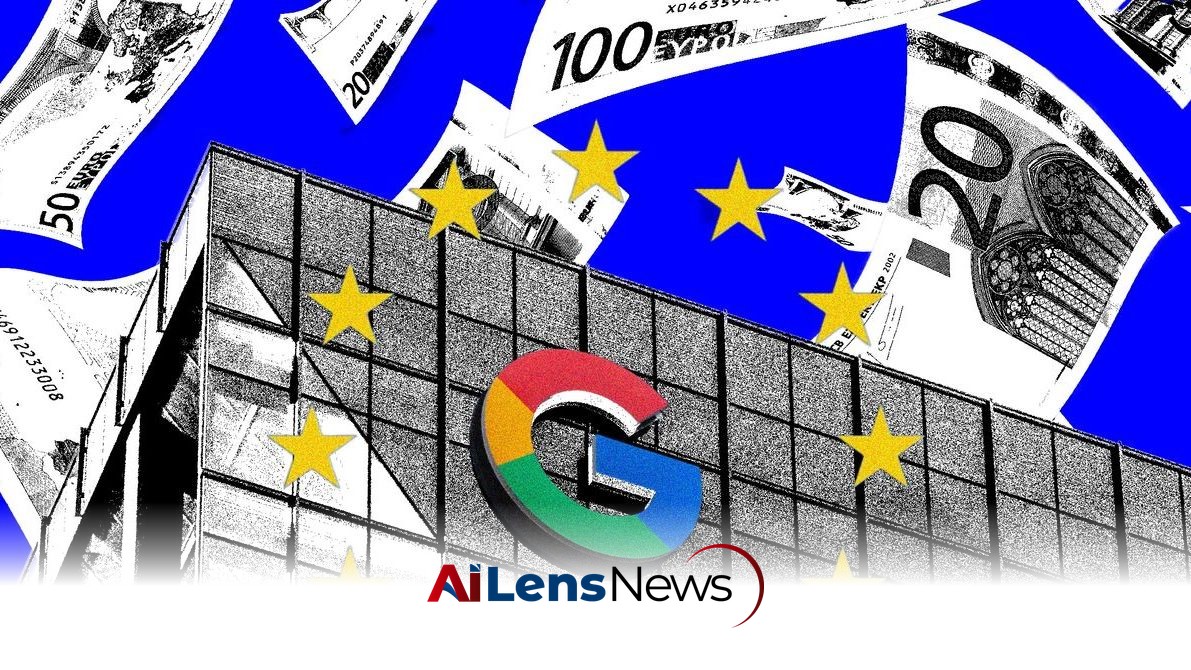


The European Commission has fined Google $1 billion for prioritizing its own services in search results, violating competition laws.
Washington DC, United States Jul 23, 2026 ALN: The European Commission has levied a $1 billion penalty against Google over alleged competition law violations. This fine is part of the EU's broader effort to regulate technology giants and ensure fair competition within its digital markets. The action reflects ongoing concerns about the market dominance of major tech companies and their impact on consumer choice and innovation.
The investigation by the European Commission (EC) revealed that Google had abused its dominant position in the search and app store markets within the European Union. Specifically, the EC found that Google was directing users toward its own apps and services, undermining competitors and violating the EU’s Digital Markets Act. This legislation aims to create a level playing field for all digital market participants, particularly in sectors dominated by a few large players.
As part of the ruling, the EC has ordered Google to cease giving preferential treatment to its own services in search rankings. This includes services related to shopping, accommodations, transport, and flights, which have been shown to benefit from higher visibility in search results compared to competing services. Additionally, Google must allow app developers the freedom to communicate and transact with users outside of the Play Store, where Google typically takes a commission on sales. This requirement aims to enhance competition by enabling developers to reach customers more directly and potentially offering better pricing structures.
“The best products should succeed because they’re better, not because they’re owned by the company running the search engine,” says Teresa Ribera, an executive vice president at the EC. Her statement highlights the fundamental principle of competition law: that market dominance should not lead to anti-competitive practices that harm consumers and stifle innovation. European consumers, according to Ribera, have the right to be informed by app developers about where to find the best offers, even if that means bypassing the app store that takes a cut of sales.
In response to the ruling, Google indicated that it would consider appealing the penalty. The company expressed its belief that the enforcement actions taken by the EU are not reflective of fair competition. Kent Walker, president of global affairs at Google, stated, “This isn't fair competition; it’s product degradation driven by a small group of self-serving complainants, with European businesses and consumers taking the hit.” This sentiment underscores the tech giant's perspective that the regulatory environment may inadvertently harm the very consumers it aims to protect.
Trade associations within the tech industry have also voiced concerns regarding the EU's approach to enforcement of the Digital Markets Act. Daniel Friedlaender, senior vice president at the trade organization CCIA Europe, remarked, “Reducing the quality of what Europeans have access to is not a positive outcome.” This reaction reflects a broader apprehension within the industry that stringent regulations could stifle innovation and limit the range of services available to consumers.
The European Union has a history of imposing significant fines on Google for various antitrust violations. In the past decade, the EC has issued multiple multi-billion-dollar penalties, with the most notable being a record $4.1 billion fine upheld by a European court in July 2021. This fine was related to Google's agreements that required phone manufacturers to pre-install Google Search and Chrome on their devices, further entrenching its dominance in the market. Such punitive measures are indicative of the EU's aggressive stance against perceived anti-competitive behavior.
“Certainly, the stakes are really high for companies. How they are ranked affects their businesses a great deal,” says Kathryn McMahon, an associate professor of law at the University of Warwick. McMahon's insights highlight the critical nature of search rankings in the digital economy, where visibility can directly correlate with revenue and market share. According to EU competition law, firms in a dominant position, such as Google, hold a special responsibility to ensure that their practices do not distort competition, which can ultimately harm consumers.
In an effort to address the complaints raised by the EC, Google has proposed changes to the way it manages the Play Store and how it presents its products in search rankings. The EC has characterized these proposals as "progress towards compliance," indicating that while Google is making strides, further adjustments may still be necessary to align fully with EU regulations.
Complicating the situation is the geopolitical context, particularly the relationship between the United States and the European Union. Recently, former US President Donald Trump threatened to impose steep new tariffs on European countries that seek to restrict American technology companies. This statement reflects the broader tensions between the US and EU over regulatory approaches to major tech firms. The White House's silence on the matter following Trump's remarks suggests uncertainty about how the US government will react to the EU's regulatory actions.
The latest penalty against Google is viewed as a strong response, especially in light of transatlantic complaints regarding regulatory fairness and the treatment of American technology companies abroad. Kathryn McMahon notes that this demonstrates the EU's willingness to be tough in its enforcement of competition laws, signaling to other tech companies that they must adhere to strict compliance standards or face significant consequences.
The implications of this ruling extend beyond Google, as it sets a precedent for how digital markets will be regulated in the EU. The outcome could influence the behavior of other tech giants and reshape the competitive landscape within the digital economy. As the EU continues to refine its regulatory framework, the balance between fostering innovation and ensuring fair competition will be a critical focus for policymakers, industry stakeholders, and consumers alike.
To learn more about the latest developments in Crime & Law, stay updated with our exclusive reports and analyses on AiLensNews.

