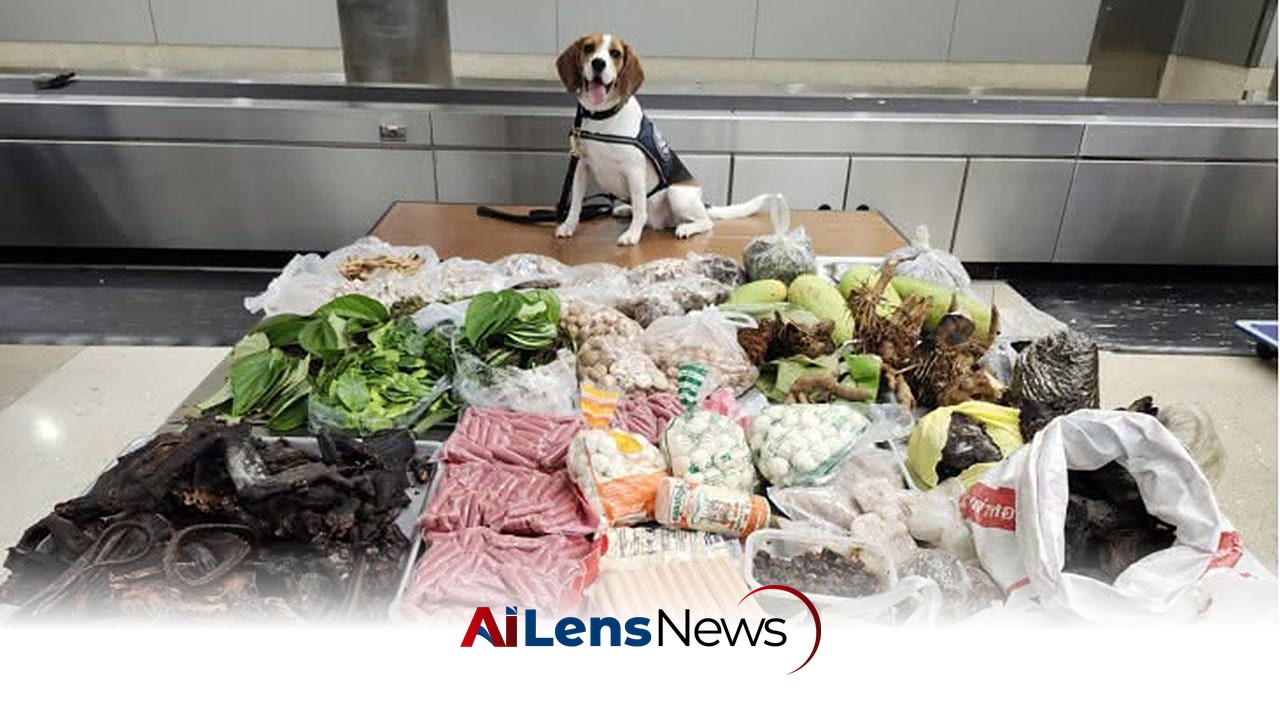


A Customs and Border Protection K9 detected nearly 100 pounds of prohibited meat, plants, and wildlife products in luggage from Thailand, including a Bengal monitor lizard.
Washington DC, United States Jul 23, 2026 ALN: U.S. Customs and Border Protection (CBP) plays a vital role in safeguarding American agriculture and wildlife from potential threats posed by the importation of prohibited goods. A recent incident at a border entry point highlighted the effectiveness of CBP's efforts, particularly through the use of specially trained K9 units. In this case, a K9 named Maisy discovered nearly 100 pounds of prohibited items in a suitcase that had arrived from Thailand, showcasing the critical role that these canine companions play in border security.
The suitcase, which was flagged by Maisy, contained a significant assortment of items that are restricted from entry into the United States. The haul included:
The Bengal monitor lizard, in particular, raises significant concerns due to its status as a protected species. The U.S. Fish and Wildlife Service (USFWS) has since taken custody of the lizard, which underscores the importance of enforcing wildlife protection laws. The illegal trade of wildlife not only threatens biodiversity but also can introduce diseases that affect both animals and humans. The presence of such items in international luggage serves as a reminder of the ongoing challenges faced by wildlife conservationists and regulatory agencies.
CBP officials shared a photo of K9 Maisy proudly posing next to the suitcase, emphasizing the importance of their inspections in preventing the introduction of harmful pests and diseases into the United States. The agency's light-hearted caption, "If you discovered all this in a suitcase, wouldn't you be this happy?" reflects the satisfaction that comes with successful enforcement of regulations designed to protect American agriculture and wildlife.
In addition to this incident, CBP's commitment to protecting U.S. borders is further demonstrated by a separate case involving officers from the California Department of Fish and Wildlife. In collaboration with the National Oceanic and Atmospheric Administration (NOAA), these officers conducted an inspection at the San Ysidro Port of Entry, where they discovered approximately 436 fish that were being illegally imported. The fish included several species such as rockfish, lingcod, sheephead, and yellowtail, which were being brought into the country without valid Mexican fishing licenses.
The illegal importation of these fish not only violates fishing regulations but also poses a threat to marine ecosystems. The seizure of the fish catch serves as evidence in the ongoing case against the individuals involved, who are facing charges for the unlawful take of fish in Mexico, fishing without valid licenses, and illegally importing the fish into the United States. This incident highlights the collaborative efforts of various agencies to enforce fishing laws and protect marine resources.
CBP agriculture specialists are tasked with routinely inspecting international luggage for prohibited items that could pose risks to U.S. agriculture and wildlife. These inspections are crucial in preventing the introduction of foreign pests and diseases that could have devastating effects on local ecosystems and agricultural production. The role of K9 units, like Maisy, adds an additional layer of effectiveness to these inspections, as these dogs are trained to detect a variety of prohibited items, including food products and wildlife.
The use of K9s in customs enforcement is not a new concept; however, it has gained increasing recognition for its effectiveness. These specially trained dogs are capable of detecting scents at incredibly low concentrations, making them invaluable in identifying prohibited items that might otherwise go unnoticed. Their keen sense of smell allows them to detect organic materials, including meats, fruits, and even certain types of wildlife products, which can be difficult for human inspectors to identify without the aid of technology.
The implications of these enforcement actions extend beyond immediate seizures. They contribute to a broader effort to protect American agriculture from invasive species and diseases that could disrupt food supplies and local economies. The introduction of foreign pests can lead to significant economic losses for farmers and agricultural producers, making the work of CBP and partner agencies crucial for maintaining the integrity of U.S. agricultural systems.
Moreover, the illegal wildlife trade poses a serious threat to biodiversity. Species like the Bengal monitor lizard are not only protected by law but also play important roles in their ecosystems. The removal of such species can have cascading effects on local wildlife populations and habitats. By enforcing regulations and seizing illegally imported wildlife, agencies like the USFWS and CBP are working to ensure that these species are preserved for future generations.
As global trade continues to expand, the challenges associated with customs enforcement will likely evolve. Increasing international travel and trade can lead to a higher volume of goods crossing borders, making it imperative for agencies to remain vigilant and adaptable in their inspection processes. The collaboration between various agencies, such as CBP, NOAA, and USFWS, is essential for addressing these challenges effectively.
In conclusion, the recent discoveries made by K9 Maisy and the collaborative efforts of various enforcement agencies underscore the importance of customs inspections in protecting U.S. agriculture and wildlife. These incidents serve as a reminder of the ongoing threats posed by illegal imports and the critical role that trained personnel and specialized units play in maintaining the integrity of the nation’s borders. As enforcement agencies continue to adapt to changing circumstances, their commitment to safeguarding American resources remains steadfast.
To learn more about the latest developments in Crime & Law, stay updated with our exclusive reports and analyses on AiLensNews.

