

More
Checking your session
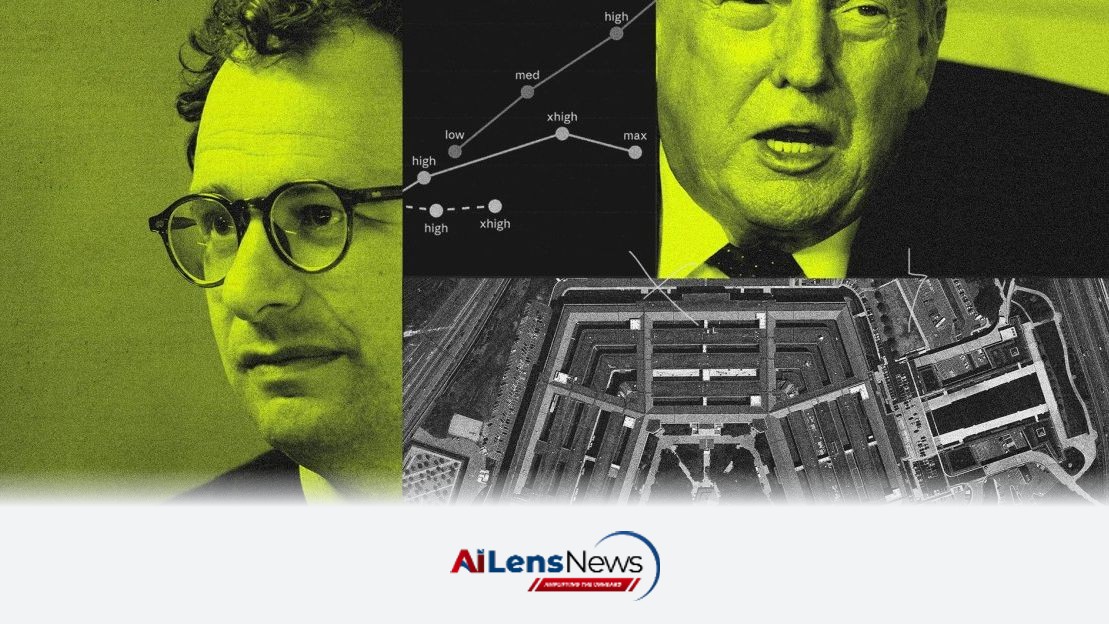



A California judge ruled that the Pentagon's blacklisting of AI lab Anthropic was unconstitutional, marking a significant victory against the Trump administration's actions.
Washington DC, United States Aug 28, 2026 ALN: On Thursday, a judge ruled that the Pentagon’s blacklisting of Anthropic earlier this year was unconstitutional, delivering the AI lab a significant victory in a monthslong rollercoaster of a legal battle with the Trump administration. This ruling not only underscores the complexities surrounding the intersection of national security and technological innovation but also highlights the ongoing tensions between government agencies and private companies in the rapidly evolving field of artificial intelligence (AI).
The lawsuit, filed in March in a California district court, accused the Trump administration of unlawfully retaliating against Anthropic for setting "red lines," or unacceptable military use cases of its AI technology. The implications of this ruling extend beyond the immediate concerns of Anthropic and touch upon broader issues of free speech, corporate governance, and the ethical use of AI technologies.
Judge Rita F. Lin, a district judge in the northern district of California, articulated a clear stance against the government’s actions, stating, "The empty invocation of national security is not a blank check to punish and retaliate against government critics." This statement emphasizes the legal boundaries that govern the relationship between the state and private enterprises, particularly in sectors that are pivotal to national security. The judge also pointed out that the actions were "unlawful retaliation in violation of the First Amendment," indicating that the government’s efforts to silence dissenting voices could set a dangerous precedent for other companies and individuals who may wish to speak out against governmental policies.
In her ruling, Judge Lin criticized Defense Secretary Pete Hegseth’s decision to classify Anthropic as a supply chain risk, labeling it as "arbitrary and capricious." This classification is particularly significant, as it is typically reserved for entities that pose a direct threat to national security. By designating Anthropic in this manner, the Pentagon sought to diminish the company’s role in defense contracts, effectively sidelining it in favor of other AI vendors willing to comply with the military's expanded demands. While the Department of Defense retains the authority to select its vendors, the ruling suggests that such decisions must be grounded in legitimate and justifiable reasons rather than punitive measures against dissent.
The conflict began earlier this year when Secretary Hegseth initiated a renegotiation of contracts with AI labs, aiming to expand the Pentagon's authority to utilize AI for "any lawful use." This move raised alarms among various stakeholders, as it could potentially lead to the deployment of AI technologies in controversial applications, including mass surveillance and autonomous weaponry. Most AI labs acquiesced to the new terms, but Anthropic took a firm stance, insisting on two critical restrictions: the prohibition of its AI technology for mass surveillance of American citizens and for use in lethal autonomous weapons systems—technologies that could operate without human oversight.
This refusal to align with the Pentagon's demands resulted in a high-stakes back-and-forth between Anthropic and the Department of Defense. Tensions escalated, marked by public exchanges of insults from officials and a final ultimatum from the Trump administration. Less than 24 hours before this ultimatum, Anthropic's CEO Dario Amodei issued a resolute statement reaffirming the company’s commitment to its principles. Amodei articulated that while the company had never objected to specific military operations or sought to limit its technology's use arbitrarily, it believed that in certain contexts, AI could undermine rather than uphold democratic values.
Following this statement, the Pentagon escalated its response by officially designating Anthropic as a "supply chain risk," a move that typically indicates a significant threat to national security interests. This classification allowed the Pentagon to pursue contracts with seven other AI labs, including tech giants like Google, Microsoft, OpenAI, and SpaceX, thereby diminishing Anthropic's influence within the Department of Defense and the broader defense contracting landscape.
In response to this aggressive maneuver, Anthropic filed a lawsuit challenging the Pentagon's actions. The case drew considerable attention not only for its implications for Anthropic but also for the broader discourse on the role of private companies in national security. The legal battle raised questions about the extent to which government entities can exert control over private companies, particularly those that operate in fields as sensitive and impactful as AI.
In March, Judge Lin sided with Anthropic, temporarily blocking the Pentagon’s blacklist. In her order, she noted that the Department of War’s records indicated that Anthropic was designated as a supply chain risk due to its "hostile manner through the press." This characterization of the company's public statements as hostile raises important questions about the nature of public discourse and the potential for government retaliation against companies that choose to voice dissent or raise ethical concerns.
The implications of this ruling are profound. It not only reinstates Anthropic's position within the defense contracting arena but also sets a precedent that may deter future governmental overreach in similar circumstances. The case serves as a reminder of the critical balance that must be struck between national security interests and the rights of private entities to operate without undue interference or retaliation from the government.
As the landscape of AI continues to evolve, the ruling may encourage other tech companies to take principled stands on ethical issues, knowing that they have legal recourse if faced with retaliatory actions from government entities. This case could also prompt a reevaluation of how national security concerns are invoked in regulatory and contractual contexts, potentially leading to more transparent and accountable practices in the future.
Ultimately, the ruling reflects a growing recognition of the need for clear guidelines and ethical frameworks in the rapidly advancing field of artificial intelligence. As AI technologies increasingly permeate various aspects of society, the dialogue surrounding their use—particularly in military applications—will likely continue to be a contentious and critical issue for policymakers, technologists, and the public alike.
To learn more about the latest developments in Politics, stay updated with our exclusive reports and analyses on AILensNews.

Lebanon president says agreement with Israel 'does not legitimise' occupation

A federal judge has issued a ruling that temporarily blocks the Pentagon's decis…

Jovan Tang, a 16-year-old from Whampoa, dedicates his time to addressing local i…
A US congressional panel is probing birth-tourism businesses, focusing on nation…

Field Marshal Syed Asim Munir discusses Pakistan's security outlook and regional…