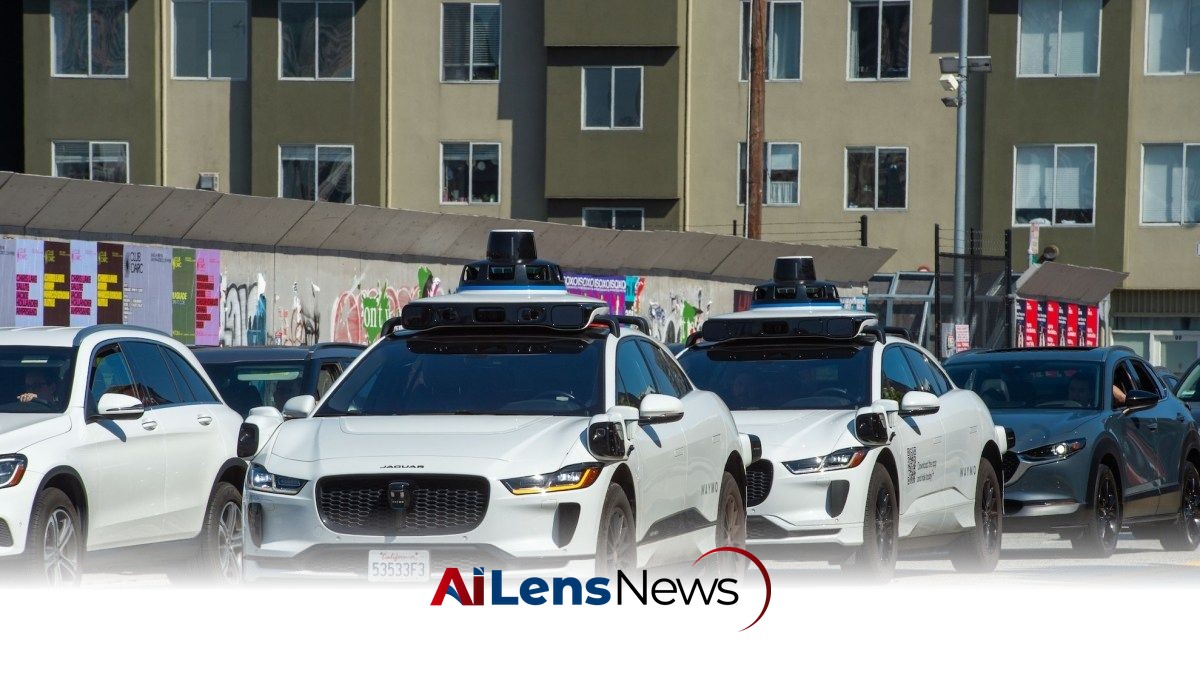


Following a significant traffic jam caused by Waymo robotaxis, Mayor Daniel Lurie urges state regulators to implement stricter rules for autonomous vehicles.
Sacramento, United States Jul 17, 2026 ALN: It turns out that even San Francisco mayor Daniel Lurie, who once declared that the city should be a testbed for emerging tech, has his limits. Especially when that emerging tech creates a massive hours-long traffic jam that leaves thousands at a standstill.
Mayor Lurie has asked state regulators to bolster rules for autonomous vehicles nearly two weeks after Waymo robotaxis became immobile in heavy July 4 traffic, ran out of power, and blocked key streets, further compounding the gridlock. The traffic jam, which trapped municipal shuttles, became a citywide problem that affected thousands of people.
In his letter to the state Department of Transportation, which was viewed by the media, Lurie pointed to two events — a widespread power outage in December and the Golden Gate Bridge fireworks show on July 4 that attracted 100,000 spectators — both of which led to dozens of stranded Waymo vehicles and paralyzed traffic. The San Francisco Chronicle first reported on the letter.
The events, he said in the letter, “demonstrated that California’s current regulatory framework does not adequately address how autonomous vehicles operate during major incidents, planned or not. California’s challenge now is not just whether autonomous vehicles can operate safely under normal conditions, but also whether they can perform reliably during extraordinary ones.”
Lurie said autonomous vehicle manufacturers should be able to demonstrate four “core operational capabilities” and asked the California Department of Transportation to establish statewide standards to prevent future problems like the July 4 gridlock incident. Under Lurie’s vision, companies would be required to immediately remove or relocate robotaxis from active travel lanes to keep people moving and be required to be able to adapt in real time, adjusting their routes, service area, and pickup and drop-off locations. Companies would also have to share real-time operations data with local agencies, including service disruptions, the locations of immobile robotaxis, and recovery efforts as well as demonstrate through testing that they can handle large influxes of people and traffic.
The media has reached out to Waymo for comment. The article will be updated once the company responds.
Any company that wants to operate a robotaxi service in California has to successfully navigate two testing and deployment permit processes, one administered by the state’s Department of Motor Vehicles and the other by the Public Utilities Commission. California’s existing regulatory framework is stricter than that of other states like Texas and Arizona, but that hasn’t dissuaded companies from trying to operate there.
San Francisco and the wider area that stretches south into Silicon Valley have long been a testbed for autonomous vehicle technology. Six companies, including Nuro, Waymo, and Zoox, hold driverless testing permits, which allow the vehicles to drive without a human safety operator behind the wheel.
But the area has also become the launch point for commercial services, which requires other permits from the DMV and CPUC. Waymo is the largest, with an estimated 1,000 robotaxis operating in the Bay Area today. But there are plenty of others either testing or poised to launch commercial operations, including Amazon-owned Zoox as well as a premium robotaxi service that will be operated by Uber. Tesla has a branded robotaxi service but it doesn’t use driverless vehicles, nor does it have the permits to do so. Instead, Tesla has a charter transportation permit, which allows its own drivers to pick up and drop off riders throughout San Francisco in vehicles equipped with its advanced driver-assistance system rather than fully autonomous software.
Waymo’s scale has made it the focal point for regulators in San Francisco and beyond. The company now operates in 11 cities and has said it completes more than 500,000 paid rides every week. In San Francisco, Lurie noted that Waymo had agreed to restrict its service on July 4 near the waterfront and had even assigned a representative to the city’s emergency center. But that wasn’t enough to keep the Waymos out of the heavy traffic that occurred outside of that district.
Lurie said these voluntary actions are no longer enough — a reflection of just how big Waymo’s fleet has become. He said the four proposed requirements “will not undermine autonomous vehicles; they will strengthen them.”
The recent incidents have raised questions not only about the operational capabilities of autonomous vehicles but also about the broader implications for urban infrastructure and public safety. As cities increasingly embrace technology to manage transportation, the challenges faced by San Francisco highlight the need for comprehensive regulatory frameworks that can adapt to both normal and extraordinary circumstances.
While the concept of autonomous vehicles is often associated with the promise of enhanced safety, reduced congestion, and improved efficiency, the reality can be much more complex. Incidents like the July 4 traffic jam serve as a reminder that the technology is still in its developmental stages and that unforeseen challenges can arise, particularly in urban environments where traffic patterns can change rapidly.
The mayor's call for stricter regulations reflects a growing sentiment among city officials that technology companies must take greater responsibility for the impact of their innovations on public life. As autonomous vehicle fleets expand, the potential for disruption increases, necessitating a proactive approach to regulation that prioritizes public safety and the smooth functioning of the city’s transportation network.
Moreover, the regulatory landscape for autonomous vehicles is still evolving. As more companies enter the market, there is a pressing need for standardized regulations that can ensure consistent safety and operational protocols across the board. This is especially crucial in California, where the presence of multiple companies operating in close proximity can lead to compounded risks if not managed effectively.
The implications of this situation extend beyond San Francisco. Other cities considering the deployment of autonomous vehicles may look to San Francisco’s experience as a cautionary tale, prompting them to think critically about their own regulatory frameworks and the potential challenges they may face. As the technology continues to develop, cities will need to strike a balance between fostering innovation and ensuring the safety and well-being of their residents.
In conclusion, the recent traffic chaos caused by Waymo robotaxis serves as a pivotal moment in the ongoing dialogue about autonomous vehicles and their place in modern transportation systems. As Mayor Lurie calls for stricter regulations, it underscores the necessity for a robust regulatory framework that can address both routine operations and extraordinary events, ultimately ensuring that the deployment of such technologies benefits all residents while minimizing risks to public safety.
To learn more about the latest developments in Local & Regional, stay updated with our exclusive reports and analyses on AiLensNews.

