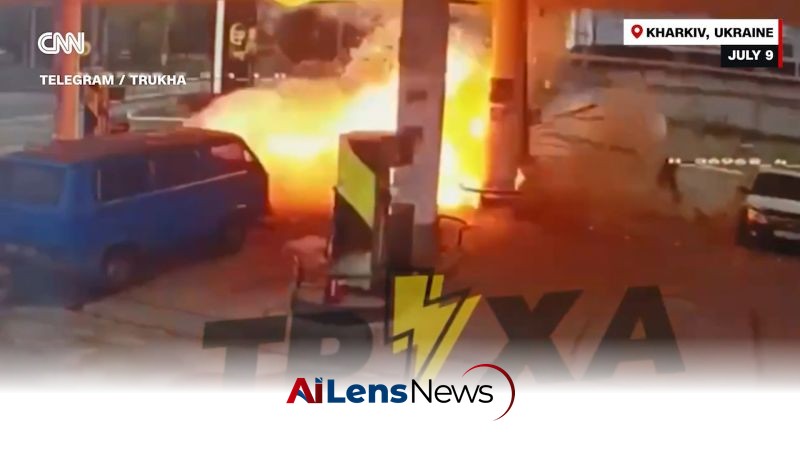


Russia's recent drone strikes on Ukrainian gas stations have intensified, aiming to instill fear among civilians. Over 200 fuel stations were hit in June and July, with officials warning of a deliberate campaign against non-military infrastructure.
Washington DC, United States Aug 1, 2026 ALN: The ongoing conflict between Russia and Ukraine has escalated significantly in recent months, particularly in the realm of targeting civilian infrastructure. Among the most concerning developments has been the deliberate targeting of gas stations across Ukraine, with over two hundred reported hits in just June and July alone. This alarming trend raises questions not only about the immediate impacts on civilian life and safety but also about the broader implications for the war and the populations affected.
The recent attack on a gas station, which left policeman Mykhailo Tsypliakov injured, illustrates the dangers faced by those trying to assist in the aftermath of such strikes. Tsypliakov’s account highlights the chaos and unpredictability of drone warfare, where even first responders are not safe. The injuries he sustained serve as a stark reminder of the risks involved in the ongoing conflict, particularly for those in proximity to front-line battles or strategic targets.
Ukrainian officials have indicated that the attacks on fuel stations are part of a broader strategy by Russia to instill fear and panic among the civilian population. As Tsypliakov noted, panic can lead to a loss of control, a psychological tactic that could be aimed at undermining morale among Ukrainians. The targeting of gas stations is particularly troubling, given their essential role in daily life, especially in a country where commercial air travel is limited and road and rail networks are critical for transportation.
It is also worth noting that these attacks are not random but appear to be strategically concentrated near the front lines, where Russian drones can operate with relative ease. This suggests a calculated effort on Russia's part to maximize the impact of their strikes while minimizing the risk to their own military assets. The use of various types of drones and airstrikes also indicates an adaptation in tactics by Russian forces, which have been forced to respond to Ukrainian military advancements and long-range drone campaigns targeting Russian infrastructure.
The psychological warfare aspect of these attacks cannot be understated. The Ukrainian populace has witnessed the effects of similar tactics employed by Russia in the past, particularly in the wake of Ukrainian strikes on Russian refineries, which caused significant disruptions and long lines at gas stations in Russian cities. By targeting fuel stations in Ukraine, Russia may be attempting to mirror this chaos and instill a sense of vulnerability among civilians.
Furthermore, the recent escalation in attacks coincides with warnings from Western officials regarding the potential for further escalation from Russian President Vladimir Putin. As the conflict continues, the toll on civilians has become increasingly severe. Reports from the United Nations indicate that June was the deadliest month for Ukrainian civilians since 2022, reflecting the intensifying nature of the conflict and the increasing risks faced by ordinary citizens.
In the city of Zaporizhzhia, the situation has become particularly dire, with acting mayor Regina Kharchenko reporting a staggering 54 strikes on gas stations within a mere 24 days. The casualties from these attacks—four deaths and 29 injuries—underscore the human cost of this conflict and the specific targeting of civilian infrastructure. Kharchenko’s characterization of these strikes as “deliberate terrorism” points to the broader implications of such actions, as they not only endanger lives but also disrupt the essential services that civilians rely on for their daily needs.
As the range of Russian drones extends, the threat to major population centers like Zaporizhzhia increases. This shift in strategy raises concerns about the safety of civilians in urban areas, who may now find themselves in the crosshairs of military operations that were previously confined to more rural or front-line areas. The attacks on gas stations, in particular, highlight the vulnerability of essential services during wartime, where every aspect of daily life becomes a potential target.
Fuel stations in Ukraine have taken on a critical role, serving not only as places to refuel vehicles but also as hubs of activity for evacuees, soldiers, and delivery drivers. The importance of these stations is further amplified by the ongoing conflict, as they provide a much-needed respite for those fleeing violence or seeking to transport goods. Yaroslav Starovoitenko, president of the Ukrainian Oil and Gas Association, emphasized that these locations have become sanctuaries for civilians, offering warmth, food, and a place to regroup amidst the chaos of war.
Despite the fear and uncertainty, some individuals remain resolute. Accounts from civilians like Serhiy, who jokingly noted his survival from previous injuries on the front lines, reflect a complex mix of bravado and acceptance of the dangers that come with living in a conflict zone. Similarly, delivery drivers like Vladyslav and Maksym express a sense of obligation to continue working despite the risks, highlighting the resilience of the Ukrainian people in the face of adversity.
On the other hand, the Russian military has been quick to publicize their attacks, showcasing videos of successful strikes on gas stations. This public relations strategy serves to bolster domestic support for the war effort and project an image of military efficacy. However, it also raises ethical questions about the targeting of civilian infrastructure and the responsibilities of military forces in conflicts involving non-combatants.
As the conflict continues to evolve, the implications of these attacks on gas stations will likely extend beyond immediate casualties and damage. The psychological impact on civilians, the disruption of essential services, and the potential for further escalation all point to a troubling trajectory for the war. It remains to be seen how these developments will shape the course of the conflict and the lives of those caught in its crossfire.
To learn more about the latest developments in Crime & Law, stay updated with our exclusive reports and analyses on AiLensNews.

