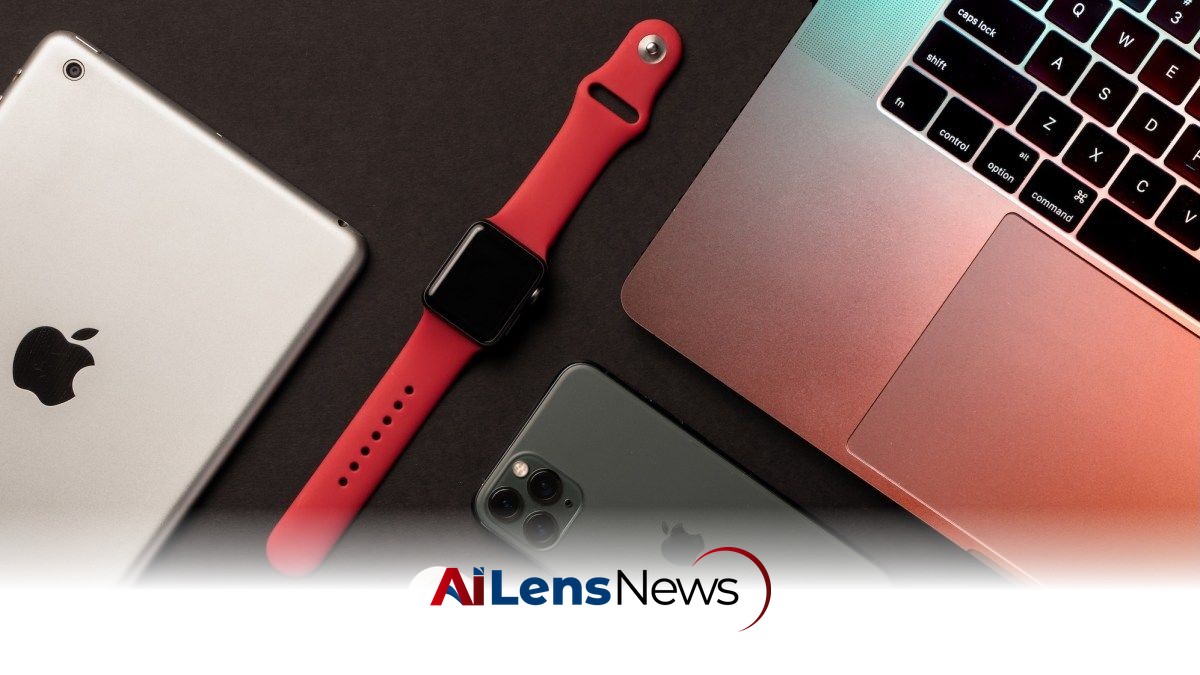


Apple reports a significant inventory increase as it braces for supply shortages impacting production costs and device pricing.
Washington DC, United States Jul 31, 2026 ALN: As the generative AI boom drives steep demand for hardware components, Apple and other hardware makers are facing what outgoing CEO Tim Cook calls “a hundred-year flood [on] memory pricing,” which is severely impacting the cost of producing iPhones, MacBooks, and other devices.
Apple described its recent earnings report as its “strongest June quarter ever,” with iPhone and Mac sales performing better than expected, growing 22% and 29%, respectively, year-over-year. Yet the company is bracing for memory shortages, known as RAMageddon, to get even worse. Apple’s biggest challenge is securing the advanced memory nodes used in its Apple silicon chips, which power the A-Series and M-Series processors used in iPhones and Macs.
“We continue to expect high levels of demand. However, with less flexibility in supply chain, we expect the impact from the supply constraints to increase significantly sequentially,” Cook said on Apple’s quarterly earnings call. “We’re seeing some very significant constraints currently with limited flexibility in the supply chain to remedy it.”
Apple is evidently worried enough about supply shortages that it reported $11.1 billion in inventory, nearly double the $5.7 billion it reported last September. This marks a break from Cook’s long-held supply chain approach, which has emphasized minimizing how much inventory Apple has on hand.
These constraints led Apple to “reluctantly” raise the price of Macs and iPads last month, Cook added. Other companies that have raised hardware prices include Meta, Samsung, Microsoft, and Sony.
“We’re going to be scrambling on the supply side, essentially,” Cook said.
For the upcoming quarter, Apple is predicting revenue growth between 9% and 11% year-over-year. But in the last several quarters, Apple has maintained about 16% year-over-year growth. Of course, that worries investors — Apple stock dropped 6% in after-hours trading.
When Senior VP of Hardware Engineering John Ternus steps into the CEO role in September, the company could be facing a rough patch, but at least Apple isn’t alone in its supply struggles.
The term "RAMageddon" highlights the critical situation in the semiconductor industry, particularly concerning memory chips such as DRAM and NAND flash. These components are essential not only for smartphones and laptops but also for a wide range of devices, including servers and IoT devices. The increased demand from sectors like generative AI, which require substantial computational power and memory resources, has intensified the competition for these components.
The generative AI boom has led to a surge in demand for high-performance computing capabilities, which in turn drives up the need for advanced memory technologies. Companies are investing heavily in AI technologies, leading to higher consumption of memory chips as they scale their operations and enhance their product offerings. This demand has resulted in substantial price increases for memory components, which are expected to continue in the near term.
Apple's situation is particularly precarious given its reliance on custom silicon chips designed in-house. The A-Series chips, used in iPhones, and M-Series chips, used in Macs, are critical to Apple's performance and user experience. The advanced memory nodes necessary for these chips are not only expensive but also in limited supply, complicating Apple's ability to meet its production goals.
In addition to the immediate impact on pricing and inventory levels, these supply constraints could have longer-term implications for Apple's product strategy. The company has historically prided itself on maintaining a tight grip on its supply chain, often opting for just-in-time inventory practices that minimize excess stock. However, the current landscape may force Apple to adopt a more flexible inventory strategy, increasing costs and potentially affecting profitability.
The price increases for Macs and iPads, while necessary to offset rising production costs, may also impact consumer demand. Apple is known for its premium pricing strategy, and any additional hikes could deter potential buyers, especially in a competitive market where alternatives may be available at lower prices. The tech industry is experiencing a shift, with consumers becoming more price-sensitive as economic uncertainties loom.
Furthermore, the broader implications of supply chain disruptions are being felt across the technology sector. Competitors like Meta, Samsung, Microsoft, and Sony have also raised their prices in response to similar challenges, indicating that this is not an isolated issue. The ripple effects of these supply constraints may lead to a slowdown in innovation as companies prioritize managing costs over launching new products.
Investors are closely monitoring Apple's response to these challenges, particularly as the company transitions to new leadership with John Ternus taking over as CEO. Ternus has been a key figure in Apple's hardware engineering efforts and is expected to bring a fresh perspective to the company's strategies in navigating supply chain difficulties. However, the pressure to maintain growth in a constrained environment will be significant, and how Ternus addresses these challenges will be critical for investor confidence.
The upcoming quarter's forecast of 9% to 11% revenue growth, while still positive, represents a notable decline from the previous growth rates of around 16%. This shift has raised concerns among investors, as it may signal a potential slowdown in Apple's overall business momentum. The drop in stock prices following the earnings report reflects these anxieties, as market participants weigh the implications of supply constraints against the backdrop of a strong demand environment.
In conclusion, Apple's current predicament underscores the complexities of the global supply chain and the challenges that arise from unprecedented demand fluctuations. As the company navigates these constraints, its ability to balance pricing, inventory management, and consumer demand will be crucial. The tech industry as a whole will be watching closely to see how Apple adapts to this evolving landscape, particularly as it embarks on a new chapter in leadership with John Ternus at the helm.
To learn more about the latest developments in Economy, stay updated with our exclusive reports and analyses on AiLensNews.

