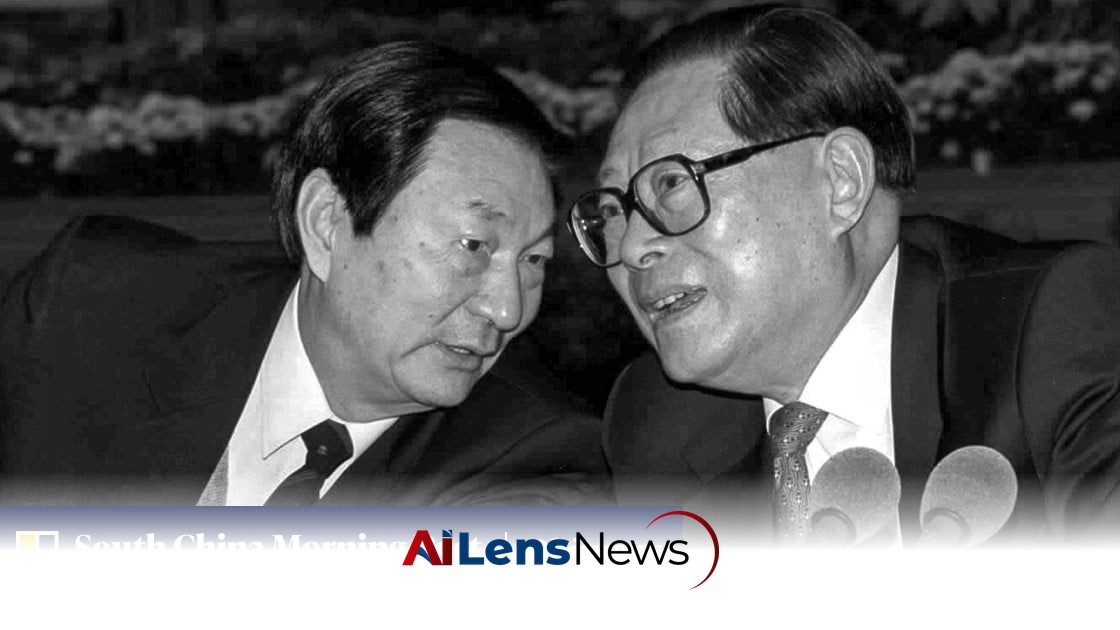



Zhu Rongji, China's former premier and key architect of the country's economic reforms, has died at the age of 97, leaving a legacy of significant transformation.
London, United Kingdom Aug 13, 2026 ALN: “Regardless of what lies ahead – be it a minefield or a deep abyss – I will forge ahead unswervingly, dedicating my entire life and energy to the country until my dying day.”
Those words, spoken at the dawn of his premiership, came to define Zhu Rongji, China’s towering economic reformer who died in Beijing on Wednesday. He was 97.
His remarks at a press conference in 1998 came as China was undertaking sweeping state-owned enterprise (SOE) reforms that caused widespread job losses, even as it reeled from the 1997 Asian financial crisis. Zhu's leadership during this tumultuous period was characterized by a commitment to reform and modernization, which he believed were essential for China’s economic survival and growth.
Zhu, dubbed China’s economic tsar by the media, was known for his determination to steer the country through the rough waters of reforms and external shocks during his tenure as vice-premier and premier between 1991 and 2003. His era was marked by a series of bold initiatives aimed at transitioning China from a centrally planned economy to a more market-oriented one, a shift that would have profound implications for both the country and the global economy.
Born in 1928 in Shanghai, Zhu's early life was shaped by the tumult of war and revolution. He witnessed the devastation of World War II and the subsequent Chinese Civil War, which led to the establishment of the People's Republic of China in 1949. Zhu's educational background included a degree in electrical engineering from Shanghai Jiao Tong University, followed by a career that spanned various sectors, including academia and government. His early experiences during a period of significant upheaval instilled in him a deep understanding of the complexities of governance and economic management.
As vice-premier under Premier Li Peng, Zhu was instrumental in implementing reforms that aimed to increase efficiency within the state sector. He shook up the centrally planned economy, overhauled the state-owned business sector, fought corruption, revamped the tax system, and secured China’s entry to the World Trade Organization (WTO) in 2001. This accession was a landmark achievement, as it not only integrated China into the global trading system but also marked a significant endorsement of Zhu's reform agenda.
One of Zhu's significant challenges was managing the fallout from the Asian financial crisis that began in 1997. The crisis exposed vulnerabilities in many Asian economies, including China, and Zhu's response involved aggressive reforms to stabilize the economy. He emphasized the need for a resilient financial system and greater transparency in state-owned enterprises, which were often mired in inefficiency and corruption. Zhu's approach to crisis management earned him a reputation as a "fire-brigade captain," reflecting his ability to act decisively in times of need.
The reforms initiated during Zhu's tenure had far-reaching implications. They not only transformed the landscape of China's economy but also improved the living standards of millions of Chinese citizens. By promoting private enterprise and foreign investment, Zhu helped create a dynamic economic environment that fostered growth and innovation. The GDP growth during his time in office was remarkable, with China averaging nearly 10% annual growth, reflecting the success of the policies he implemented.
His straight-talking, no-nonsense style earned him a host of nicknames – including “iron-face Zhu”, “no-nonsense leader”, “problem solver”, “fire-brigade captain”, “crisis manager” and “troubleshooter.” These monikers encapsulate not only his leadership style but also the public's perception of his effectiveness. Zhu was known for his willingness to tackle difficult issues head-on, often making unpopular decisions in the name of long-term stability and growth.
Despite his successes, Zhu's tenure was not without controversy. The rapid pace of reform led to significant social upheaval, including rising inequality and job losses in the state sector. His policies often faced pushback from various factions within the Communist Party and the bureaucracy, who were resistant to change. Nonetheless, Zhu remained steadfast in his belief that reform was essential for China's future, famously stating, "Reform is like a boat; if it stops, it will sink."
After leaving office in 2003, Zhu continued to influence economic policy through various roles, including as an advisor and elder statesman. He remained a vocal advocate for reform, often emphasizing the need for continued modernization and adaptation in the face of global challenges. His legacy is marked by a profound transformation of China's economy, which has since become the second-largest in the world, a testament to the foundations laid during his leadership.
Zhu's passing marks the end of an era in Chinese politics and economics. His contributions to the country’s economic reform are widely recognized, and his influence continues to be felt in the policies and strategies adopted by current leaders. As China faces new challenges in an increasingly complex global landscape, the principles of reform and adaptation that Zhu championed remain relevant and crucial for the nation's continued development.
In conclusion, Zhu Rongji's life and career were defined by a relentless pursuit of reform and modernization, driven by a deep commitment to his country. His legacy as a transformative leader will be remembered as one of the pivotal chapters in China's journey towards becoming a major global economic power. As the nation reflects on his contributions, it also faces the ongoing task of navigating the complexities of a rapidly changing world, a challenge that Zhu himself embraced with vigor and determination.
The implications of Zhu's reforms extend beyond China's borders, as they have played a significant role in reshaping global trade dynamics. Zhu's policies facilitated China's integration into the global economy, allowing it to become a key player in international markets. This integration has had profound effects on global supply chains, trade agreements, and economic partnerships, reshaping the landscape of global commerce.
Moreover, Zhu's emphasis on modernization and economic reform has inspired other developing nations seeking to implement similar strategies. His approach demonstrated that it is possible to balance economic growth with social stability, albeit with challenges. The lessons learned from Zhu's tenure continue to resonate in discussions about economic policy, governance, and development strategies worldwide.
As China continues to evolve, the challenges Zhu faced during his time in office—such as managing economic inequality, environmental concerns, and the need for sustainable growth—remain pertinent. His legacy serves as a reminder of the importance of adaptive leadership in navigating these complexities. The principles he championed, including transparency, accountability, and reform, are essential for addressing the multifaceted issues that China and the global community face today.
In remembering Zhu Rongji, it is vital to acknowledge not only his accomplishments but also the ongoing journey of reform that he so passionately advocated. His life's work has left an indelible mark on China's economic landscape, and as the country looks to the future, the foundations laid during his leadership will continue to influence its path forward.
In summary, Zhu's contributions to economic reform in China were transformative, setting the stage for a new era of growth and development. His passing is not only a loss for China but also for the global community that has witnessed the remarkable rise of the Chinese economy as a result of his vision and leadership. As the world reflects on his legacy, it must also consider the ongoing challenges and opportunities that lie ahead, ensuring that the spirit of reform and progress continues to thrive in the years to come.
To learn more about the latest developments in Politics, stay updated with our exclusive reports and analyses on AILensNews.

